
Carmen Lundy
An excerpt from "Freedom of Expression: Interviews with Women in Jazz"

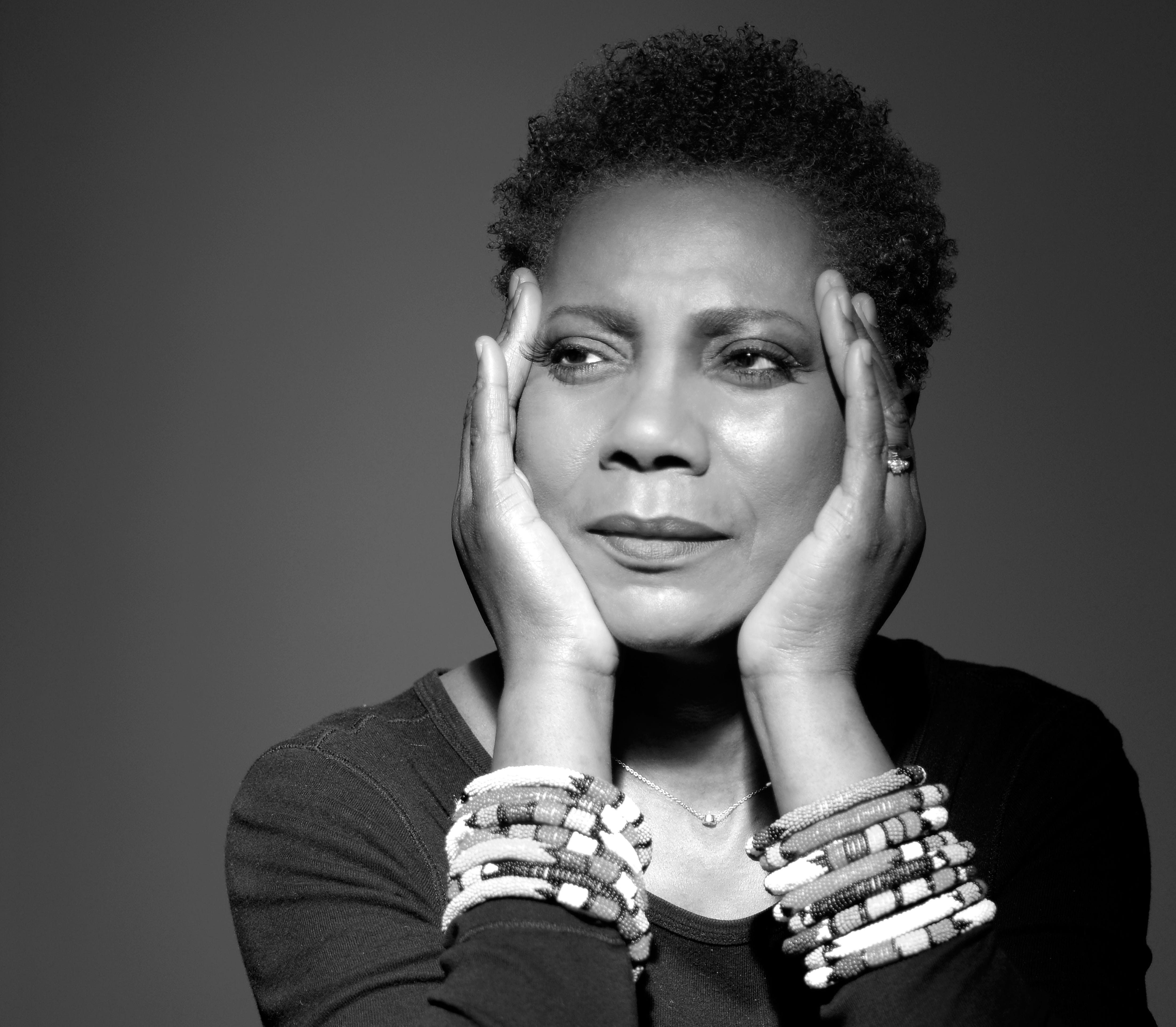
(Carmen Lundy; photo by Victor Dlamini.)
Published in 2016, Freedom of Expression: Interviews Withe Women in Jazz is a collection of interviews I conducted with 37 female musicians of all ages, nationalities, and races and representing nearly every style of jazz one can imagine. The interviewees include Eliane Elias, Terri Lyne Carrington, Anat Cohen, Diane Schuur, Cheryl Bentyne, Mindi Abair, Connie Crothers, and many other incredible musicians.
Since launching Night and Day, I have been sharing excerpts of interviews from the book. In celebration of Women’s History Month, please enjoy these excerpts from my conversation with singer, composer, and 2026 NEA Jazz Master, Carmen Lundy.
Singer, composer, multi-instrumentalist, and visual artist Carmen Lundy is one of the first musicians I interviewed for this project. At the end of our conversation, after I turned off the digital recorder, I mentioned that I was stuck on trying to come up with a title for the book, and that “Women in Jazz” just wasn’t going to cut it. She told me she believed the title of the book would come out of one of the interviews, that somebody was going to say something, and it would be apparent that that was the perfect title. Of course, she was right. The title would come from my interview with drummer and composer Terri Lyne Carrington, who quoted Duke Ellington’s definition of jazz as “freedom of expression.” The complete title came together via a brainstorming session with writer and musician Michael Veal, and I made a mental note I would have to tell Carmen that her prediction had come true.
I am not surprised Lundy has a gift for clairvoyance. Many musicians do. There is an otherworldly, sometimes visionary quality to Lundy’s lyrics and music, as well as the production that surrounds her distinctive voice. On her track “Requiem for Kathryn” from her 2009 album Solamente, a self-produced album of “demos” on which Lundy plays every instrument, her sparse, wordless vocal somehow speaks to both the sadness and hope for deliverance that comes when someone close to you has passed.
Lundy describes herself as “multi-repertoire,” a description that’s more than accurate when considering the breadth of her artistry and musical résumé. She composes much of the repertoire she sings, and at the time of this writing, has written or co-written over 80 songs. She also composes and produces music for film and television, has acted on stage, is a visual artist, and conducts jazz clinics for singers and instrumentalists across the country. Lundy certainly fits the mold of a traditional jazz singer, but at the same time manages to upend any and all definitions of that term.
Chris Becker (CB): When did you first begin playing a musical instrument?
Carmen Lundy (CL): I think I began playing an instrument around the age of four. I grew up in a family in Miami where every house had a piano, which wasn’t so unusual. I remember this day very vividly: I came in from whatever — kindergarten? — to stay at my grandparents’ while my parents were at work. And I went straight to the piano, and I started to do whatever! I remember getting a spanking and being told to just go home! “Go home!” you know? [laughs] So I have this vivid memory of shaking up everybody in the house, because I would just not leave that piano alone!
I was in love with the instrument. My aunt played piano for the choir and for the gospel group my mother sang in, the Apostolic Singers, in Miami. So my first real introduction to the instrument was through my aunt, who played gospel piano and still does to this very day. All of my initial chords and my understanding [of music] came from that gospel thing. Strong left hand, the inverted triads—all that stuff.
My mother arranged for me to get piano lessons when I was around the age of six. My brother [Curtis Lundy] was taking drum lessons at the age of five. I pretty much stayed with [the piano] until I realized how everybody would get so excited when my mother sang! I thought, “Okay, I wanna do that!” If I was a good girl, I got to watch my mother’s group rehearse. That was when I started to notice that one singer had a certain part that the other singer didn’t have. When I understood that there were harmonies, I think that’s when I said, “Oh, that’s how that goes!” And it wouldn’t be the melody, but the middle part that would be more interesting to me. I thought if I would learn that middle part, then maybe one day they would let me sing in their group. They never did! [laughs] But that’s beside the point.
I think I was around the age of 10 or 11 when the church I was attending started a junior choir. So now you got all the daughters of all the singers in the gospel group with my mother leading. . . . We were all now of age to start the junior choir. And I was terribly interested in doing everything but the lead! I just loved the whole idea of being the harmony, you know, to be a supporting voice. It seemed to be a little more challenging than just singing the melody that everybody already knew. To really support the melody was more interesting to me.
And as that junior choir began to go into different churches, do more special events, I kind of stepped out and thought that I could possibly also be a soloist. So somewhere between the ages of 11 and 12, I knew that was it! That was it.
CB: It struck me as you were describing hearing those inner voices, how that very much describes the ear of an arranger or the ear of a composer. When you think back to those early days, do you think that maybe you were not only becoming the singer that you are today but the composer as well?
CL: I don’t know. That’s a great question. No one’s ever asked me that question. I don’t know if the composer in me, if that seed was planted that early on. I don’t know! It’s a great question, it really is!
I’d have to say that as far as discovering that there was a potential composer in me, [that happened] when I was in college, and had switched my major from the opera side to jazz. There were requirements: composition, arranging, and improvisation, and being a jazz major, I had to take those courses. The composition teacher I had and the way that teacher introduced me to composition had a lot to do with it.
The musicians who played in my bands at that time were also an influence. They were writing their own tunes, and they’d say, “Carmen, I’ve got this tune, and it goes like this. There are no words. All you have to do is sing this melody along with the guitar line.” Okay, no problem! Singing my classmates’ and colleagues’ tunes allowed me to hear me, you know? I got to be the one to introduce the composition. So there was something intriguing about that!
CB: As part of your instruction for young singers, do you encourage them to compose music?
CL: Yes. [The emphasis on] composing is the result of spending the last 12 years or so at the Kennedy Center in D.C., representing Betty Carter’s Jazz Ahead program, along with other faculty. It was Betty’s request to continue to press upon the students the value of writing their own music.
As people, we’re more alike sometimes than we want to believe we are. Particularly when it comes to how you render the truth in a melody with or without words. I know for a fact that I decided to sing more original music when I got to New York. I was doing all the gigs and singing all the standards and club dates, doing my great arrangements of Ellington tunes, Mancini tunes, and everybody else. Everybody knew them and loved them, “Isn’t she great?” And I just realized, being in New York from the late 1970s and into the early 1990s, living there, developing my craft, honing in on it and establishing a reputation as a musician as well as a singer, I realized Betty Carter was around the corner, Sarah Vaughn was down in the Village, and Carmen McCrae had just returned from a world tour, so who would want to hear me, you know? What makes me so special? The greats are here! So what do I do? What’s going to distinguish me from them? I’m not going to build a career singing Ella Fitzgerald solos, it’s not gonna happen!
I realized that to distinguish myself, I should sing songs that come from my time, of my experience, and not so much of what has somehow come to be called “The Great American Songbook.” So as a composer, I started to stick my neck out even a little bit farther by singing new songs. Just like Billie Holiday did when she introduced songs that didn’t exist before her. “God Bless the Child,” “Billie’s Blues,” and so many others, you know? “Don’t Explain,” “Fine and Mellow,” “Lover Man”—these are songs Billie Holiday brought to us.
I just kind of went with that. It felt right. And now after having over 80 published songs of my own—I’ve collaborated of course, from time to time— that’ s quite a body of work in this particular genre of music, you know?
I don’t know if it’s fortunate or unfortunate for me to find that there’s this definition of a jazz singer as “someone who sings songs from another time.” Jazz singer: “Somebody who scats!” It’s similar to what we’ve done with the classical singer, where what defines you is the repertoire of another century. I find that this has made for a unique kind of distinction among my peers.
I hope that at the end of the day, someone will recognize the contribution that I’ve made not only to keeping the bar high for jazz vocalizing, but also that I’ve given some of the young people behind me, including some of the artists who have covered my tunes, something else to say!
Freedom of Expression: Interviews With Women in Jazz is available for purchase from Amazon and The Jung Center of Houston Bookstore.
❤️❤️❤️