
Cindy Lisica: Blindfold Test
Welcome to a new "Blindfold Test" for Night and Day with gallerist Cindy Lisica.

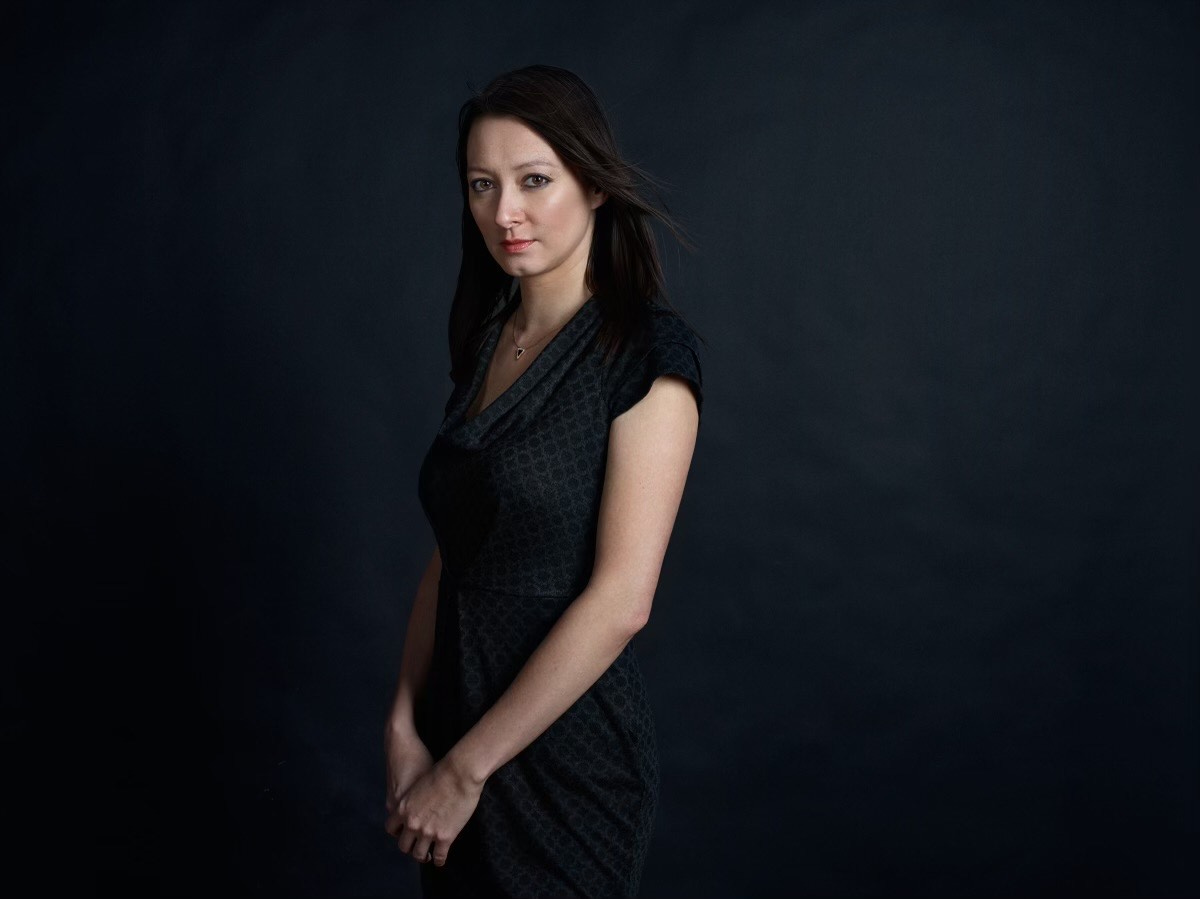
(Cindy Lisica; photo by Jan Rattia.)
Welcome to a new “Blindfold Test” for Night and Day with gallerist and art historian Cindy Lisica.
Originated by Downbeat magazine, a “blindfold test” is a listening test that challenges the featured artist to identify and discuss the music and musicians performing on selected recordings. No information is given to the artist in advance of the test.
One of my long-term goals for Night and Day is to open up these “blindfold tests” to more creative individuals working outside the fields of music. The interplay between artistic mediums, be it music, writing, or visual art, is a recurring theme in my writing, and I believe that a healthy dialogue across disciplines, as well as cultures and economic strata, is enlightening and empowering. With all of that in mind, gallerist and art historian Dr. Cindy Lisica is the ideal subject for the first “blindfold test” of 2026.
Cindy (since she’s a friend, I’ll use her first name) is currently serving as Professor of Art History at Savannah College of Art and Design (SCAD). She has held museum positions at The Andy Warhol Museum in Pittsburgh, The Museum of Contemporary Art (MoCA) in Los Angeles, The Menil Collection in Houston, and Tate Britain and Tate Modern in London, and has co-organized and installed exhibitions internationally in Paris, Shanghai, Beijing, and Tokyo. (Cindy’s travels, as well as her ethnic background, inspired several of the selections in this “blindfold test.”) In addition to teaching at SCAD, writing about art, participating in art fairs, and representing artists online, Cindy also plays drums (and now sings!) in the Bay Area-based post-punk band sub•ject.
I met Cindy when she ran Cindy Lisica Gallery in Houston (2016-2019), which was in the same building as Anya Tish Gallery. Like Anya, Cindy was always super patient with my questions about art and supportive of my writing. It was a pleasure to reconnect with her on Zoom for an extended conversation about music that inevitably kept circling back to art.
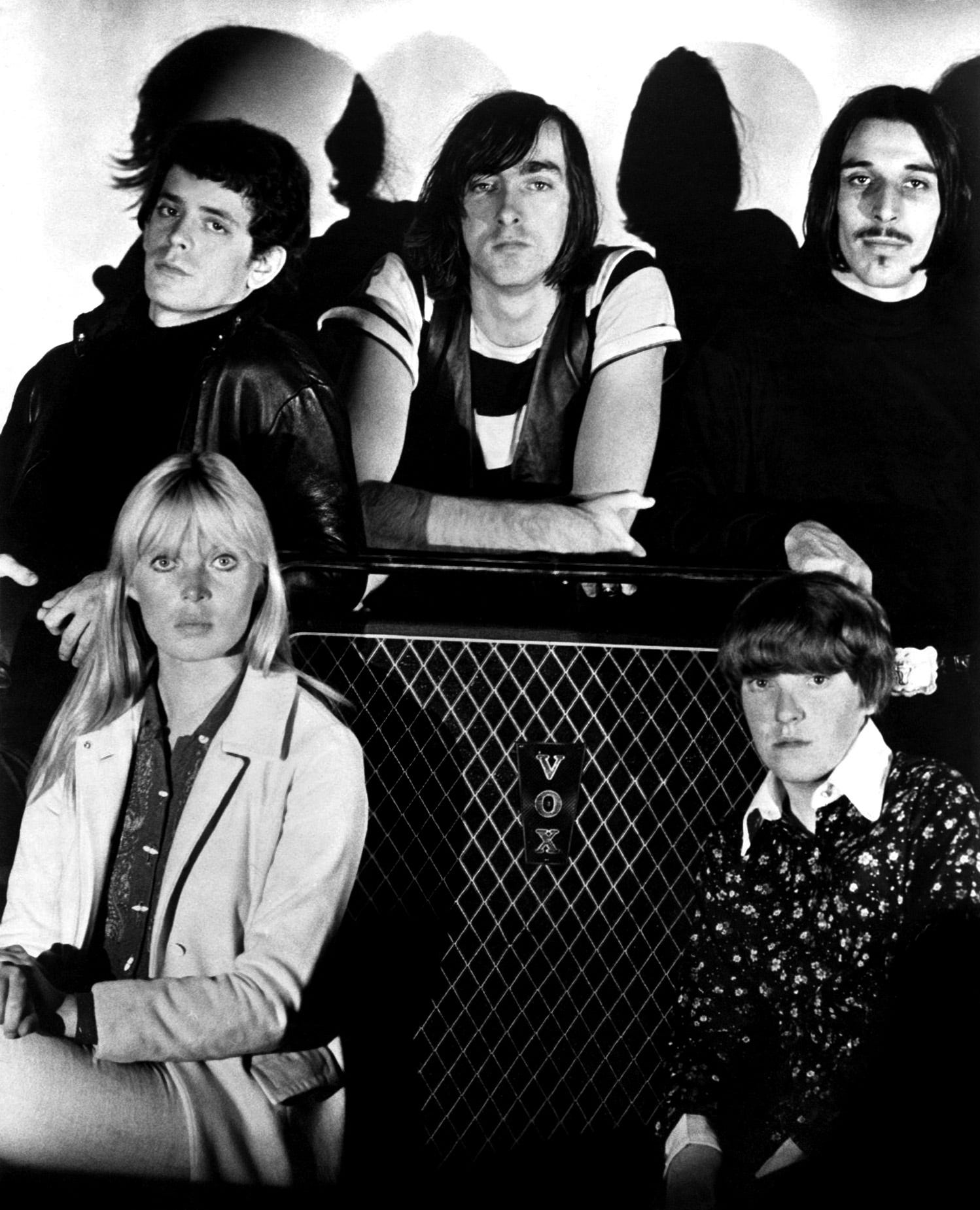
(The Velvet Underground; photographer unknown.)
The Velvet Underground
“Venus in Furs” by The Velvet Underground (from The Velvet Underground & Nico, 1967, Verve), John Cale, electric viola, bass guitar, celesta on “Sunday Morning;” Sterling Morrison, rhythm guitar, bass guitar; backing vocals on "Femme Fatale;"Lou Reed, lead and backing vocals, lead guitar; Maureen Tucker, percussion, drums; Nico, lead and backing vocals.
(Immediately) Velvet Underground!
Yes! A band that was famously managed by artist Andy Warhol, and who performed with Warhol’s traveling multimedia show, Exploding Plastic Inevitable. You worked at The Andy Warhol Museum in Pittsburgh, correct?
Yes. That probably would have been 24 years ago. I initially got a job at the Andy Warhol Museum working as a gallery attendant, and I kept going into the archive. It was my first museum job, and I spent a lot of time just standing around, but I could also spend time reading and decided to read Warhol’s library. I read all of the bios on Warhol, as well as biographies of Lou Reed, Candy Darling, and Edie Sedgwick. In fact, one of the songs from this album, “Femme Fatale,” is about Sedgwick. I learned about these players in the big world of Warhol.
One of the archivists noticed that there was this gallery attendant coming in and reading everything (laughs), and I was allowed to start my first internship in the Warhol archives. At that time, the archivist was opening, one by one, Andy’s time capsules, which were these boxes that Warhol put together starting in the early 1970s when he moved studios. Instead of hiring movers, he had all of the people in his scene helping him pack, and they were really trying to get him to pack! (laughs) Someone suggested he put his stuff in boxes and call them “time capsules.”
No kidding!
Yeah, and it turned into this idea to make them something that Andy= would continue. He would put whatever it was that came across his desk and all these other treasures into a box, and when it got full, it would be labeled with the month and year and then put in storage. Andy’s idea was that someday, he would have an exhibition of the time capsules, and people could buy one, not knowing what was in it. But while he was alive, I don’t think he could have ever given them up. By the end of Warhol’s life, there were six hundred and ten time capsules. After I had earned my Ph.D. and done some curating, I was asked to come back to the Warhol Museum and work as an archivist. In the time I was there, we finished opening up all of the capsules.
The capsules included items worthy of a museum, as well as junk that his mother refused to throw away.
There was a time capsule that was full of pizza dough. You can imagine what a mess that was! Another had a mummified foot. But there were also these amazing treasures. One had Salvador Dali’s paint palettes, and you could connect them to the exact date Warhol received them, because he recorded his visit with Dali in his diaries.
The thing that makes Warhol so unique is that he was not just a visual artist. He was a mass media artist. Him taking on the Velvet Underground, turning it into Exploding Plastic Inevitable, this amazing performance with visuals and dancers, it was such an amazing collaboration. Edie was onstage – everyone had a part in it.
I read that Warhol’s advice to Lou Reed early on was to “leave the dirty words in” his song’s lyrics. That sounds as if he just wanted to shock people, and that was on the agenda. But something that’s just “shocking” isn’t going to last, and we keep going back to that first album, like any great work of art.
Exactly. It was a unique example of collaboration at every level.
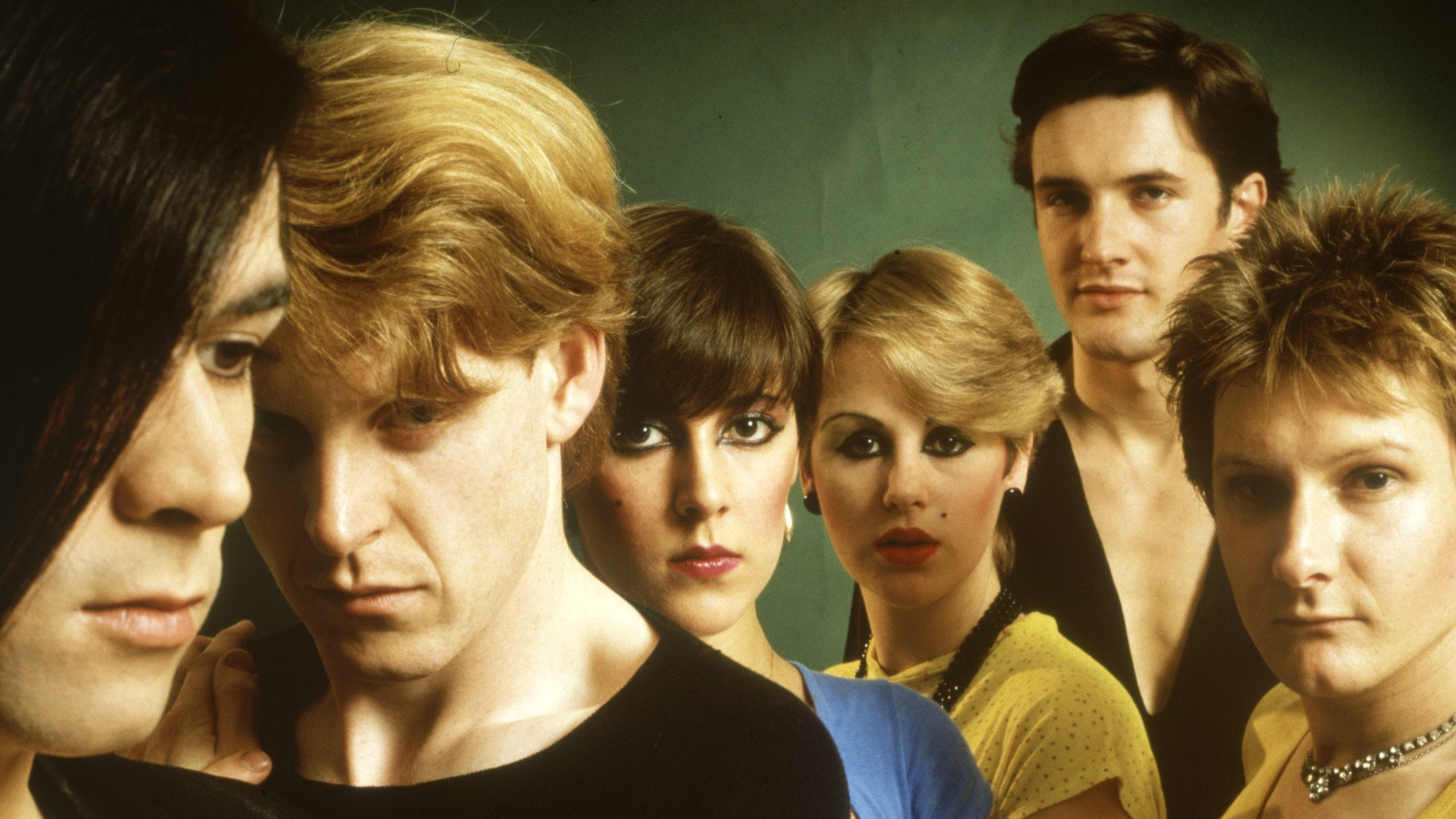
Human League
“Seconds” by The Human League (from Dare, 1967, Verve), Ian Burden, synthesizers; Jo Callis, synthesizers; Joanne Catherall, vocals; Philip Oakey, vocals; Susan Ann Sully, vocals; Philip Adrian Wright, slides, occasional synthesizer, cover design.
(Immediately) Oh, gosh. I so know this. This is “Seconds” by the Human League.
You recently sang this song with your band, sub•ject. Was that the first time you moved from the drum kit to singing?
It is! Other than karaoke or singing in the school choir.
When did you start playing drums?
I started pretty late in life. In my head, I started playing drums when I was a kid. I begged my parents to let me play the drums, and they definitely didn’t let me. But they did allow me to take dance classes, ballet, jazz, tap, and gymnastics, and I just wanted to do tap! Why do you think that is? (laughs) This was percussion! So, I did that for years and years. As an adult, I got into electronic music. I was a rave promoter and a House DJ. I still have turntables. In my 30s, I got a drum kit and took some lessons, and I’ve been playing for ten years or so.
This current band has a lot more room for mixing in psychedelic, post-punk, and synth stuff. We don’t typically do covers. Our bassist wanted to cover “Seconds” and really wanted it sung by a woman. My voice sounds better when I’m in my low range, so when I sang it, I thought, okay, I’m going to channel Nico and Kim Gordon.
Your palette is expanding. No pun intended!
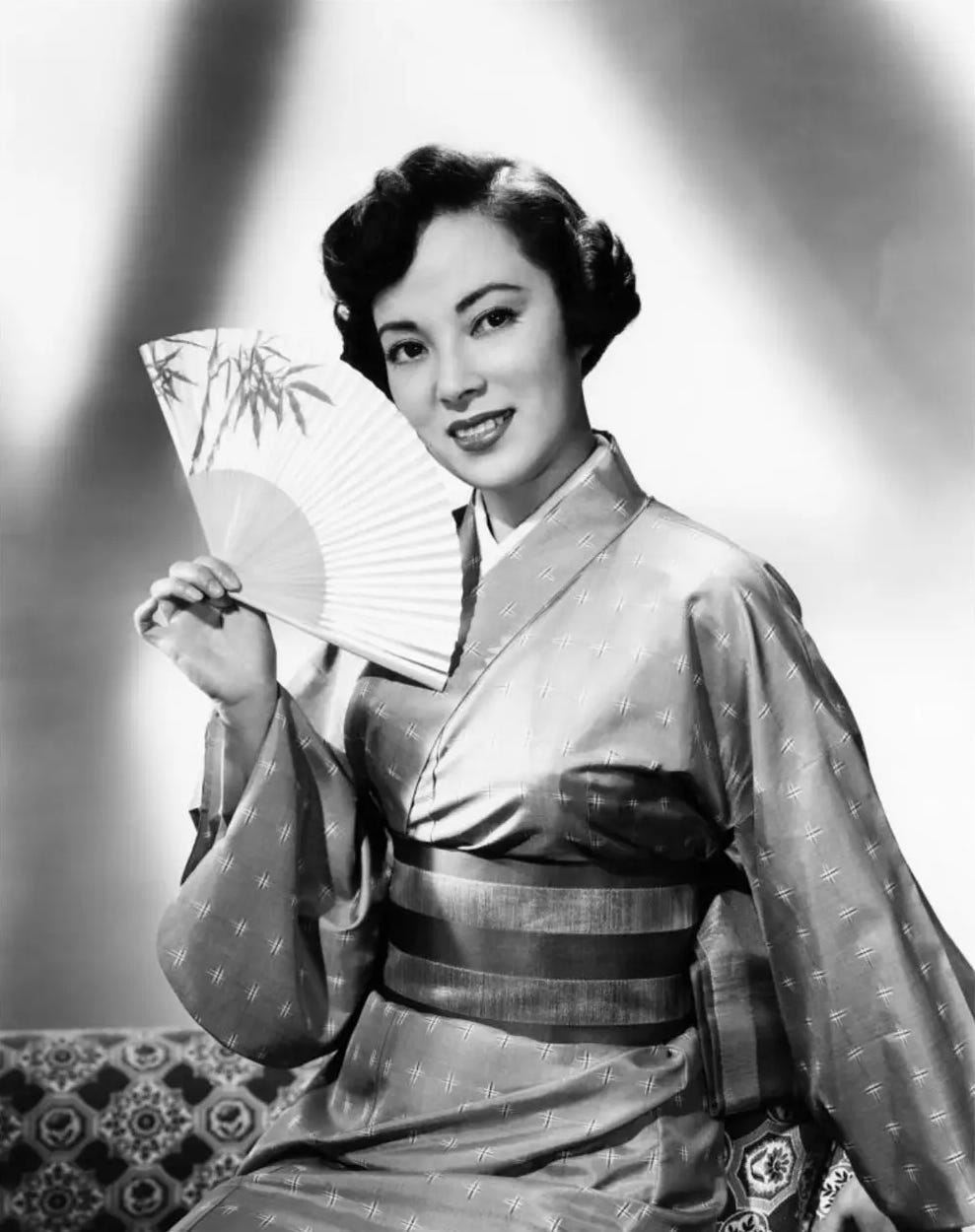
(Yoshiko Yamaguchi a.k.a. Li Xianglan.)
Yoshiko Yamaguchi
“If Only” (from Shanghai Lounge Divas, 2004, EMI), Li Xiang-Lan (real name Yoshiko Yamaguchi), vocals. Recorded circa 1930.
I’m not sure how this next selection will land. You might not recognize the song, but the language may be familiar.
(Listening) It’s definitely a Chinese singer. Is this from the 1930s or 40s?
Yes, exactly. She’s singing in Mandarin, and you speak Mandarin, correct?
I do. I can hold a conversation, and I can order food, but I’m not an intellectual Mandarin speaker.
Your mother was born in Shanghai; she’s Chinese, correct?
Yes. My father is an American-born, Caucasian from Western Pennsylvania. My grandfather on my dad’s side is Croatian. In fact, my name, Lisica, is a very rare Croatian name. It means “fox.” There are only two families who have that last name. My grandmother on that side is from England.
I’m much closer to the ethnicity on my mother’s side; I grew up going to Taiwan. She was born in Shanghai in 1947, right after World War II, when Mao was taking over. Her father was an officer in the Nationalist army of China, which went on to form what we now know as Taiwan, R.O.C. (Republic of China). She was three when they all went over to Taiwan. A lot of Chinese people who fled China and Mao’s regime colonized Taiwan, which had been colonized before. She grew up in Taiwan, and had several brothers and sisters, who were all able to move on military planes (from China) because of her father.
Were you born in Taiwan?
I was born in Pennsylvania. My mom took me to Taiwan when I was two. I was educated in the U.S. and later England, but I spent several summers in Taiwan. My mother would just put me on a plane by myself, and it would take 24 hours to get there. The whole family would come to the airport, and by the end of the summer, I’d be speaking Chinese, and then come back to the U.S. and lose that again. And now, as an adult, I try to go every couple of years to see my family.
The singer I played for you is Yoshiko Yamaguchi, a Japanese singer and actress who “passed” as Chinese, and recorded in Shanghai under the name Li Xiang-Lan. Her story is complex.
Did your mother bring with her to Taiwan things from Shanghai, from the culture there?
My mother definitely played music from this era, that’s probably why it sounds familiar. After she moved to the U.S., she kind of became more and more Americanized over time and is part of a generation that felt they needed to do that. Because Japan had occupied Taiwan before China, there was a lot of anime, manga, and Japanese pop culture in my childhood.
Where I grew up in Pennsylvania, I was very “othered” because it was a very rural area. Everyone knew my mom was Chinese, everyone knew I was half-Chinese, and it was a “thing.” You are not us. Then suddenly, after I moved away, I had to remind people, “Hey, I’m not white!”
Hearing about this singer’s story reminds me of how you are perceived by others can be so different, depending on where you are in the world. You can have multiple identities.
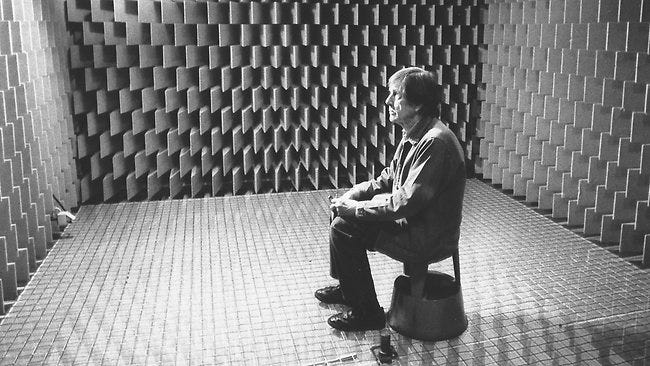
(John Cage in Harvard University’s Anechoic Chamber; photographer unknown.)
John Cage and David Tudor
“Indeterminacy 1” by John Cage (from Indeterminacy, 1959, Folkways), John Cage, voice; David Tudor, piano, tapes, whistles, amplified slinky.
Do you recognize the voice?
It’s gotta be Cage! At first, I didn’t recognize his voice at first, but when the sounds came in . . . and of course I love Isamu Noguchi.
When teaching art history, do you include John Cage along with his contemporaries, like Robert Rauschenberg and Jasper Johns?
Yes, absolutely. Chronologically, if I talk about the 60s, I’m going to not only talk about the pop artists, but I’m also going to talk about John Cage and Merce Cunningham. I also address gender and sexuality in that narrative, because it’s very easy to and has commonly been ignored, and it shouldn’t be.
This is true in my world as an arts writer.
Especially when it comes to the men, who in the 1960s were “out,” but they were still being hidden by the people writing about them. Not to say that that’s the most important thing. There’s an argument that we should focus on the actual work they produced. But I think the relationships that were happening were integral to the art they made.
This also comes into play with heterosexual relationships. We can go back to Jackson Pollock and Lee Krasner. Pollock died in 1956, and Lee Krasner, who was there before him in New York before Pollock even left Wyoming, had a career before him, disappeared, and then came back in the 1980s. That’s part of the reason why I wrote my book Global Perspectives in Modern Art: Turning Points of the 20th Century. It’s not just about adding Krasner back into the existing story; it’s about rewriting the story. Because it was written poorly in the first place! (laughs) The larger narrative has to be reworked. Start the story again, with the truth.
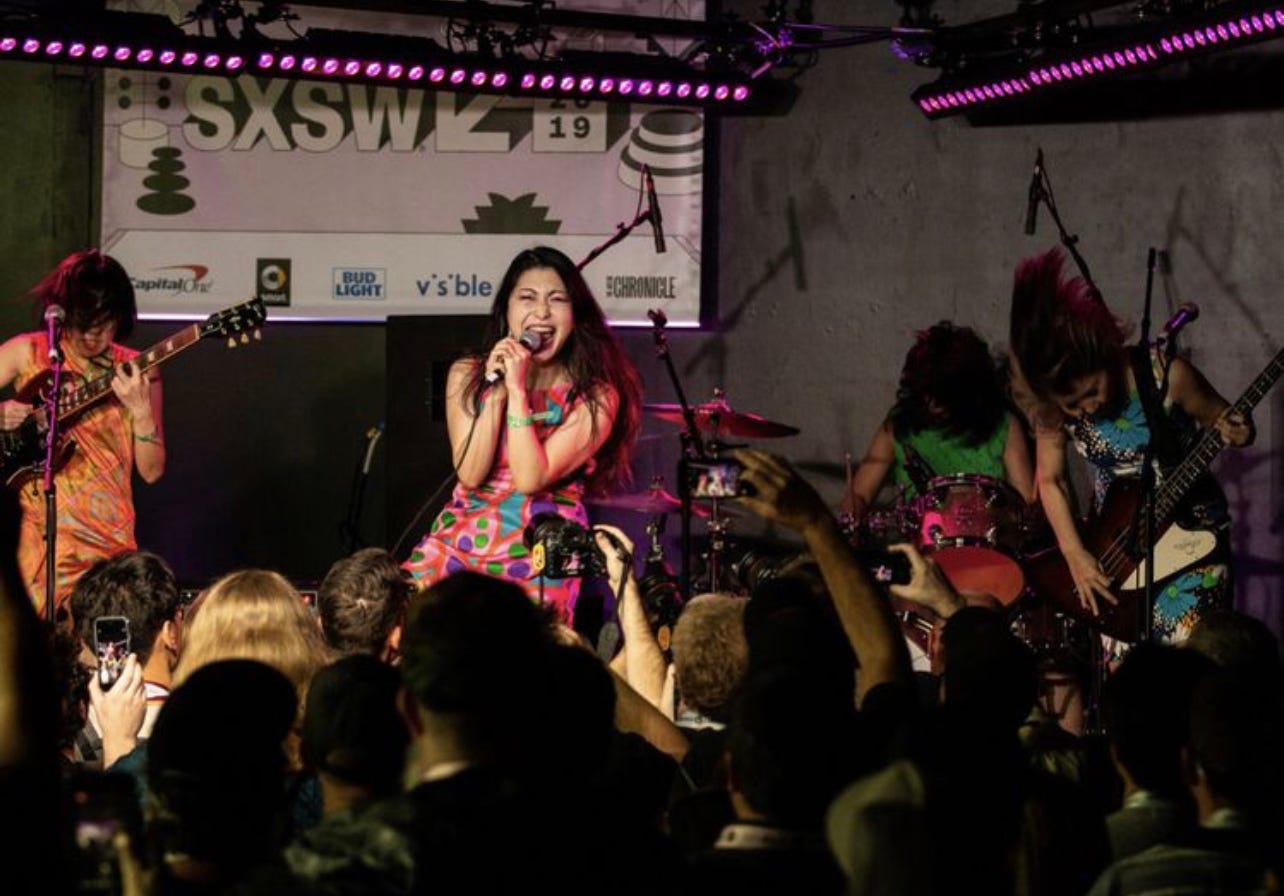
(Otoboke Beaver; Photo licensed under Creative Commons.)
Otoboke Beaver
“Don’t Light My Fire” by Otoboke Beaver (from IItekoma Hits, 2019, Damnably), Accorinrin, lead vocals; Yoyoyoshie, guitar, backing vocals; Hirochan, bass, backing vocals; Kahokiss, drums, backing vocals.
Okay, how about the language?
Japanese. And a little bit of English.
I’ve been to Japan eight times, but I’ve never lived there. I took my students to Japan last year.
One reason I chose this is that I was curious about your time in Japan and how that has informed your professional career and your curating and teaching.
I’ve had a lifelong interest in contemporary Japan. I did my grad work on Takashi Murakami, who is known as Japan’s Andy Warhol. I interviewed him several years ago. The first time I went to Japan, it was my college graduation gift to myself! It’s very easy to go from Taiwan to Japan, so I usually combine the trips.
Why did you take your students to Japan, and what did you go see?
Two years ago, I went to Japan to go to Sado Island, an island I had never been to, and see Kodō, a professional taiko drumming group, who do an annual international arts festival called the Earth Celebration. I camped there and also went to another island I’d never been to called Naoshima, known as Japan’s “Art Island.” I wanted to take the students there after I visited. The whole island is full of art installations. There are like three museums, and a little town that’s very old, and looks like it would have centuries ago. Very few people live on the island, and it’s been taken over by artists from around the world. You need at least two entire days to see the entire island. We later went to Tokyo to see teamLab installations, the Imperial Palace, and Shinto and Buddhist temples.
Does this track jump out as a transgressive example of Japanese culture?
Well, you can tell that their main influence is probably British and American punk rock. But I feel like there is this Japanese Pop quality to it that makes it sound Japanese. Even if you’ve never seen the musicians (in Otoboke Beaver), a picture comes into your head, and it’s probably pretty close to what they look like. (laughs)
I think they’re very aware of and play with these tropes and have fun doing it. It’s kind of exhilarating. You just laugh when you hear this!
There’s a little bit of that cute but deadly thing. “Drop Dead Cute,” to quote the title of Ivan Vartanian’s book. The violent cuteness. (laughs) It’s like using something that’s associated with weakness, a cute little innocent girl, and going, “Eff you. Go to hell! I’m cute but I’ll f-cking kill you!” It’s very subversive. Grab the power and throw it back at your fans. (laughs)
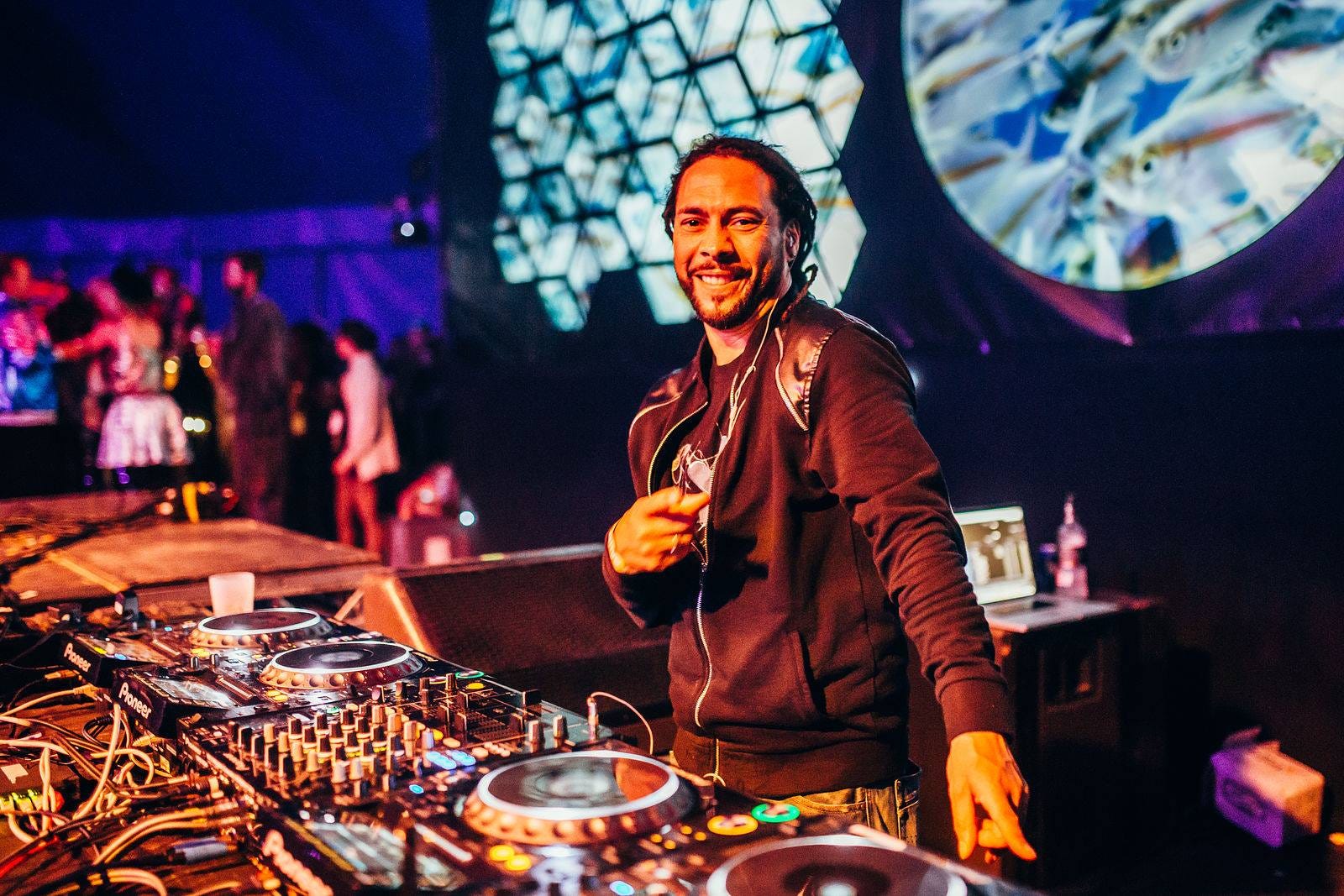
(Roni Size; photographer unknown.)
Roni Size & Reprazent
“Share the Fall” by Roni Size (from New Forms, 1997, Talkin’ Loud, Mercury, Universal), Roni Size (Ryan Williams), production, keyboards; Onallee (Tracey Bowen), vocals. (Complete personnel here.)
(As soon as the beat kicks in) Okay! This is Roni Size?
That’s it!
I’m surprised you were sure I would know it!
In one of our many conversations, when you had a gallery in Houston, I think you mentioned going to hear Roni Size. But I didn’t know you were once a rave promoter!
Back in 1997, I was in college at Penn State, and my brother, who was a techno DJ, and I, threw the first rave in State College, Pennsylvania. The first one we threw was in the basement of a church. The next one was in a Chinese restaurant, after hours, of course. And then we ended up throwing one on Tussey Mountain, a ski mountain. My brother and I would use the school computers and Photoshop to design flyers. We would walk around town, and just hand out flyers to people, looking for other ravers and asking, “Hey, do you want to go to a party?”
Is there a connection between your throwing raves and curation?
That’s a good connection! Depending on the venue, if you were lucky enough to have multiple rooms, you’d have a “jungle (drum and bass)” room, which would be very different than the main room that was house and techno. The lighting would be different. There’s the chosen music or, with curation, artwork, and then the question of how people will experience it. How will they move through the space? What will they hear or see first? So yes, those raves were curated experiences for sure!
She is a multi-faceted talent!
So great to read this!!!