
Lisa Bella Donna: Blindfold Test
Welcome to a new "Blindfold Test" for Night and Day with synthesist Lisa Bella Donna.

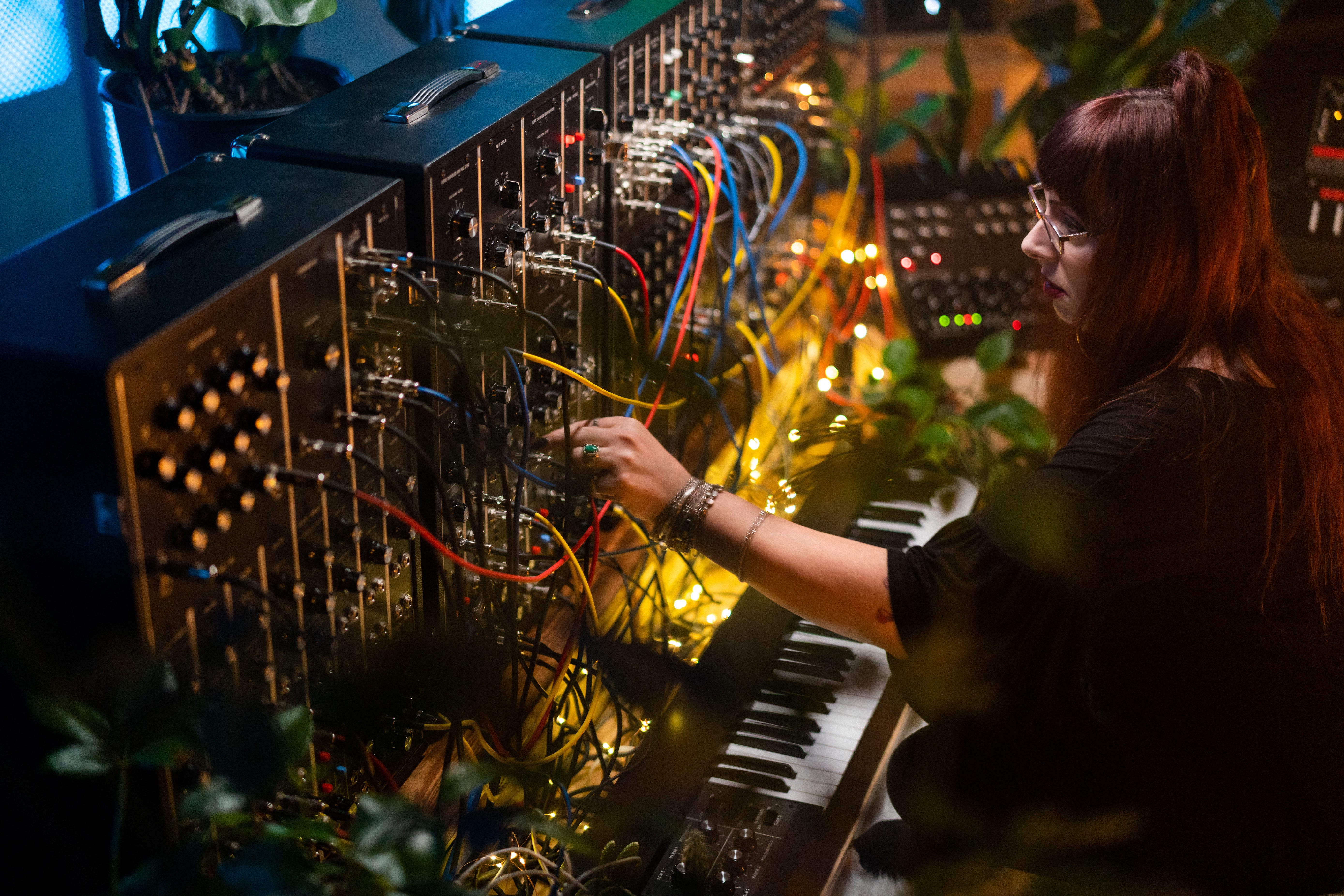
(Lisa Bella Donna; photo by Spencer Kelly.)
Welcome to a new “Blindfold Test” for Night and Day with composer and synthesist Lisa Bella Donna.
Originated by Downbeat magazine, a “blindfold test” is a listening test that challenges the featured artist to identify and discuss the music and musicians performing on selected recordings. No information is given to the artist in advance of the test.
“Music that wishes to transcend musical intention into a stereo experience.” These words perfectly describe the music of internationally acclaimed recording artist, composer, modular synthesist, sound designer, educator, and clinician Lisa Bella Donna. I became aware of Lisa and her music through her collaborations with my friends, guitarist Stan Smith and his brother, Breeze, who plays percussion and drums. Lisa’s solo music, created with analog synthesizers and cutting-edge digital processing and inspired by nature and the outdoors, completely enchanted me, and I’ve added much of her sprawling discography to my Bandcamp collection, including her latest digital release, Dawn of a New Age. (Lisa has also released several recordings on vinyl, her preferred format.) We connected on social media, and I sent her a copy of my book, Freedom of Expression: Interviews With Women in Jazz. Those three words, “freedom of expression,” also remind me of Lisa and her music-making.
We conducted this “blindfold test” over Zoom; Lisa recently moved into a new, expansive studio space, based in the Appalachians, and her enthusiasm and love for all of the tracks (which I selected after much thought and listening) came across loud and clear, despite the occasionally fussy digital connection!
(Scroll down for a Spotify playlist of the following tracks.)
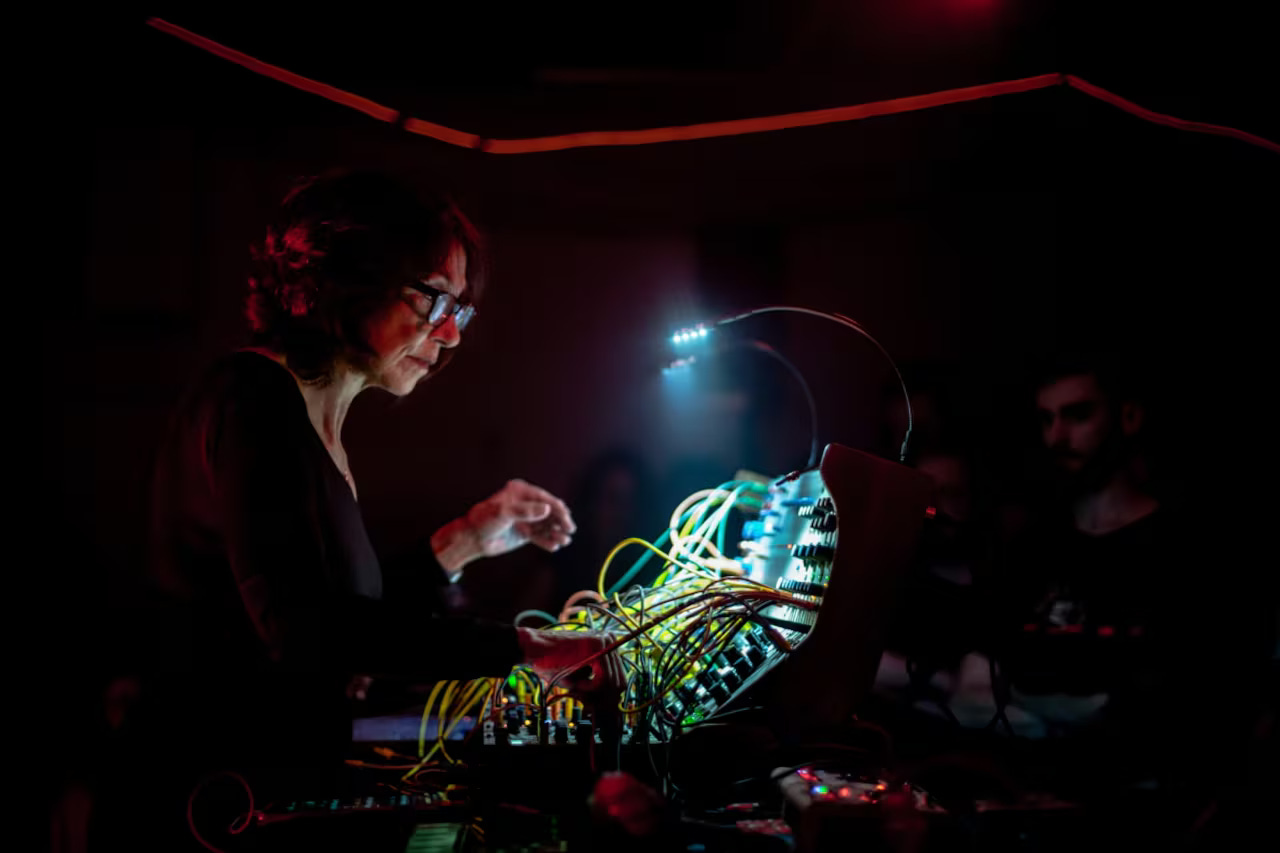
(Suzanne Ciani.)
Suzanne Ciani
“Coral Reef” by Suzanne Ciani and Jonathan Fitoussi (from Golden Apples of the Sun, 2023, Transversales Disques), performed by Suzanne Ciani and Jonathan Fitoussi.
Any guesses?
No. It’s beautiful though! This is gorgeous.
This is Suzanne Ciani and Jonathan Fitoussi. Have you met Suzanne in person?
Absolutely. Yes. Suzanne is a tremendous of a person as she is an artist.
When did Suzanne’s music come into your life, and this world of synthesis?
My first real introduction to Suzanne’s music was through her more New Age work. I learned “Neverland” for a gig many years ago. I wasn’t familiar with her Buchla stuff until probably the mid-2000s. She wasn’t an early influence on me, per se. However, she’s one of the best to ever do it. A true, brave pioneer of performing live with modular synthesis.
Electronic music made a big impact on me when I was seven or eight years old. I had a stepfather named Dana Piersol who had a very eclectic and incredible record collection, and he turned me on to (the record label) ECM, Shostakovich . . . He appreciated my tastes, which were, of course, Black Sabbath, Uriah Heep, and things like that. One afternoon, he played Wendy Carlos albums, Switched On Bach and Sonic Seasonings, and explained that what I was hearing, specifically on Sonic Seasonings, wasn’t field recordings, but were indeed (sounds created from) the Moog synthesizer. He had a book with a photograph of a gigantic modular Moog, and it really got my gears turning. Because I was already into György Ligeti, Vladimir Ussachevsky, Otto Luening and other similar music I found at the library, he would sort of sniff out my interests. Hearing Sonic Seasonings sent me packing back to the library! I taped and studied the Columbia-Princeton Electronic Music Center albums, Barton Cumming’s recording of music for tuba and electronic tape by Joesph Ott. Also, Beverly DeFries D’Albert, and of course, Morton Subotnick were early influences.
Were you playing piano then, or guitar?
Well, I had a organ. It was some sort of three-tier ‘70s electronic organ that had a tape recorder in it. One Winter, this same stepdad and I made a Heathkit (reel-to-reel) tape recorder, and that was a fun way to get a better understanding of how electronics work. I started doing tape-to-tape stuff with the organ and the two tape recorders. Very crude! (laughs) Anything I heard from the library was what I was trying to do.
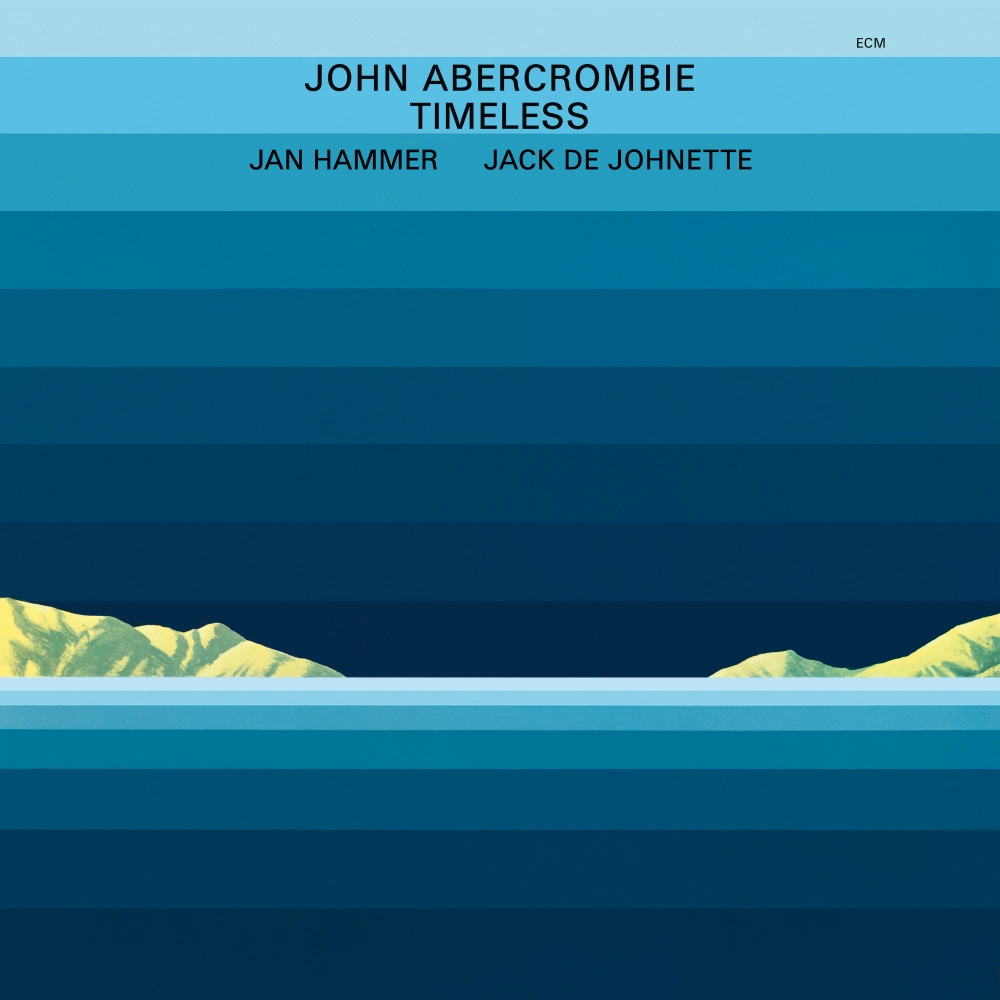
John Abercrombie
“Timeless” by John Abercrombie (from Timeless, 1975, ECM), John Abercrombie, electric guitar; Jan Hammer, organ, piano, synthesizer; Jack DeJohnette, drums.
(Immediately after the first guitar note) John Abercrombie, “Timeless!” This is one of my favorites, and one of the best albums ever made, as far as I’m concerned. It doesn’t really get much better than this. It’s just a testament of what happens when three equally talented and equally beautiful musicians get in the same room and trust each other in the process.
These musicians are from three very different musical worlds.
Oh, absolutely. But they’re each sort of the fathers of jazz fusion music.
This music is more of where I really come from. The ECM landscape. Most people assume, when they hear one of my albums, that I must have spent all my time listening to Tangerine Dream or Klaus Schulze. But I didn’t discover them until years after I had already become deeply immersed in modular synthesis. It was this kind of music, what you hear on “Timeless,” that I was after. It’s organic, but there’s an electricity to this music, not just sonically, but in the transmission of communication between these musicians. There’s a stereo experience of conversation in this music.
That’s what I hear when I listen to your solo performances. Maybe it’s you communicating with the instrument, and the instrument communicating with you?
I think I try to just simply stay out of the way. Instead of making the music about myself or my presentation of the music, I really try to listen and respond within the sonic environment. When there are sequencers going, polyrhythmic and stereo information happening, that allows the musician – I guess, myself – to respond in a musical and hopefully eloquent way. Not just make music to make music, but to respond and create an atmosphere. My albums are designed for the listener. I’m hoping to create a home for the listener to come in, spend an hour with me, and come out feeling inspired about something within themselves.
As much as I love jazz-oriented music and playing with great jazz musicians, I found that I still could not conform to the stylistic trends of different demographics. I was never really going to fit in with that, and that’s one of the reasons why I sort of stepped away from ensemble-based music. I’m not too interested in conforming to anybody’s idea of what I should be doing with music.
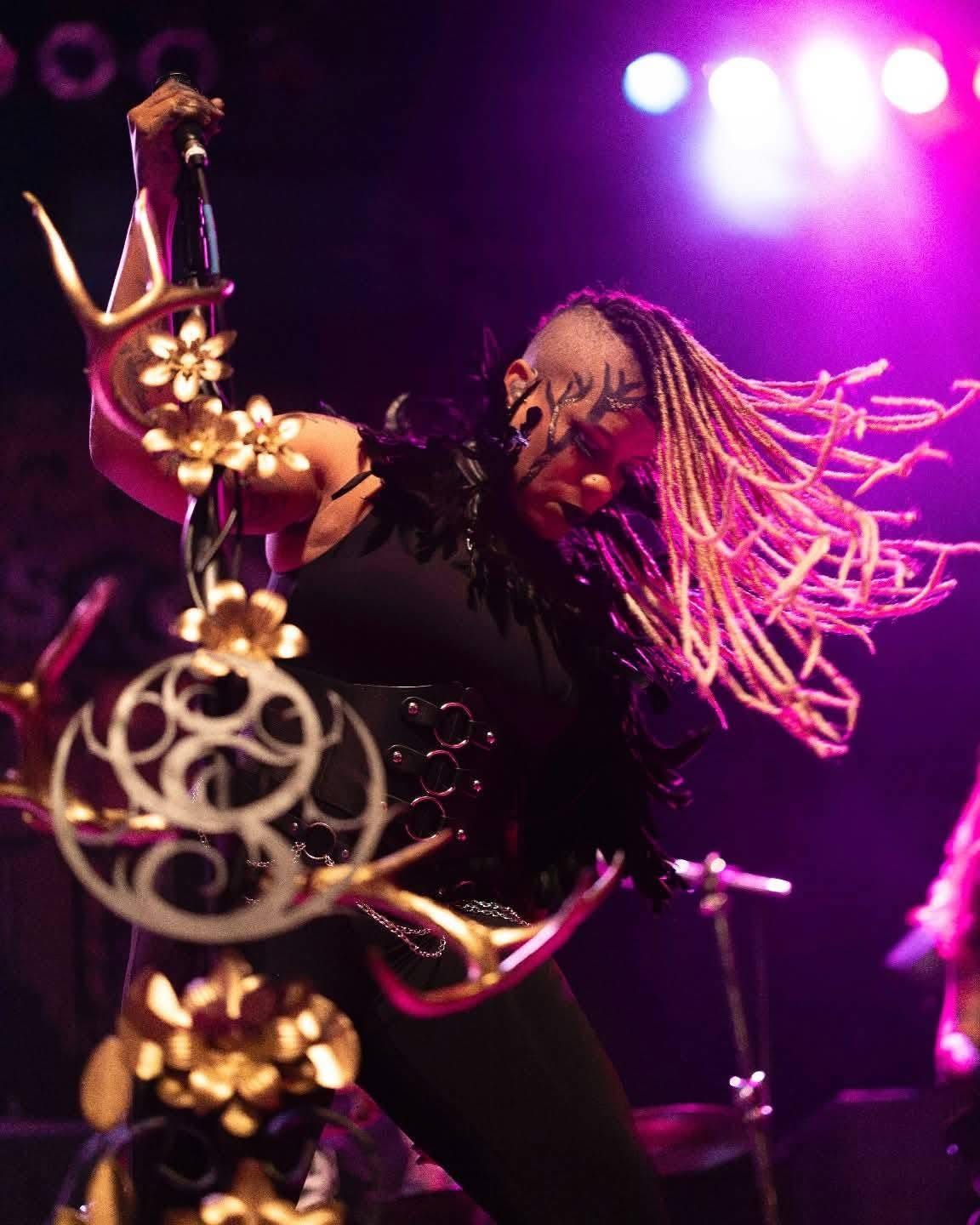
(Cammie Gilbert of Oceans of Slumber.)
Oceans of Slumber
“Apologue” by Oceans of Slumber (from Winter, Century Media Records, 2016), Cammie Gilbert, vocals; guitarists Anthony Contreras, gutiar; Sean Gary, guitar; Keegan Kelly, bass; Uaeb Yelsaeb, synthesizer; Dobber Beverly, drums.
This next track is a bit loud, so get ready.
Bring it! (after a few seconds) Turn it up! Oh, yeah!
This is a Houston band called Oceans of Slumber. The lead singer is Cammie Gilbert, who is just amazing, and her husband, Dobber Beverly, is playing drums. This is from an earlier album, Winter; they’ve had some personnel changes and recorded several critically acclaimed records since.
That’s who I thought it was, but I couldn’t remember their name! A couple of years ago, I was invited by (producer) Joel Hamilton to come and play a couple of gigs with these guys in New York. For some reason or another, I was unable to break away from my schedule.
That’s a great track! I love the dark, heavy, aggressive style format, but I also love the female aspect of it. Wonderful band! I haven’t had the pleasure of meeting them, but I’ve heard nothing but rave reviews about them as people and how passionate and driven they are in their work. The music speaks for itself. I’m hoping, at some point, I can connect with them and do a track or a gig. It would be great.
I came to metal late in my musical listening. Meeting and writing about Cammie and Dobber, and getting into prog, Black, and Death metal, I learned there was a much wider palette than I had been aware of. Is that how you hear metal, as a bigger, sonic landscape?
Oh, absolutely, especially as a listener. Yes, I composed metal music for many years, in and out of different seasons of music in my life and career. But again, I didn’t really fit, because I didn’t conform very well. The things I wanted to do in metal then just weren’t allowed. Now, you can pretty much do whatever you want, blend in other genres, and take your time developing something epic. Whereas, in the ‘80s and ‘90s, when I was writing that kind of music, you weren’t allowed to do that. You could, but you weren’t going to get gigs, or interest from listeners or labels.
But my knowledge and passion for metal runs really deep. It’s a special music, because there’s no other kind of music that does the thing that it does. The spirit of it, the release of it, the otherworldliness. You could almost call it fantasy, but it’s just another consciousness, in the same way that Terry Reilly is a different consciousness, or Joni Mitchell is a different kind of consciousness of music. Heavy metal is another deep poetry of time and space, where there are these amazing opportunities to use metaphor. I like metal with a lot of rawness and heat. An album that I recommend for your readers is Blessed Death, Kill or Be Killed. To me, that’s one of the best albums ever made, let alone a heavy metal album. There’s just something so honest and so organic about it. And those New Jersey boys . . . you don’t want to mess around up there unless you’re prepared! (laughs)
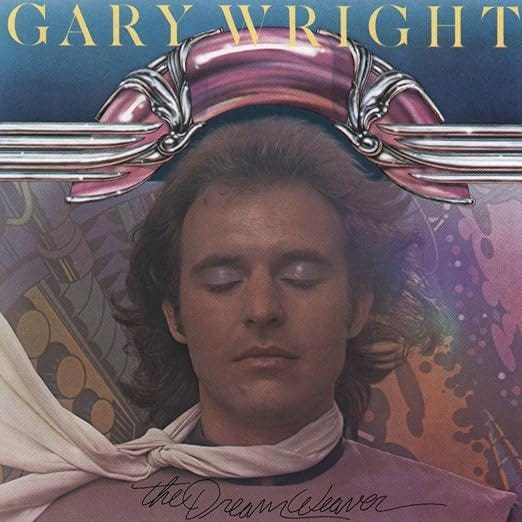
Gary Wright
“Dream Weaver” by Gary Wright (from The Dreamweaver, Warner Bros, 1975), Gary Wright, vocals, ARP Solina String Ensemble, Minimoogs, drum machine; David Foster, Fender Rhodes; Jim Keltner, drums.
(Immediately) The one and only! The reason, that’s the reason for me. Listen to that. Sweet Gary. What a sweet, brilliant human being.
I lived in Cleveland in that era of the 70s, and my parents were avid music listeners. Every Friday, my dad would come home from General Motors, and he would bring five or six new records. They had a pioneer stereo with these massive speakers hung from the ceiling. My mom made these knitted plant hangers – very ‘70s. The ritual was, we would come home from school, do our homework, have dinner, and as soon as dinner was done, Mom and Dad would disappear into the garage, and you’d smell this lovely herbal smell coming from the garage. And they’d come back in, a little glazed-eyed, feeling really good, and the records would go on the turntable for the rest of the evening. We didn’t really watch television then. The house was usually filled with music.
When Dream Weaver came out, my mother played it all the time -- cranked it -- and would tell me, “Come in here and sit between these speakers and listen to this.” She would claim, “This is what the future is going to sound like.” All of the lyrics talk about love and raising things on a higher frequency . . . What a remarkable album.
I got the very rare opportunity to communicate with Gary back in the ‘90s. I expressed to him how important his work was to me, both solo and with Spooky Tooth, and asked him how he made these records. He said he just wanted to break away from everything he had already done. He created his own studio in his basement. He had a technical friend that helped him put four mini-Moogs in a cabinet that could be controlled by keyboards or sequencers. He had a Moog model 15, ARP strings, and a mini-Moog bass. And you’ve got David Foster on board to help refine the songs, and then you’ve got Bobby Lyle – what a tremendous musician! (Editor’s note: Lyle plays on some of the tracks on Dream Weaver.)
I’ve sat in Bobby’s living room and interviewed him!
Oh, wow! Lucky you. Another forward thinker! You got me wound up on this!
When, as a teenager, I finally got into working in studios, I was really just focused on being a good musician who could keep up with a wide variety of different musical jobs. I hadn’t decided that I wanted to make electronic music. But when the opportunity came to do that, Gary was it. The inspiration to go for it. I went back to Dream Weaver, I had discovered Weather Report’s Heavy Weather, and Billy Cobham’s Crosswinds, then Gino and Joe Vanneli. This is the music where I come from, music that wishes to transcend musical intention into a stereo experience.
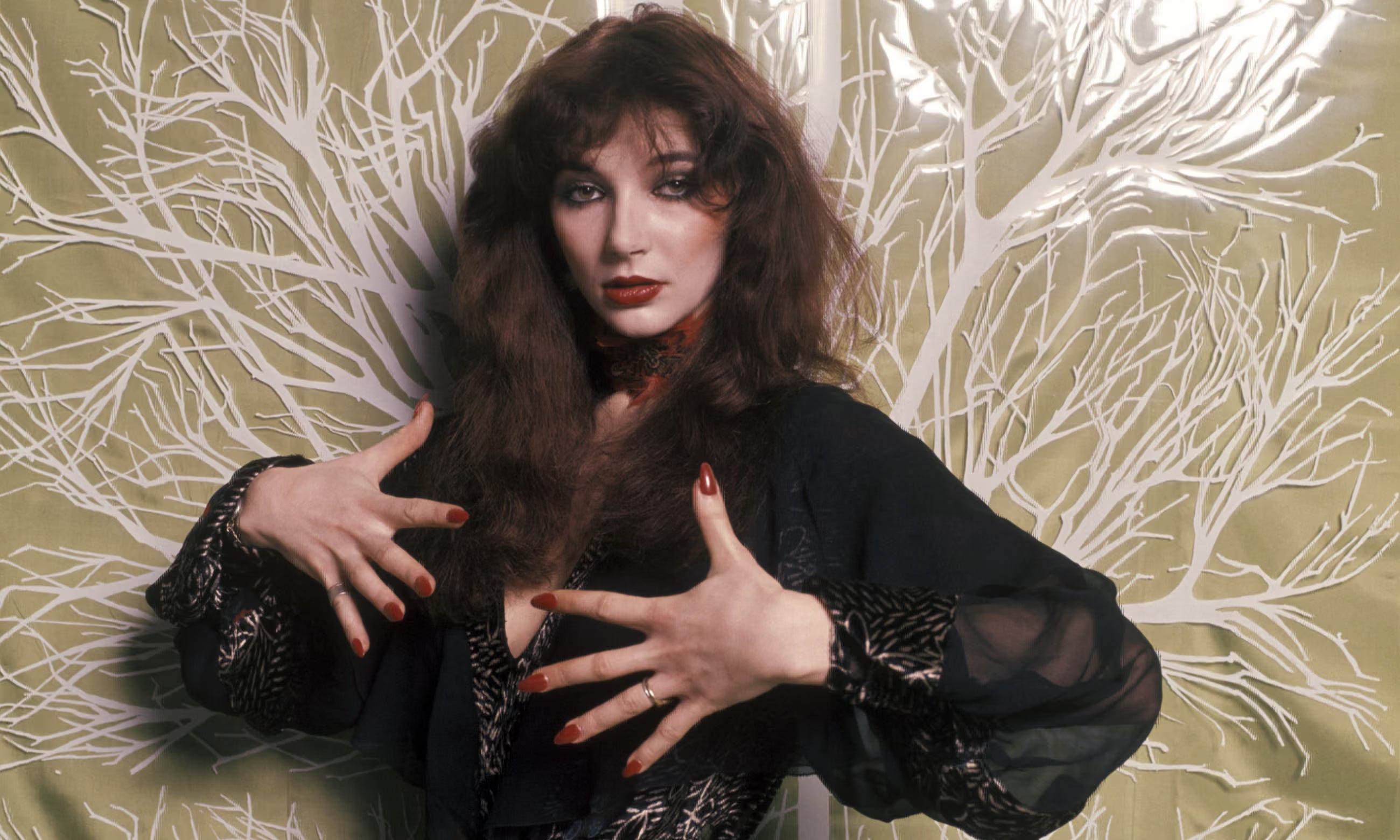
(Kate Bush. Photograph: Peter Mazel/Sunshine/REX
Kate Bush
“All the Love” by Kate Bush (from The Dreaming, 1982, EMI), Kate Bush, vocals, piano, Fairlight CMI synthesizer; Del Palmer, bass; Stuart Elliot, drums, percussion; Richard Thornton, choirboy.
(Immediately) “All the Love.” This is in my top five of favorite Kate Bush songs.
It’s a heavy song.
I have sobbed to that song specifically many times. But what a perfect song for those kinds of sad seasons of change. I remember when this record came out, and for me, it’s her masterwork. No one else has one of those albums, and she basically did a lot of it on her own.
When The Dreaming came out, I was a teenager, and I loved it. But I wasn’t in an environment or community where I could share it. My dude friends back then were pretty stupid and not really interested in anything other than getting stoned. So that was a record that was mine. I mean, who the hell else was I going to play it to?
It hits the constellation of different feelings that are . . . there’s a lot of sensuality, there’s sadness, there’s eroticism – dark eroticism – on that album. The title track is a mindfuck. And some of the lyrics, like in “Get Out of My House” and “Leave It Open,” it’s like, whoa, girl, what is going on over there? (laughter) I don’t think she’s given the same amount of respect as David Bowie, Prince, or Peter Gabriel, but she is, without a doubt, every bit as deep and far-reaching as each of them. When you’ve got Eberhard Weber on your album, you’re doing something right! (Editor’s note: Weber plays double bass on The Dreaming on the track “Houdini.”)
Lisa Bella Donna
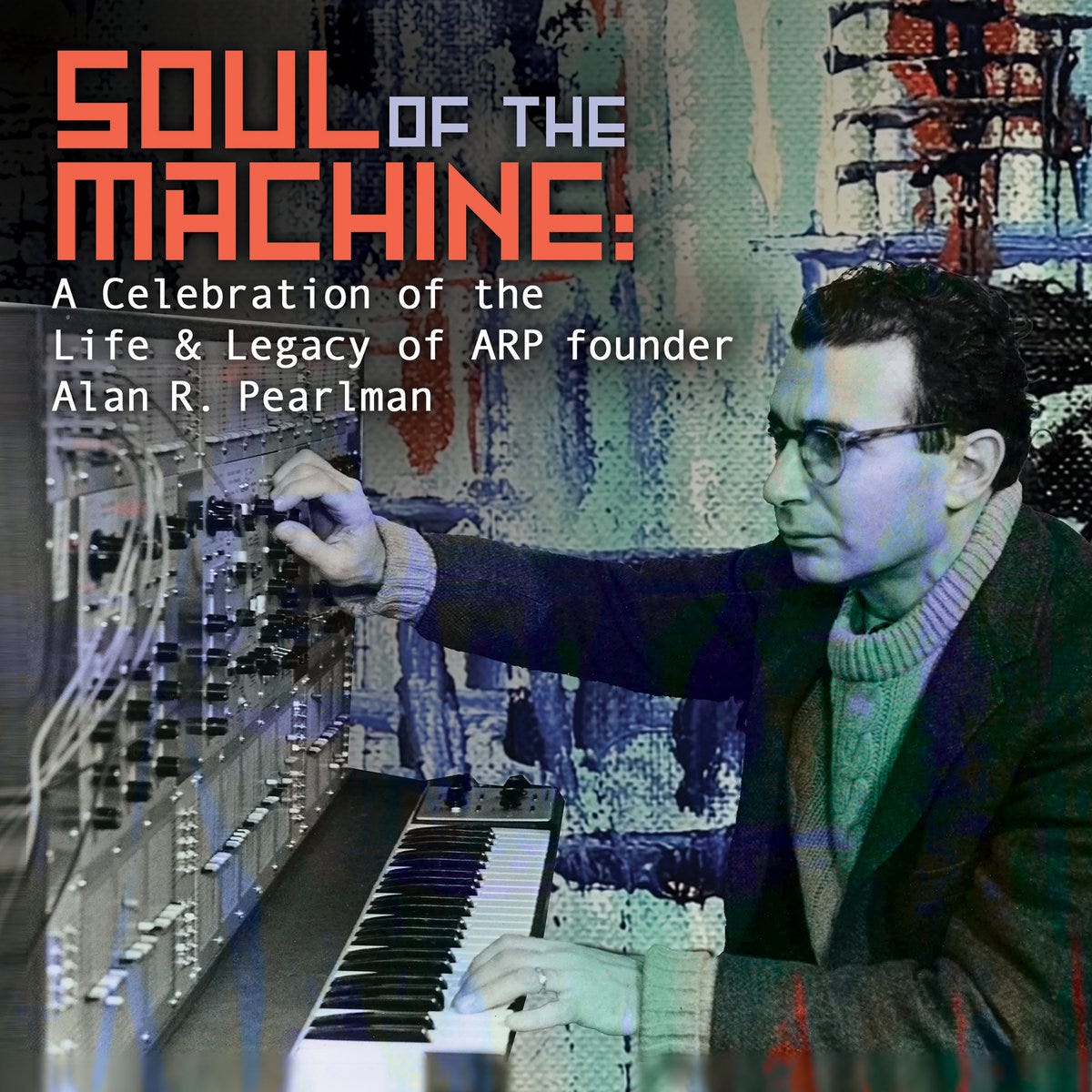
“Conclusions” by Lisa Bella Donna (from Soul of the Machine: A Celebration of the Life and Legacy of ARP Founder Alan R. Pearlman, 2025, Projekt Records), Lisa Bella Donna, synthesizers.
(Immediately laughs) You sly dog!
I thought, how in the world can I wrap up a blindfold test with Lisa Bella Donna? Well, it’s gotta be a Lisa Bella Donna track!
(laughs) That was a fun afternoon!
Is this a live performance, a single take?
Yes, it’s a live performance, recorded in 2018; it’s mixed through a Yamaha P.A. mixer to an Otari Mx5050, and I converted it to CD-R or whatever. There’s a video of the performance on YouTube. That was when I lived in a loft called Milo Arts in Columbus, Ohio, and I didn’t have the technology that I have now. I did a couple of live pieces at that loft; it was an arts community, an old school building with a series of studios, and depending on what was going on, you could just open your loft up, and people could come in and check out what you were doing.
Nearly all of it is improvised, just stream of consciousness, mostly. Just trying to create something beautiful. As always, I was very grateful to be included on the ARP Foundation compilation. This seemed like the perfect track for that.
So great!!! Beautiful!