
Lynn Wright: Blindfold Test
Welcome to a new "Blindfold Test" for Night and Day with Berlin-based guitarist and composer Lynn Wright.

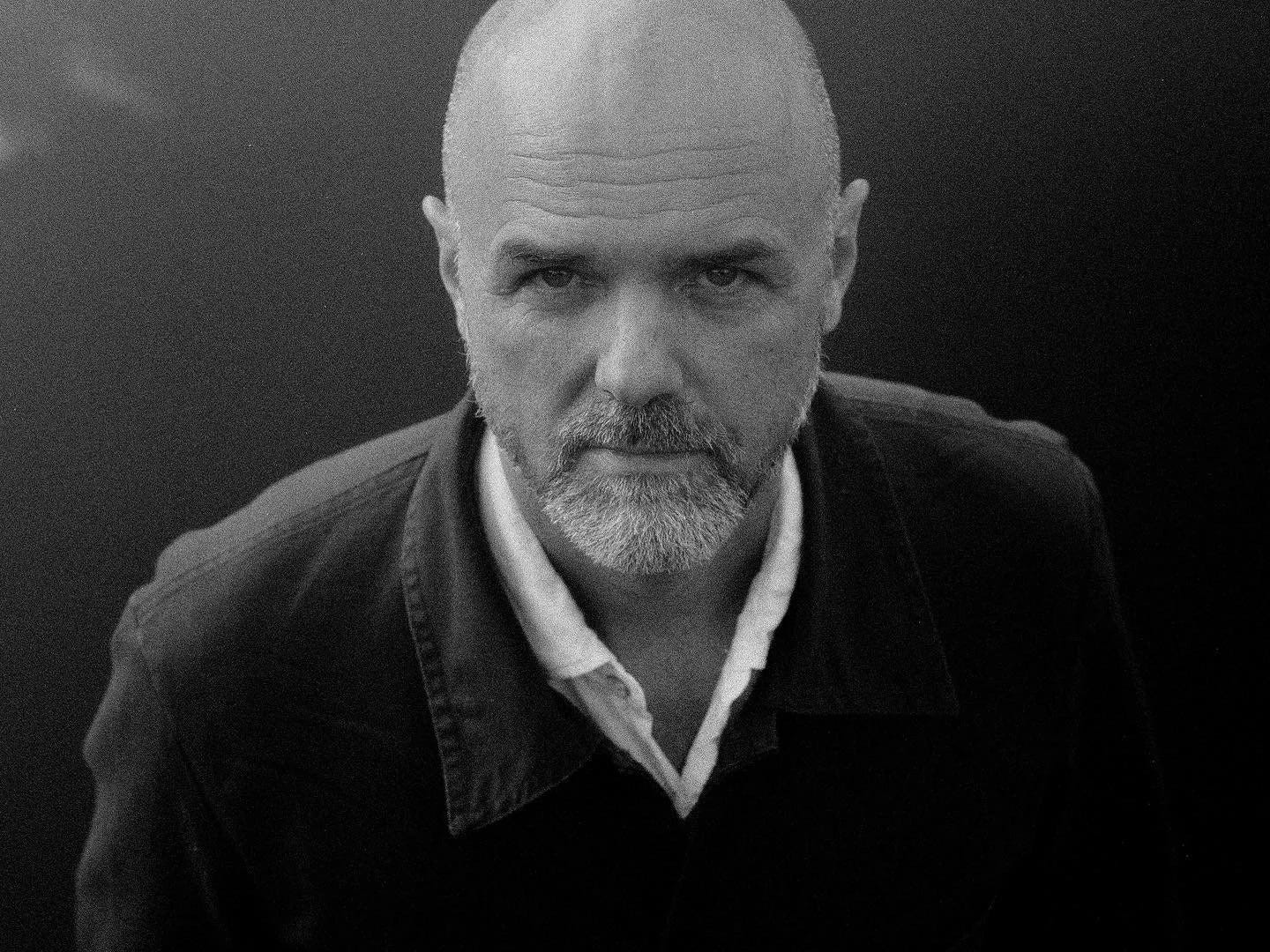
(Lynn Wright; photo by Tobias Humble.)
Welcome to a new “Blindfold Test” for Night and Day with Berlin-based guitarist and composer Lynn Wright.
Originated by Downbeat magazine, a “blindfold test” is a listening test that challenges the featured artist to identify and discuss the music and musicians performing on selected recordings. No information is given to the artist in advance of the test.
I met guitarist and composer Lynn Wright many years ago in New Orleans at a friend’s gig at the Howlin’ Wolf. We clicked immediately, and struck up a conversation about music, and his current gig as lead guitarist for singer, showman, and shaman James Hall, who had been recently signed to Geffen Records, and would release his major label debut in 1996. (James Hall’s performances with Lynn, bassist Grant Curry, and drummer Sterling Roig were explosive, and some of my favorite shows I experienced while living in the Crescent City.) Lynn and I bonded over our mutual enthusiasm for experimental rock, forward-thinking jazz, and then-burgeoning styles of electronic music, especially jungle (a.k.a. drum and bass) and trip-hop. When he wasn’t on the road touring, we remained in touch by mail (this was pre-Internet, kids) and traded mixtapes (cassettes) of music we each were discovering and wanted to share.
Eventually, Lynn and I each relocated to New York City. Lynn joined two Brooklyn-cased bands, Bee and Flower, led by bassist and singer Dana Schecter, and the bilingual indie-rock band Cordero. Meanwhile, we collaborated in the recording studio (Lynn plays guitar on my albums 200 Birds and Saints & Devils) and in live, completely improvised performances with multi-nstrumentalist Paul Watson (Sparklehorse, Othotonics, Michael Hurley), trumpeter Lewis “Flip” Barnes (William Parker Quartet, Burnt Sugar), and me on laptop doing my best to complement the sounds coming from such imaginative and skilled musicians. In 2010, I moved to Houston, and in 2022, Lynn relocated to Berlin. It’s a testament to Lynn’s talent and our friendship that we have remained close and continue to work on music together long-distance.
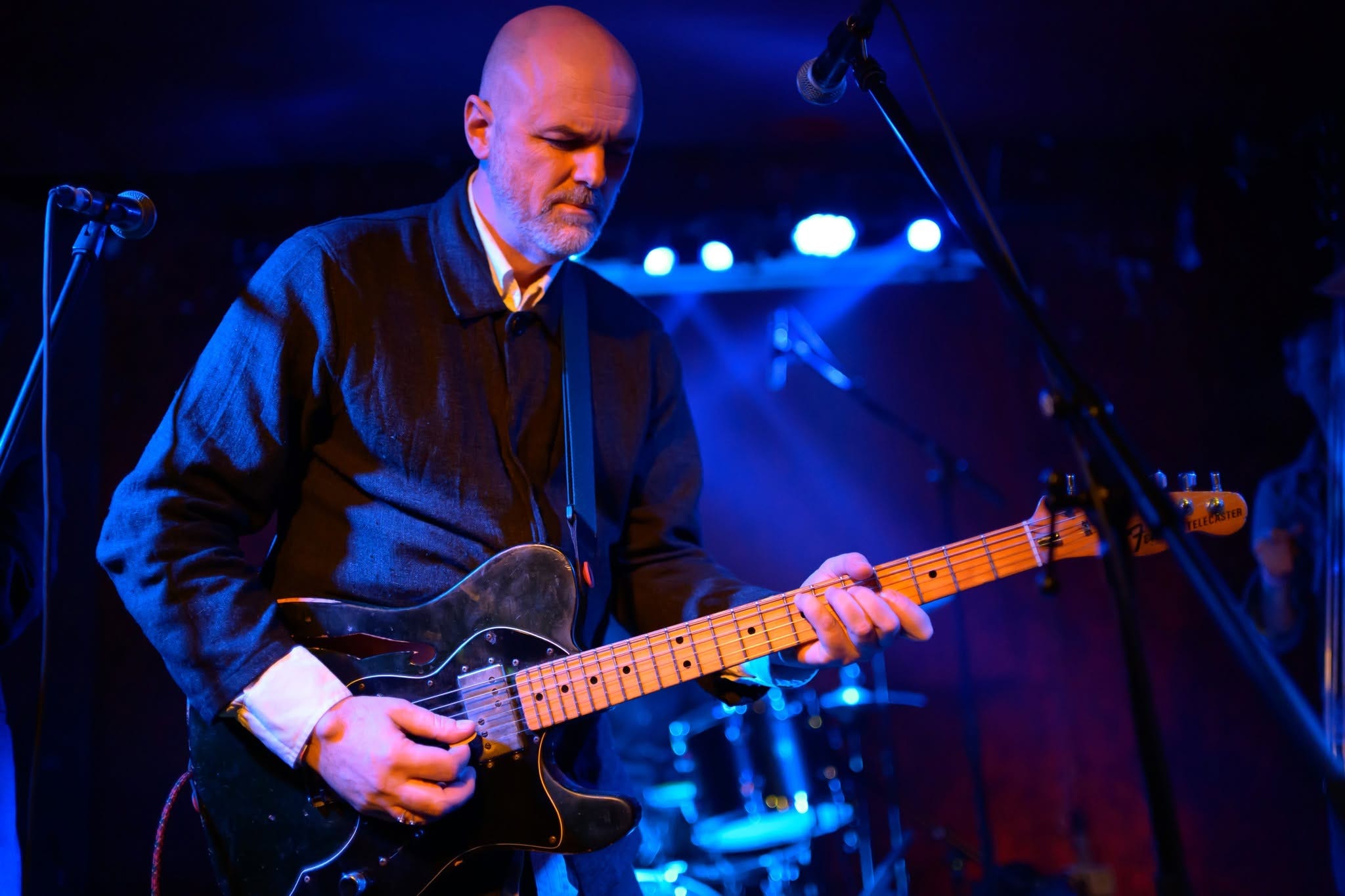
Lynn’s first solo album, Before The Sinking Plains, a collection of atmospheric and dramatic instrumentals featuring layered guitars, synths, and wordless vocals, will be released on September 4, 2026, on the Berlin-based label Miasmah Recordings. In the years leading up to the album, Lynn formed his song project And The Wiremen, featuring an array of stellar New York and Berlin-based musicians; scored music for the dance theater company Racoco Productions; and toured as guitarist and lap steel player for the majestic, doom-metal duo Insect Ark. He has also worked as a musician, music editor, and assistant composer with violinist Simon Goff on several acclaimed film and television projects.
In all the years’ve known Lynn, he has never stopped exploring and evolving as a musician. Guitar Player magazine described Lynn’s playing as a combination of “sizzling treble tones, an acidic, razor-edged attack, and a healthy eclecticism that embraces psychedelic R&B, blues-infused punk and neo-roots balladry.” That’s pretty accurate, although it leaves out the influence of Latin and pan-African musical styles on his playing. For this “blindfold test,” I rewound the tape a bit in order to unpack some of Lynn’s musical roots, consider the passage of time, and have a few laughs in the process.
(Scroll down for a Spotify playlist of the following tracks.)
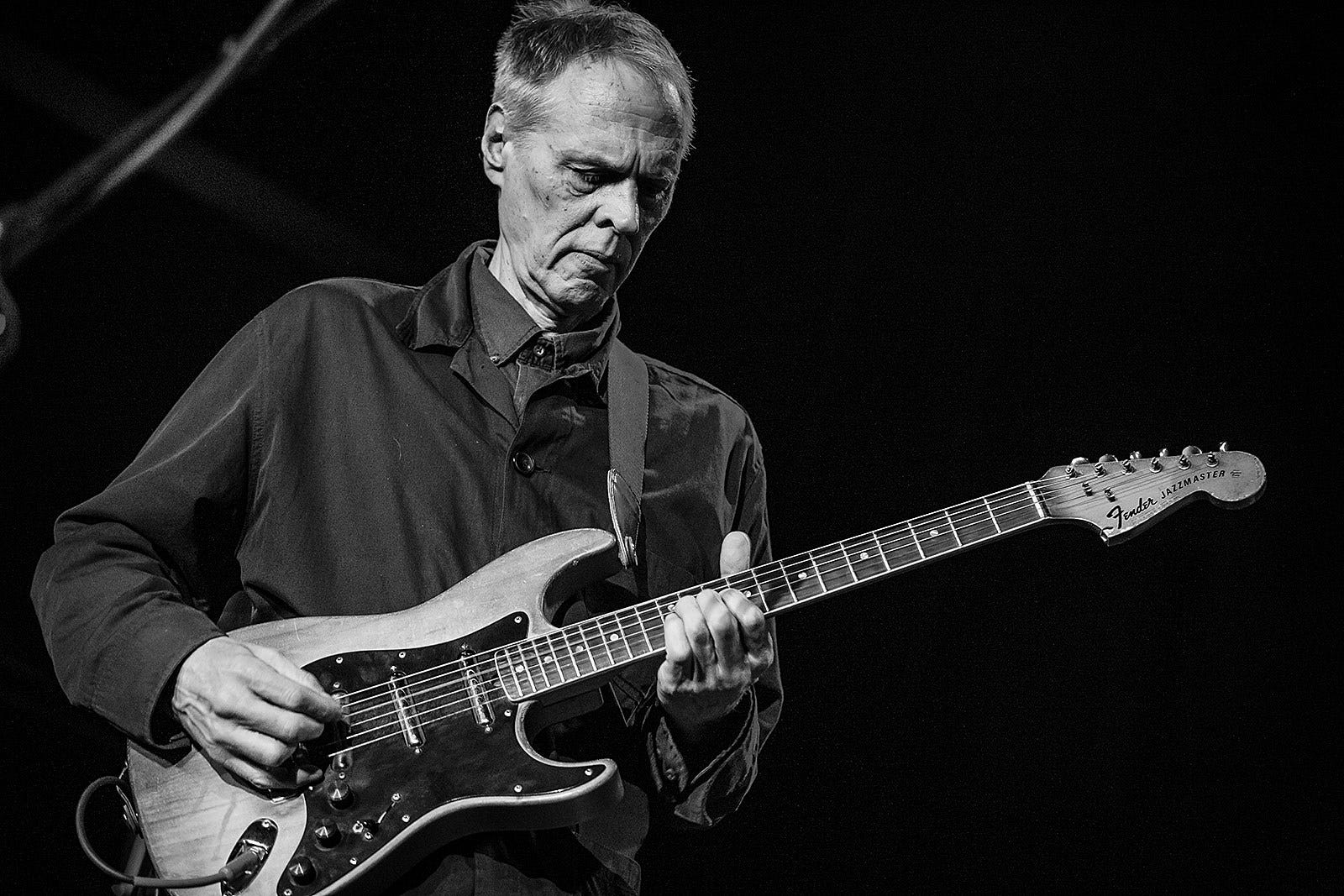
(Tom Verlaine at Bowery Ballroom; photo by P Squared.)
Tom Verlaine
“Those Harbor Lights” by Tom Verlaine (from Warm and Cool, 1992, Rykodisc), Tom Verlaine, guitars; Patrick A. Derivaz, bass; Billy Ficca, drums.
Lynn Wright: (Immediately) Is this the Tom Verlaine Warm and Cool album?
Chris Becker: Yes!
LW: Oh, man. When this album came out, I was so happy. When I was younger, and heard Tom Verlaine and Richard Lloyd playing in Television, it was like, here’s someone in the realm of what would become “punk,” but who was really playing the guitar, and in a fairly sophisticated way, as far as scales and notes go. But he was playing things I could figure out. I really wasn’t a huge fan of Verlaine’s solo albums, but then Warm and Cool came out, and it sounded to me like a really, really good soundtrack. That twang reminds me of 60s film soundtracks. This came out when I was living in New Orleans. I remember this and Tom Waits’ Bone Machine. You know me, I like albums that aren’t genre-specific.
CB: Tell me about your album Before the Sinking Plains, which comes out in September. Is it all instrumentals?
LW: It is, but you might think it’s not. Originally, I was going to make two extended pieces that were more ambient. I was using a lot of heavily treated guitars and minimal synthesizers, but I started layering vocals, without any lyrics. Since some of the tracks have very song-like structures, you might assume you are hearing words, but there are none.
When I was making this new record, I thought about making a synth record. But I said, no, I’m doing to stick to my voice. I’ll make the electronic sounds with the guitar, and when I think a synth is needed, I’ll use a synth. Really, just with the right hand, you can manipulate the sound of the guitar so much. And there are rhythmic things I can do with a guitar that I can’t do with a modular synth.
I made the record, and then I forgot about it for a couple of years. There’s a label here in Berlin: Miasmah Recordings and its sister label Sonic Pieces, which is more from the indie-classical world. Miasmah is a little harder to define. One day, I was engineering the composer Simon Goff’s record for Sonic Pieces, recording viola in an old water storage system, so we could use all of the tunnels as live reverbs and delays. The owner of Miasmah came by, and Simon told him, “You should hear Lynn’s record.” I sent it to them, and they thought it would be great for Miasmah. So, I rediscovered this record that I thought would never come out.
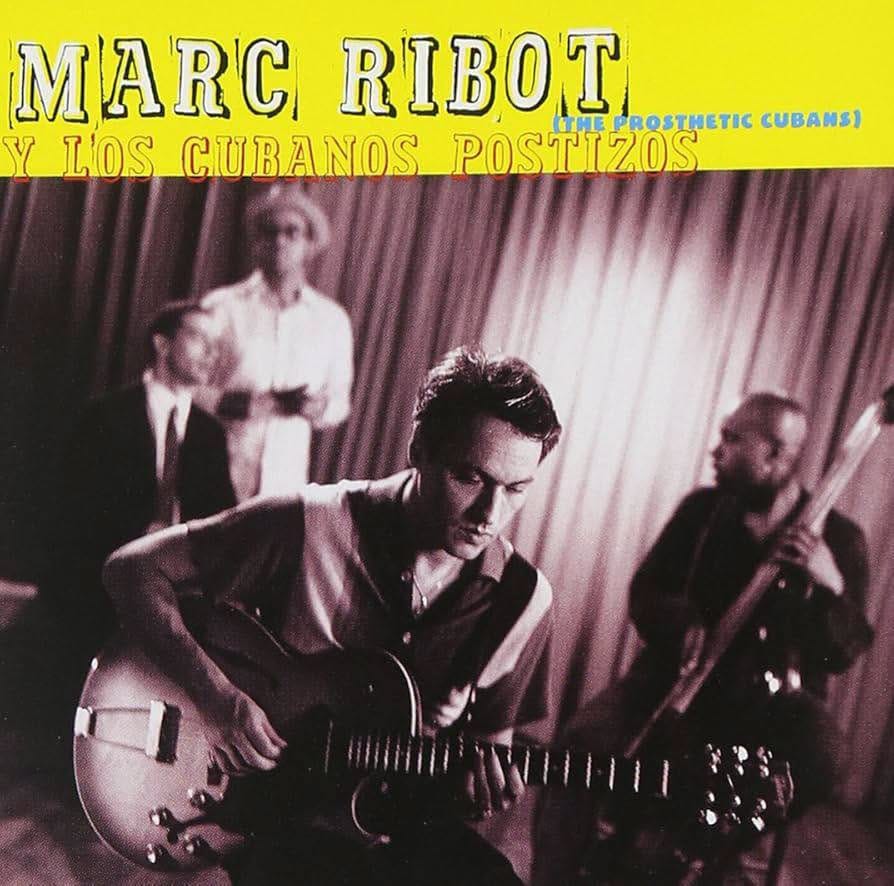
Marc Ribot Y Los Cubanos Postizos
“Las lomas de New Jersey” by Marc Ribot with Los Cubanos Postizos (from ¡Muy Divertido!, 2000, Atlantic), Marc Ribot, guitars, vocal; Anthony Coleman, keyboards; Brad Jones, bass, twelve string guitar; E.J. Rodriguez, congas, percussion, vocals; Roberto Rodriguez, drums, timbales, timpani, percussion.
LW: Is this Ribot?
CB: Yep! “The Hills of New Jersey” performed by Marc Ribot y Los Cubanos Postizos.
LW: Did you and I see this band live in New York?
CB: I never saw Los Cubanos Postizos. I did see Ribot’s band, the Rootless Cosmopolitans, in Columbus, Ohio, at a club called Stache’s. It was a small crowd, but just a fantastic show. At the time, I was too shy to go up afterwards and say, “Thanks for coming to Columbus!” Did you ever hear Los Cubanos Postizos live?
LW: Yes. It was at Irving Plaza. They opened for a band called Jonathan Fire*Eater, and it was so good. And I saw them again, I think at Tonic. I always related to Ribot’s guitar playing. His approach was something that made sense to me. He’s not an incredibly fast player, and neither am I. I’m not a shredder. Hearing Ribot, I thought, “I can walk through that door.” Whereas with other guitarists, I might admire their playing but couldn’t quite hear myself going into their world.
CB: When did the clave become a part of your musical vocabulary? If I had to guess, I’d say it was when you played with Ani Cordero’s band Cordero. But you were into Latin music before then, right?
LW: Playing with Ani Cordero is what really got me into Latin music. Originally, Ani was making straight-ahead post-punk, indie music. But then, being Puerto Rican, she started incorporating more and more Latin elements, and I just started diving into it. And weirdly, around that time, I ended up getting a couple of job writing cues for ESPN where they wanted Salsa tunes. I started working with musicians from Colombia and across South America, and I just started asking a lot of questions, figuring it out, and playing the music.
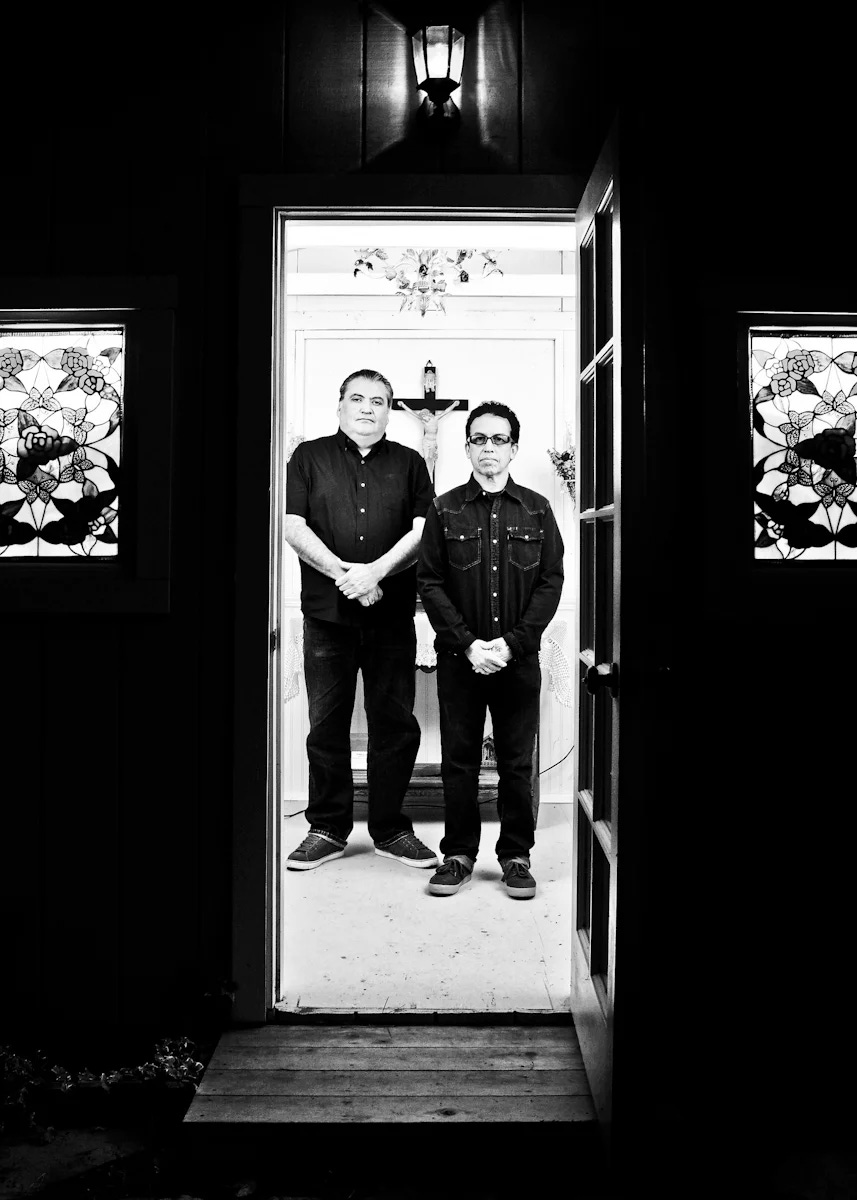
(David Hidalgo and Louie Pérez; photo by Anna Webber.)
Latin Playboys
“Ironsides” by Latin Playboys (from Dose, 1999, Atlantic), performed by David Hidalgo, Louie Perez, Mitchell Froom, and Tchad Blake.
LW: (As soon as the sound of the pickup truck starts up) Latin Playboys?
CB: You’re good!
LW: Latin Playboys only did one tour. They played Tramps, and I missed it! I don’t know where I was. A friend has a recording of them playing a club in L.A., and when they did this song, that sample of the truck was so massive! It really was like this Dada performance. You hear the truck, and then guitars creep in – and it takes a minute for the music to get as loud as the truck. And then Louie gets up and tells the story.
CB: I remember Cordero toured with Los Lobos.
LW: It was a strange thing, because Ani’s music fell between genres, especially with the second record. Sometimes we’d be out with people you would expect from the “indie” scene -- I don’t know what else to call it. But then, we played with Calexico and some Latin pop bands. We played for a week opening for Los Lobos around the Midwest and Northeast, and they were a mind-blowing band live. I mean, David Hildago has always amazed me. He comes from this band that everyone associates with this kind of straight-ahead sound, and then he made Houndog (with Mike Halby), which is one of the most lo-fi, strange blues records you’ve ever heard. He’s also played duets with Ribot.
Between the late 90s and the mid-aughts, there were a lot of people delving into more experimental takes on music from Mexico, South America, and the Caribbean. I was glad to be a part of that.
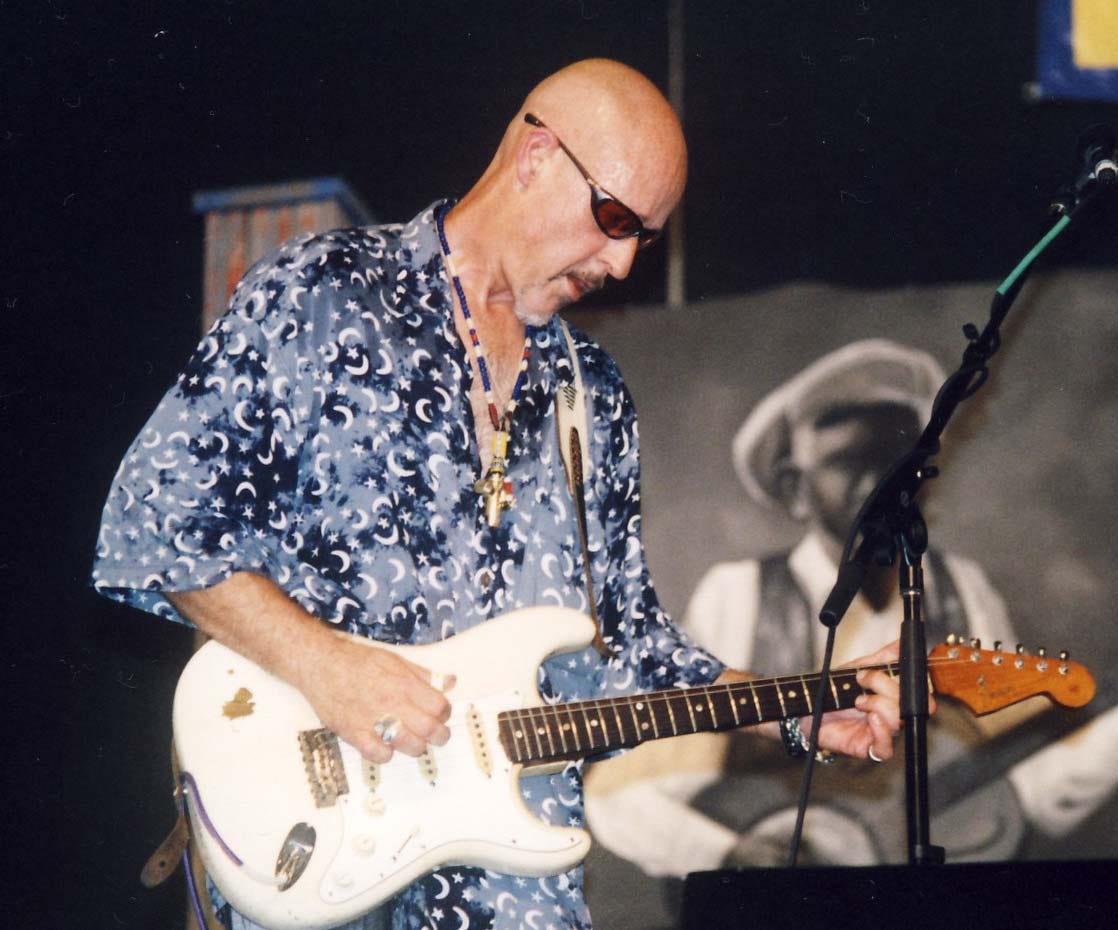
(John Mooney; photo by Masahiro Sumori.)
John Mooney
“Preachin’ Blues” by John Mooney (from Son & Moon, 2014, Fatback Records), John Mooney, vocal, national steel guitar.
LW: (listens for about 30 seconds) How old is this?
CB: It’s relatively new. Some singing is gonna come in . . .
LW: I don’t know!
CB: Here’s a hint: New Orleans!
LW: My mind is going blank . . .
CB: This is John Mooney.
LW: I should have known! When I first saw Mooney play in a club, he looked like he could have been the bouncer. He’s a big dude and an intense-looking guy. And then he started playing, and I thought, “Oh, yeah! This is what everyone’s talking about.”
It’s cool you’re playing this, because it’s music I was digging into when I was working with you. In recent years, working on film scores, it’s all been a lot more ambient and textural. My album has a lot of that on it. But I’ve been playing with another guitar player recently, and we’re going to try and come up with an album of things like this, things that are just a bit more raw.
CB: I still hear that rawness in your music, in your songs, the ambient tracks, and the soundtracks. I hear how you’ve progressed, and it’s all rooted in the guitar, your ears, and experience. You didn’t grow up in front of a screen, making music on the computer.
LW: No, I didn’t. As you know, I really learned to be a musician from playing 100, 200, or 250 shows a year. There were a number of years where I was just on the road. I like that live communication that happens between people. I love getting on a stage with people and not knowing what’s going to happen. It happens in the moment, and everyone in the room is a part of it.
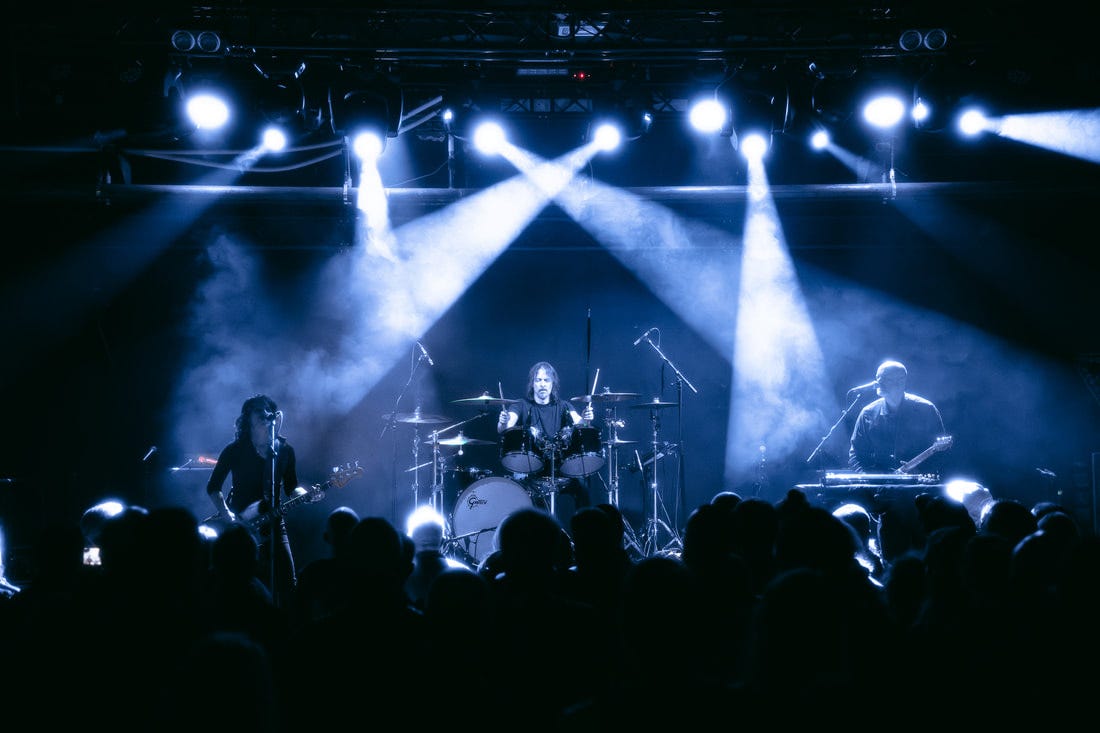
(Insect Ark; photo by e.lu.lu.)
Insect Ark
“The Frozen Lake” by Insect Ark (from Raw Blood Singing, 2024, CBS Records), Dana Schechter, bass, vocals, lap steel guitar, synthesizers, piano; Tim Wyskida, drums, percussion, backing vocals.
LW: (Immediately) Of course, I recognize this. It’s Dana Schecter and her project Insect Ark. We just did a show here in Berlin, and we have three shows coming up in June.
It’s always interesting playing with Dana, and with Insect Ark in particular. On the records, she plays everything, and the music is very specifically arranged. There are a few moments where you can improvise. But it’s just lap steel, with the heaviest strings you have ever seen, through some quite interesting effects, but mostly just played really loud through two amps. I also play guitar on some songs. The drummer in Insect Ark, Tim Wyskida, is incredible.
I’ve been playing with Dana on and off for a long time. It’s really nice to do something different and just show up and be in a world I’ve been in, but haven’t been in consistently. People may call it “metal,” but I wouldn’t call what Insect Ark does “metal.” I don’t even know what these genres mean. I was looking up sub-genres of metal when I first started playing with Insect Ark, and was like, you gotta be kidding me . . .
CB: There are billions of them.
LW: It’s like electronic music. Or sub-genres of jazz.
CB: When playing live with Insect Ark, do you take moments to stretch out and go into Sonic Youth or Swans territory with improvising and noise?
LW: When we first started playing, not as much. There are synths on the album, and the thing about touring these days, taking somebody out to play a few synth parts isn’t feasible, financially. So, Tim has a Roland pad and triggers the synths. Originally, on the first gig, we were being rigid, and everyone was listening to in-ear monitors and a click. One of our friends, I think it was Simon, asked, “Why are you doing that? You can all play.” So slowly we moved away from the click. We do stretch out at points. There’s a segue we’re doing that’s a few minutes long, where there are a couple of cues, but otherwise, completely improvised.
I went to see Dana on the last tour with Swans. Playing that music is like training for a marathon every night.
CB: When I saw Swans here in Houston at White Oak Music Hall, I was wearing earplugs and could feel the music hitting my chest.
LW: I saw the last show with their current lineup here in Berlin, and it was incredible. It was loud, but it was also the most dynamic show I’d ever seen them do. They did everything they could do really well. I lost track of time, and at the end, I realized they’d played for three hours.
CB: I had the same experience.
LW: Life is in snippets now, and it was such a nice experience to be with a room full of people who were not only willing to stay for three hours but wanted to be there, hearing music
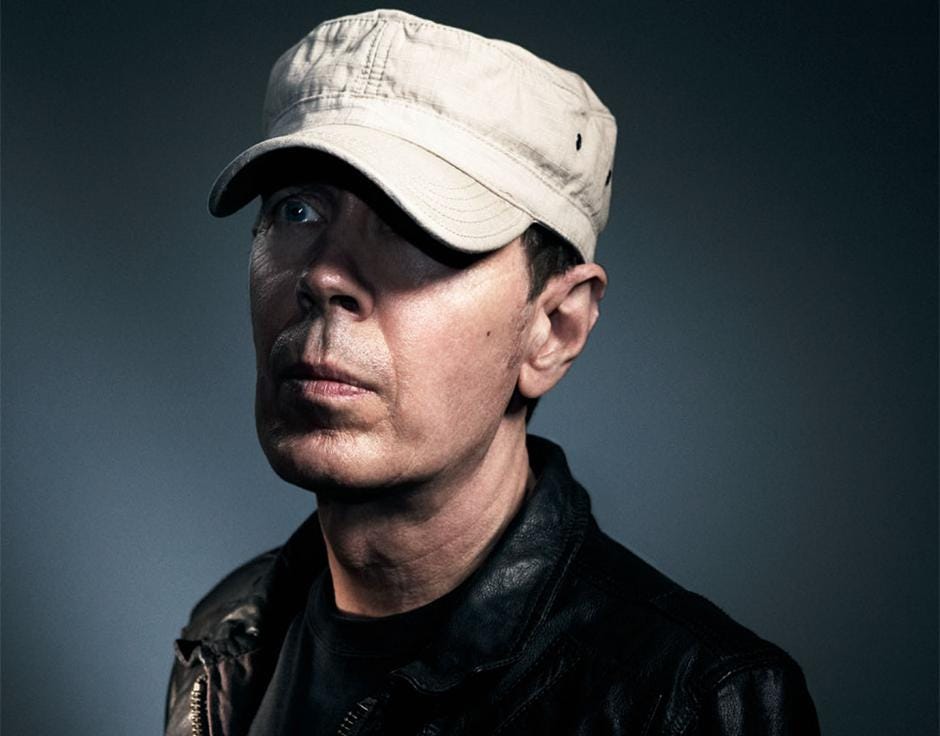
(Scott Walker; photo by Jake Walters.)
Scott Walker
“Finale” by Scott Walker (from The Childhood of a Leader, 2016, 4AD).
LW: I think I’ve heard this, but I can’t remember where.
CB: This is Scott Walker.
LW: I was going to say that, but then I thought, “Well, I don’t want to stick my head out …” It definitely sounds like the Scott Walker of the 90s and 2000s.
CB: It’s from the soundtrack to The Childhood of a Leader. It’s a dark film, and Walker’s soundtrack is just brutal. Since relocating to Berlin, you’ve done a fair amount of film and television music, correct?
LW: Yes. A lot of times on film and television scores, I work as an editor or a second or “sub-composer.” A composer will write the music and then ask me, “Can you take the theme and edit elements of it into these two other scenes?” Since I work with Simon, who is a string player, it’s been a lot more about orchestral writing.
I relate to this sort of contrast and how Walker is making music here. Even if I don’t make music that sounds like this, it reminds me of how I work with a lot of things. There’s going to be something generated from a non-musical sound or extended techniques, but I’m going to somehow lean toward tradition.
As a painter I have always taken great pleasure in listening to serious musians talk about what they do!
I've often felt painters have lost that beautiful ability to talk to each other about the work , not about fucking rent! Or money just the work, it was so great to read this Chris the real egg scramblers know who they are.🥊
Lynn!!!