
Patrick Moore: Blindfold Test
Welcome to a new "Blindfold Test" for Night and Day with cellist Patrick Moore.

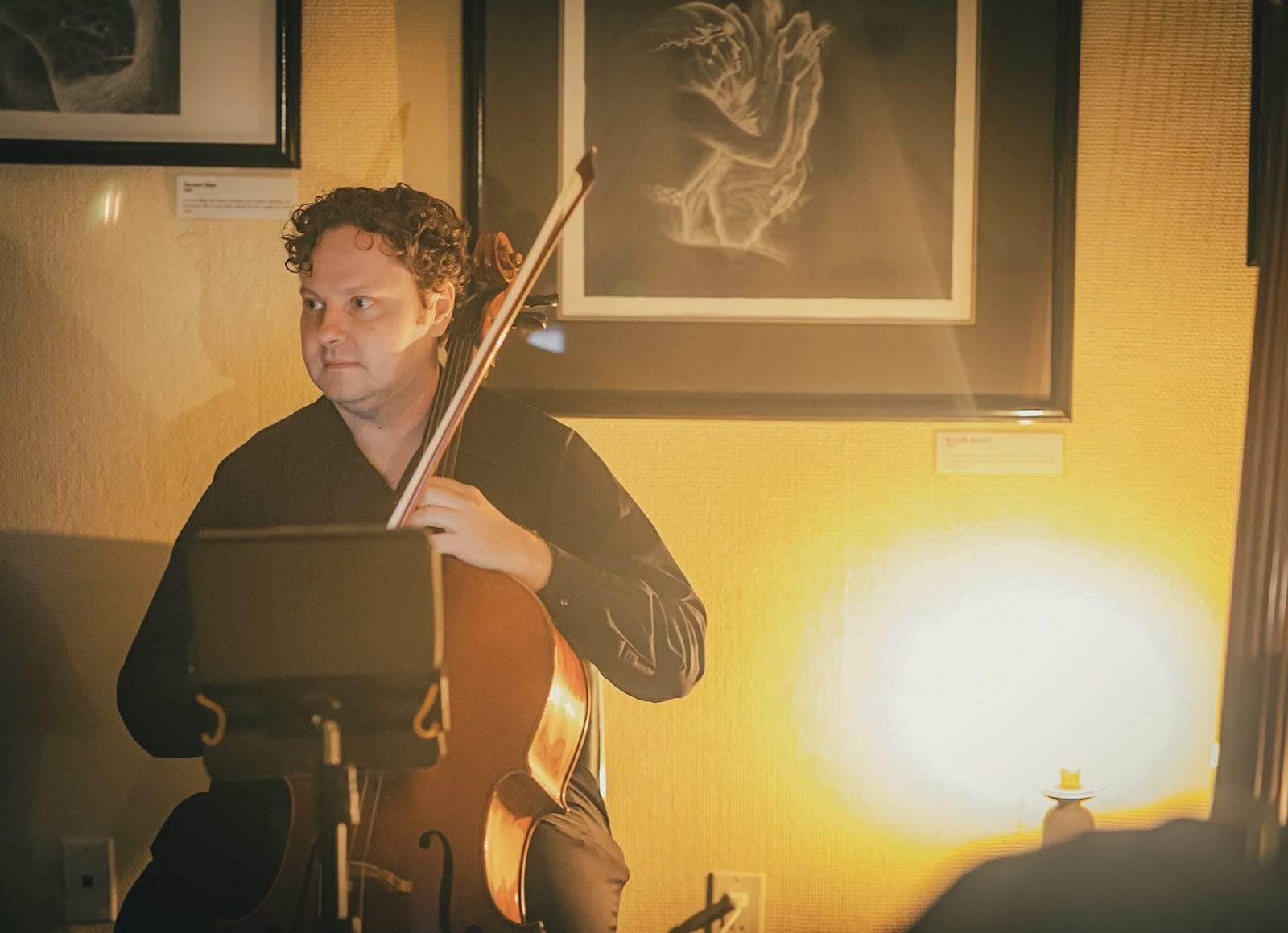
(Patrick Moore; photo by Stephanie and Andrew Lienhard.)
Welcome to a new “Blindfold Test” for Night and Day with Houston cellist Patrick Moore.
Originated by Downbeat magazine, a “blindfold test” is a listening test that challenges the featured artist to identify and discuss the music and musicians performing on selected recordings. No information is given to the artist in advance of the test.
Even for a man who loves to keep busy, this is an especially busy time for cellist, educator, and founder of Houston’s Axiom Quartet, Patrick Moore. Committed to raising the cultural perception of the city, Axiom is dedicating its 2025–2026 season to performing, in order, the complete cycle of Soviet composer Dmitri Shostakovich’s 15 string quartets. It is the first-ever live presentation of the complete cycle in Houston, with the first concert taking place on October 5, 2025, at Sangerhalle in the Heights. (You can read more about in an article I wrote for Houstonia.) The quartet’s next album, Open Source, featuring music by Houston composer Karl Blench (who happens to be Moore’s husband), will be released on Parma/Naxos in January 2026. And on October 15, Parma Recordings will release Four Generations, a CD and digital release of cello and piano compositions by Darius Milhaud, William Bolcom, Arthur Gottschalk, and Blench, performed with great skill and tremendous feeling by Moore and pianist Andrew Staupe. Moore also teaches cello, both privately, and as part of the faculty at the University of St. Thomas, and performs with several classical music ensembles and dance companies across Houston, including Frame Dance Company, ODC Dance, and the Creative Minds Collaborative. Moore has also performed a lot of my music, including my score for Assemblage, a multidisciplinary performance created in collaboration with New York-based choreographer Rachel Cohen, which ran for two performances in May 2025 at the Jung Center of Houston.
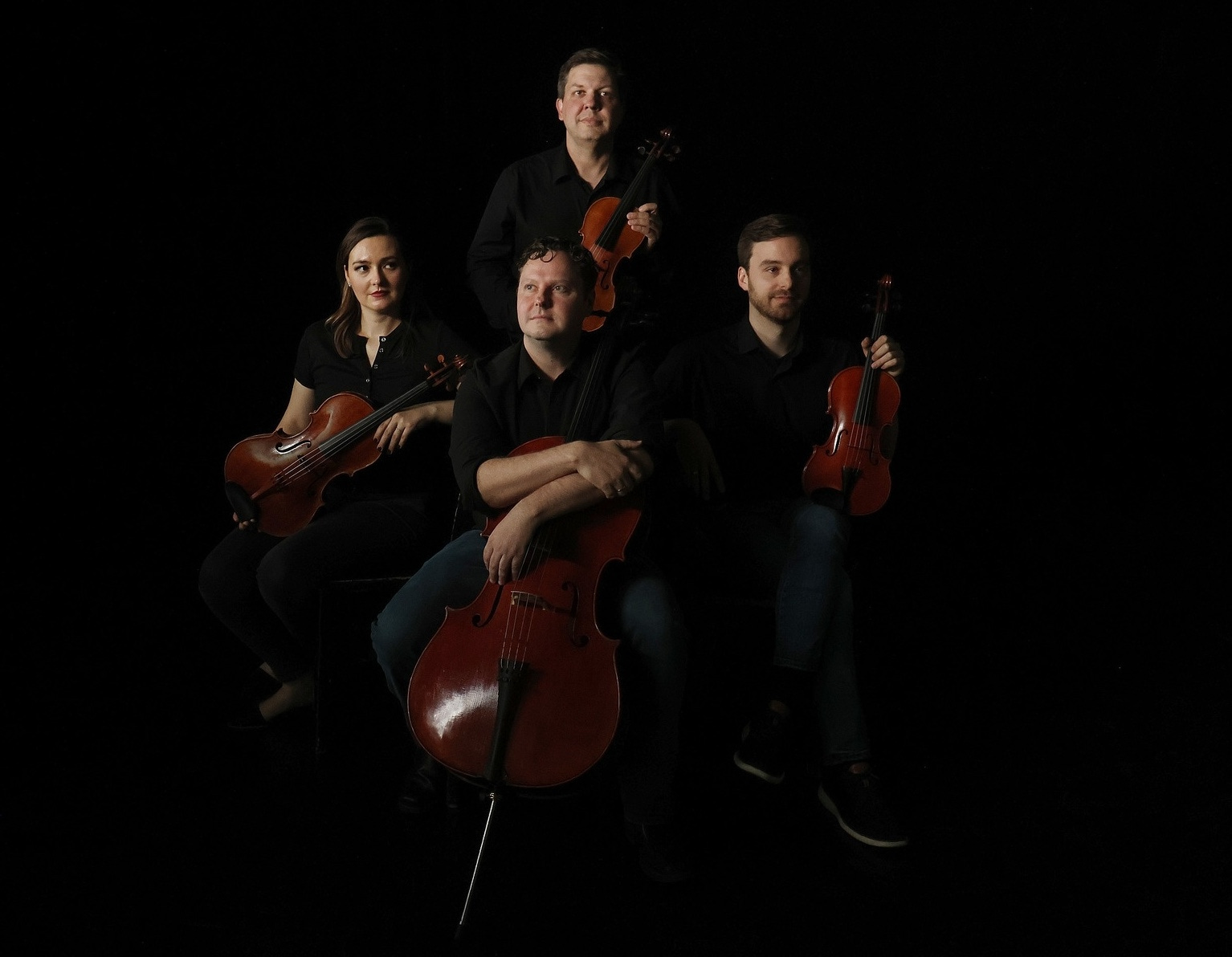
(Axiom Quartet; clockwise from top: Timothy Peters, Matt Lammers, Patrick Moore, Katie Carrington; photo by Pin Lim.)
In this blindfold test, Patrick and I cover a lot of ground, and I realize now there is an elegiac quality to at least three of the selected recordings, which wasn’t intentional. The music opened up several fascinating topics for our discussion, which returned again and again to the transformative and healing power of music.
(Scroll down for a Spotify playlist of the following tracks.)
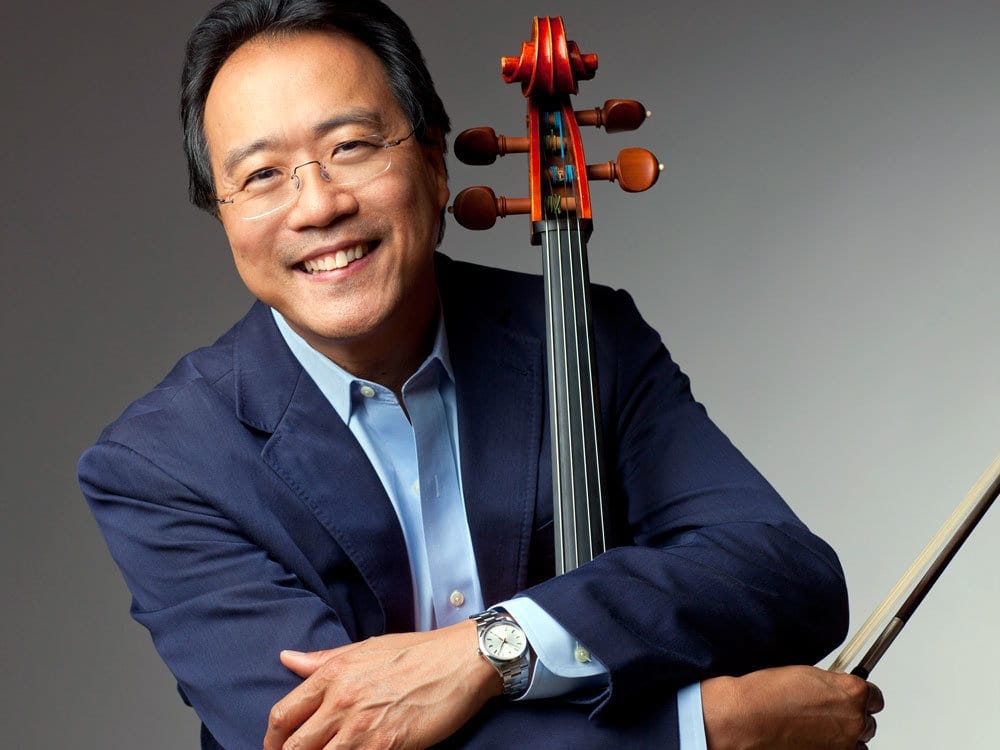
(Yo Yo Ma)
Yo-Yo Ma
“Prelude from Cello Suite No. 1 in G Major, BWV 1007” by Johann Sebastian Bach (from J.S. Bach: 6 Suites for Unaccompanied Cello, 1983, Sony) Yo-Yo Ma, cello.
(Immediately) Of course! The Bach G Major Prelude for cello solo. The real test is, can I identify the cellist? My immediate impression, basically, from bar one, is that it’s Yo-Yo Ma. That’s who it feels like.
That’s correct! When you say it “feels” like Yo-Yo Ma, can you unpack that for me?
His interpretations are always the cleanest and most intellectual of the cellists that I hear. The amount of personality and interpretive things that sometimes cellists put into Bach doesn’t really happen with Yo-Yo Ma as much.
How much interpretive leeway do you have as a cellist with Bach’s solo cello suites? Is each piece like a blank canvas, where you can do anything you want, or are there certain parameters you need to stick with?
The history of these pieces is that there is no autographed, handwriting of Bach that exists to this day. Four sources have handwritten copies (of the suites), but we don’t have Bach’s. So, we’re always trying to decide which bowings were right and which were wrong. We do vertical analysis to see where they agree or don’t agree. So, because of these, we have like a hundred “definitive” editions of the Bach cello suites. I always like to tell people if I play a wrong note in a performance of Bach, “Oh, this is just a new edition you haven’t seen yet!”
During this time period, it was very common for someone to take a piece of music and make it their own. So, changing the slurs and even the notes would have been totally fine. Bach was a big improviser, and I sincerely doubt he would have played all of the notes on the page without adding a couple of extra flourishes.
I’ve always felt that the Bach cello suites stand apart from the rest of Bach’s writing. In a way, it feels like Bach is teaching himself how to play the cello through these suites. They gradually increase in difficulty as you go through them.
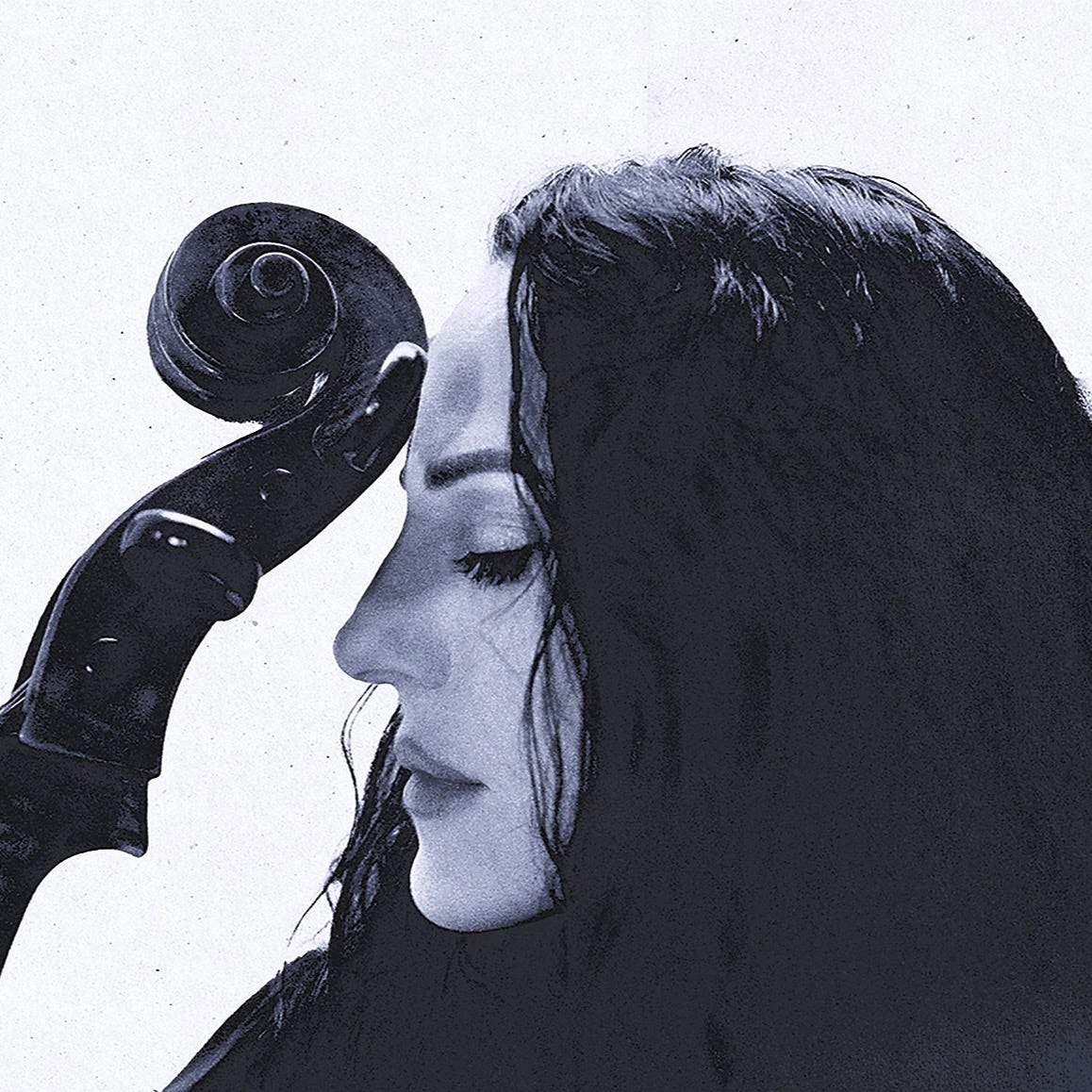
(Maya Beiser; photo by Lucia Bell-Epstein.)
Maya Beiser
“Music in Similar Motion” (from Maya Beiser x Philip Glass, 2021, Naxos) Maya Beiser, cellos, arrangement.
I don’t know who this is, but the piece is definitely inspired by Steve Reich. But it’s not Reich, because it’s not Cello Counterpoint. It’s a cool piece! Really excellent articulation. Very clear and clean.
The cellist is Maya Beiser. She’s playing Philip Glass’s Music in Similar Motion.
This is a Glass piece? What’s the instrumentation?
There are three lines of music that can be performed by any group of instruments. What Maya did here is build an arrangement of the piece with overdubs, including loops she created, I think, in real time, and then played over.
Back in the 1980s, when I was studying composition at a conservatory in Columbus, Ohio, a lot of the professors and musicians I knew absolutely hated minimalism, or just refused to take it seriously. Did you encounter that level of hostility when you were in college?
I encountered minimalism my senior year in high school when I was at Interlochen Arts Academy. A friend, who I’m still friends with to this day, said, “Patrick, I want you to play this CD and just be with the sound for an hour. Let your mind do whatever it does.” And that was Steve Reich’s Music for 18 Musicians. I loved that piece instantaneously.
I always hung out with the composers and the jazzers when I was an undergrad and didn’t encounter any hostility toward minimalism. I only encountered severe hostility when I started performing the music of Philip Glass, which is the most polarizing music I’ve ever encountered. Because either you love it, or you really hate it.
Axiom plays Philip Glass’s music so beautifully. How is playing a Philip Glass quartet different than playing Beethoven?
In any piece you perform, there’s always a severe likelihood of making a mistake in a performance. No matter how much you prepare, there is literally just a stack of odds that are against you. The strongest likelihood with a Glass piece is that somebody is going to mess up a repeat, because the repeats happen so often and are sometimes a little confusing. We call it a “roadmap,” and if I were giving street directions, it would be like, “Take a right, another right, then a left, then a right, then a right, then a left, then a right, then a right, then a left . . .” That’s what’s written in the music, and it’s so easy to get lost!
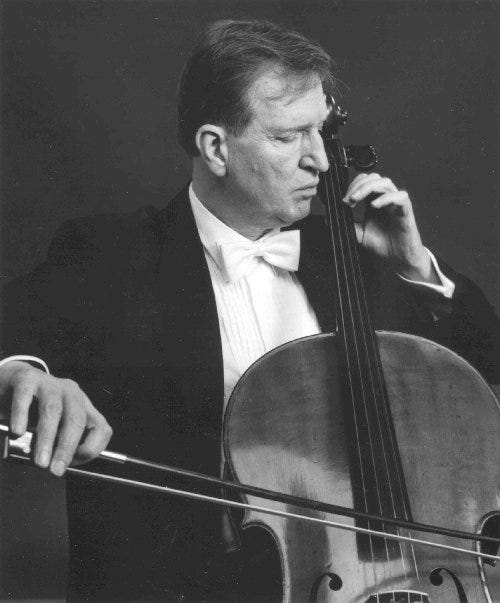
(Erling Blöndal Bengtsson; photo by David Kennedy.)
Darius Milhaud
“Élégie: Modéré, Op. 251” by Darius Milhaud (from Diverse: A Gramophone Tribute to - Complete HMV Solo Recordings 1950-1961, 2014, Danacord) Erling Blöndal Bengtsson, cello; Herman D. Koppel , piano.)
(Sighing) Oh, yeah . . . the Milhaud Élégie. This must be a historic recording. I sought out every single recording I could possibly find when I was studying this piece. (Editor’s note: Moore performs this piece on his forthcoming CD, Four Generations.) This is the beautiful, “old world” style of playing, but part of the sound is the recording quality.
The cellist is Erling Blöndal Bengtsson.
He is one of our great cellists. This is a recording I listened to. Erling influenced me quite a bit when I was growing up, because he often had some of the only recordings of the mega-challenging literature for the cello. He’s an astounding technician on the cello, and an awesome musician, with an incredible and beautiful sound.
What are some challenges you encountered as a cellist while studying and then recording this piece?
Oftentimes, when you’re looking over a piece of music to determine how you’re going to phrase it, like, I’m going to make this note louder, and this note is the one I’m ultimately going for, it’s usually clear and cut from the what the composer has written. But with Élégie, there are so many different options, and it was difficult to come up with what I thought was the best way to phrase it.
The other thing is that everything is in the stratosphere of the cello. In the old instruction books on orchestration and instrument ranges, the highest note on a cello is a C5, which is not terribly high. But the older I get, the more I’m like, there might be some truth to that. (laughs) After you get to the end of the fingerboard, that’s where the problems start to happen, and you might not land on a high note perfectly in tune. That was the real challenge for me with this piece. Just working on true consistency with color and intonation.
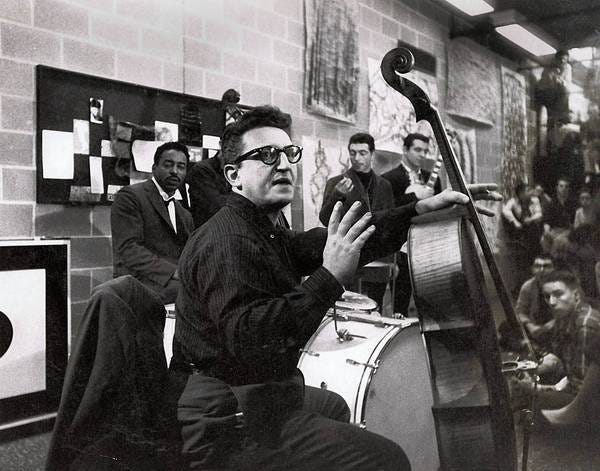
(Fred Katz, cello, with Chico Hamilton, drums)
Fred Katz
"Montuna” (from Classical Katz, Cherry Red, 2007; recorded October 21, 1956 - November, 1956) Fred Katz, cello; Chico Hamilton, drums; John Pisano, guitar; Carson Smith, bass; Paul Horn, flute.)
This is cool music. I don’t know the composer or the cellist. (After about a minute into the track) That’s a Shostakovich quote, from the second cello concerto. And that’s a quote from the Kodály solo cello sonata!
Fred Katz is the cellist. The band is the Chico Hamilton Quintet. Hamilton is the drummer. I’m not sure who’s playing the claves!
Is this completely improvised?
I’m not sure. I don’t think the groove is improvised. I think they agreed on that in advance.
I hear the dialogue. It’s pretty cool! How recent is this?
It was recorded in 1956.
That’s early! I am hearing some melodic repetition here (sings along with Fred’s cello). That’s really out there! I’m so impressed.
When I studied at the Chicago College of Performing Arts (CCPA) at Roosevelt University, which I would say is still one of the major epicenters of jazz in this country, I was on a floor with a bunch of jazz saxophonists, and I pretty much learned how to improvise from those guys. They were so open and free, and I could just do anything I wanted to. Sometimes, I tell people I was raised by a flock of wild saxophonists. At the same time, while I was there, I played a bunch of new music. Anytime anybody would write anything, I would always play it. I tried continuing that tradition when I went to Rice University, and I got to know all of the composers, including, thankfully, my husband, Karl Blench.
As a player, you have a large vocabulary of “out” sounds for the cello. That’s been my experience working with you. Does that come from your experience with jazz, or 20th and 21st century composition, or your imagination?
I love art. I love modern art and all art theory. At a certain point, I started to really grasp the concept of post-modern artwork. Now I teach this to help console students who are upset about being perfectionists, trying to get first chair, and being the best at everything they do. I always liken it to the analogy of a weed being an unwanted flower. A rose, which is the most beautiful flower we can think of, in a field of chrysanthemums, would be considered a weed. With sound and art, you can literally put a piece of shit on a pedestal and call it a work of art. We elevate anything that’s put on that pedestal, or hung on a wall — you can duct tape a banana to a wall — and call it art. At a certain point, I really did come to understand that instead of being upset about this, if you twist your mindset, you realize that art and beauty are everywhere, depending on how you change your perspective.
So, with music, I always thought modern music sounded cooler. I was reading books about twelve-tone music in the ninth grade and thought it was just the hippest thing ever. The idea of sound and organized sound being what we should call music has always resonated with me. I think for an audience member who is used to listening to Beyoncé or Mozart, they don’t really perceive organized sound. Even high-level visual artists and dancers just have a hard time grasping modern music, and that any sound can be music if it’s organized in a certain way.
We have no problem looking at a Jackson Pollock painting, but when you find its parallel in music, like the Fred Katz track, listeners might react with “What the hell is that?” This was done in 1956! We should be able to listen to it!
Context is important. Everybody has zero issues with watching a horror movie with a scratching sound in the background, because that scratching sound gives context to a creepy thing that’s about to happen. It’s kind of my life’s mission to help people wrap their heads around modern music.
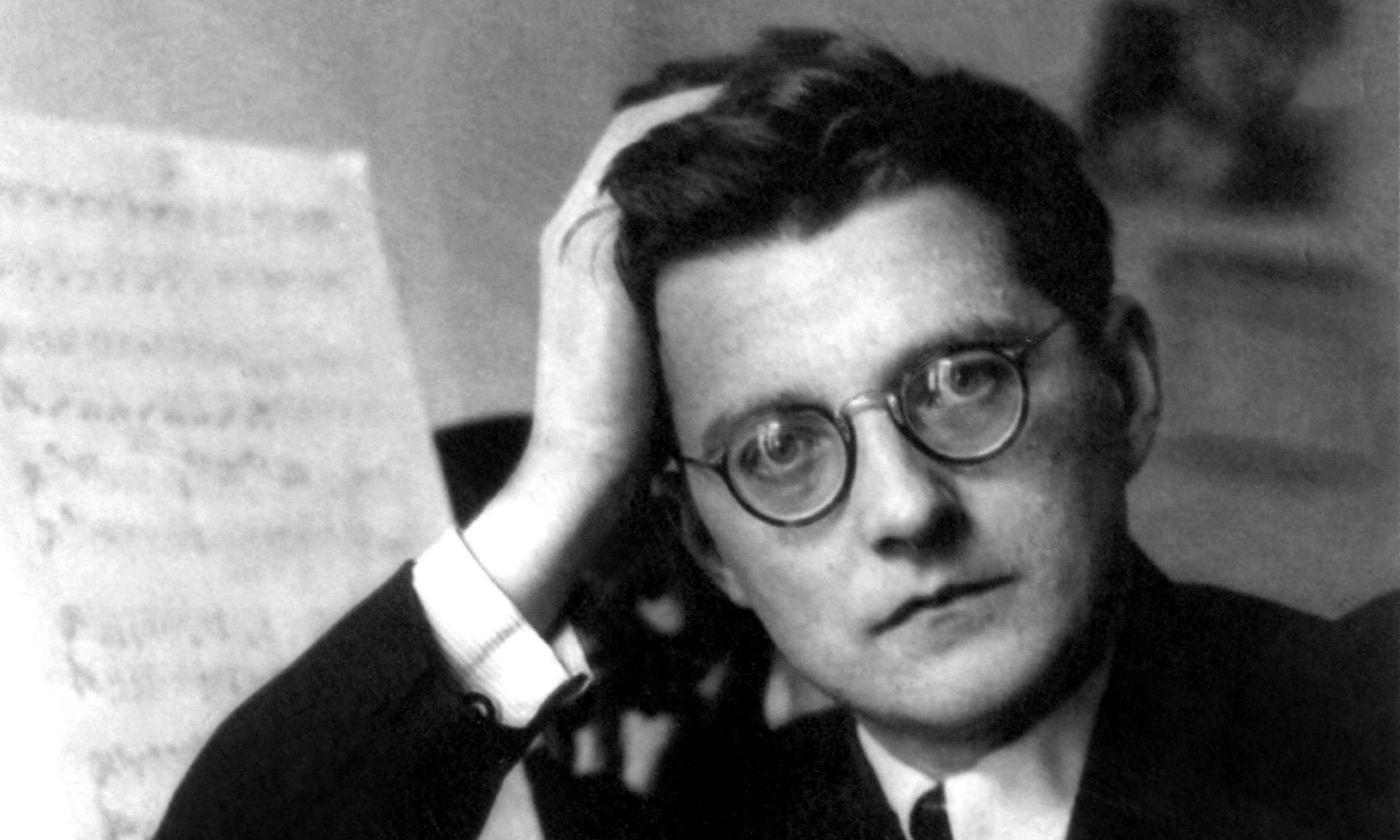
(Dmitri Shostakovich in the 1940s; Photo by Everett Collection Inc/Alamy)
Dmitri Shostakovich
“String Quartet No. 15 in E Flat Minor, Opus 144: I. Elegy” (from Shostakovich: The String Quartets (complete), Deutsche Grammophon, 2000.) Performed by Emerson String Quartet.
I don’t know this, and it’s beautiful — wait! Is this Shostakovich?
It’s his String Quartet No. 15.
I haven’t gotten there yet! I’ve been focusing on the first nine quartets until November. This is Karl’s favorite quartet. I have listened to this! This is probably the Emerson Quartet.
It is.
This is the darkest of the quartets.
In a live performance, does the music go places you and the other members in Axiom didn’t expect?
That does totally happen when you’re performing a piece of music. You really never know where the music is going to take you. Sometimes, global events or events next door happen, and they can completely change the feeling of a concert. That was partly the intention with programming Shostakovich this season, knowing this heavier music might have special context in the future.
There are a lot of different opinions regarding how to interpret Shostakovich’s quartets. While someone might agree that the fifteenth is dark, someone else might hear the music conveying resilience.
It’s Shostakovich’s String Quartet No. 8 in C Minor that I find the most frustrating -- what people attribute to that. They feel like the three knocks represent the Gestapo at the door. I don’t know if Shostakovich ever said that that is what that was. This is something music teachers tell students to get the evocation of the music correct, but it’s not necessarily what Shostakovich intended.
There’s that idea of programmatic verses absolute music, where there’s a clear program that the composer had as a story, like Berlioz’s Symphonie fantastique. Absolute music is where it’s literally just notes. Just beautiful music that has no story attributed to it. The second you look at a cloud, and say it’s a bunny, it’s hard for the second viewer to unsee that image and say what they see themselves. But with absolute music, you can interpret it the way you want to.
The fifteenth string quartet was written toward the end of Shostakovich’s life. So, he was certainly thinking about death. But I’ve played his Symphony No. 15, and the end of it is magical. It ends with these repetitive percussive sounds, and one conductor said, “These are the sounds of the machines he was on while he was dying.” No, it’s a quote from his Symphony No. 4, which was censored, and he had to bury it in his desk! And that’s how he chooses to end his fifteenth symphony, by saying, “This is who I am as an artist.”
But who knows what he actually intended?
Five of the six movements of String Quartet No. 15 are marked “adagio” or “slowly,” and the fifth movement, a funeral march, is marked “adagio molto” or “very slowly. What are some challenges that come with playing such slow tempos?
When I was younger, I sought to prove myself to the world by taking on the most challenging music imaginable, just to see if I could do it. As I’ve matured, the only thing I want to do is play slow, beautiful music. Because sculpting sound is what I’m interested in as a musician.
Giacinto Scelsi talked about the three-dimensionality of sound. You have the verticality of the pitch, going higher and lower, and the temporal aspect of rhythm. But then, you have the three-dimensionality of the thickness of the tone and the coloration of the sound you are creating. With slow music, you have so much more expressive potential to realize. This is a challenge for an immature musician who doesn’t know how to listen three-dimensionally. Once you learn how to do that and sculpt sound in that way, slow music is just infinitely interesting. For me, a beautiful sound that’s going on for a while is literally like looking at a lake at sunset, when the entire lake seems to be shimmering with light. You can just stare at it, and it’s always evolving and changing.
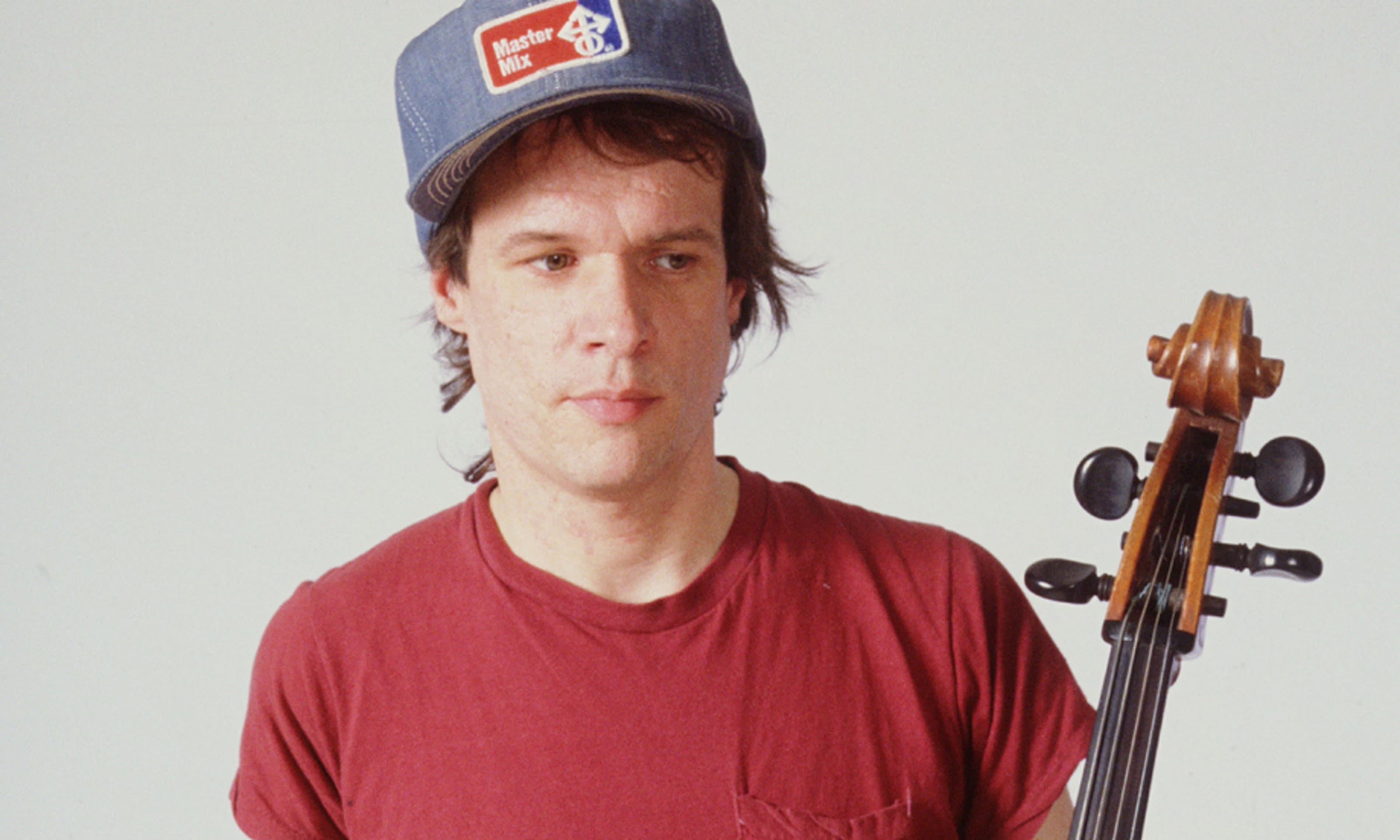
(Arthur Russell; photo by Janette Beckman.)
Arthur Russell
“Soon-To-Be-Innocent Fun/Let’s See” (from World of Echo, Upside, 1986) Arthur Russell, cello, vocals, hand percussion, echo.
I love this. I love this piece; this is gorgeous. I don’t know it, but I love it! It has a kind of Nick Drake feeling to it. The crooning, the slow singing, the whispered sound . . .
The cellist is singing and playing at the same time. This is Arthur Russell. Who is no longer with us. He died in 1992 of an AIDS-related illness. But during his short life, he created music like this, he created music for the clubs for dancing, but also music for large ensembles. He loved the recording studio and timed the recording of this album to align with the phases of the moon.
You were talking about sculpting sound, and that’s something I hear Russell doing on this track, with reverb. The album this track is on is called World of Echo.
I have several thoughts for you. True confession time: I think from age 17 to 25, I was about as hippie as they come, in terms of spirituality and thinking about the cosmos, and the oddness of Russell timing his projects with the phases of the moon doesn’t surprise me, if he was in those circles. There are theories of energy levels around you being affected by the lunar cycles. It does seem plausible, especially if we think about how our human body is tied to the moon. Feminine cycles are linked to that.
The other thing I want to talk about is something that I think about a lot. I’m perpetually struck by how much the AIDS epidemic devastated our country. I think about all the great, great artists that just died. And I have friends who tell me, basically, everybody they knew died. It’s like an entire community was wiped off the face of the planet. I’ll be eternally mad at the Reagan administration for purposefully ignoring a community that was dying because of their own religious beliefs and thinking it wouldn’t happen to them. Their lack of empathy led to a global pandemic. And here we are again, with a conservative government that’s not funding research for this, among other diseases, because of a lack of empathy and sympathy. They just think these things happen to other people on the other side of the world. Global health is local health. Hearing this makes me think about how much this pandemic still affects us.
Sometimes I wonder if music does anything to push against this.
It’s hard to say how much music can change things at the macro level. I think John Lennon had a great deal of impact, which is probably why he was killed. The Soviets certainly felt like music was powerful enough to affect their society that they had an iron fist on every artist in Russia. They were very purposeful in trying to shape what music was being created.
The older I get, the more I realize the powerful healing aspect of music and the communicative ability of music. I believe in my ability, within my own performance, to provide a healing place for people.
Great interview with a great player! Look forward to listening to this playlist too.