
Pick Three Plus One
French photography, head-scratching abstraction, a celebration of soccer, and African fiction resurrected and republished by Apollo Africa.

Welcome to Pick Three Plus One, a semi-regular series of posts highlighting gallery shows, museum exhibits, and other cultural happenings in Houston, TX, plus one additional event, band, book, film, or whatever that has captured my attention. As always, greetings and salutations to my supporters and new subscribers. I hope you continue to enjoy the writing, images, and sounds.
1. French photographers and more at Catherine Couturier Gallery
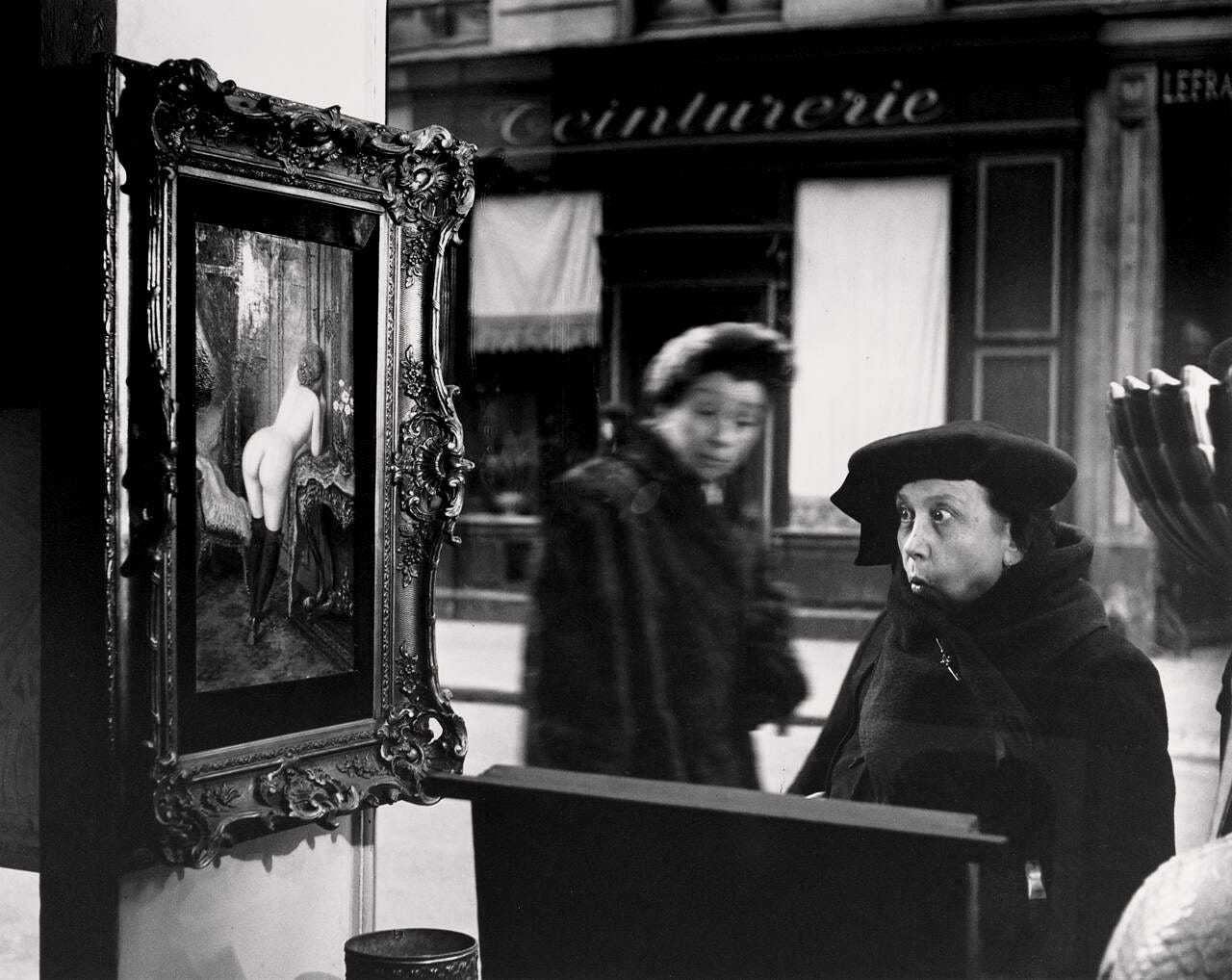
(Robert Doisneau, La Dame Indignée, 1948, gelatin silver print.)
Thirty Years: The Legacy of John Cleary Gallery, on view through September 5, 2026, at Catherine Couturier Gallery, pays tribute to the gallery’s original owner, John Cleary, who in 1996 founded what is Houston’s longest-running fine art photography gallery. (John Cleary brought on Catherine Couturier as Gallery Manager in 1999, and Couturier purchased the gallery after Cleary passed in 2008.) Among the selections of French street photography on display are several gelatin silver prints by the legendary Robert Doisneau, including Le Manège de Monsieur Barré (1955), a haunting image of a temporarily abandoned carousel that seems to be materializing (or disappearing?) in the mists of a rainstorm. It is the first photograph Cleary purchased and was included in his gallery’s inaugural show. (Photos by Henri Cartier-Bresson and André Kertész are also featured in the current exhibit.)
For me, Doisneau’s La Dame Indignée complements the spirit of this Substack, with its combination of guerilla-styled photography, good humor, and a nod toward the avant-garde. Is this Parisian lady, wrapped up in several layers of black, truly indignant or just surprised? (Maybe she recognizes the woman in the painting?) Coming up on her right is a woman captured as a blur movement, whose raised eyebrows belie a benign facial expression we are still able to discern. While “the blur” may simply be a byproduct of the technology of the time, it introduces an unexpected layer of visual poetry to the composition, a moment captured in the blink of an eye, or the flash of a camera bulb.
2. 42 at David Shelton Gallery
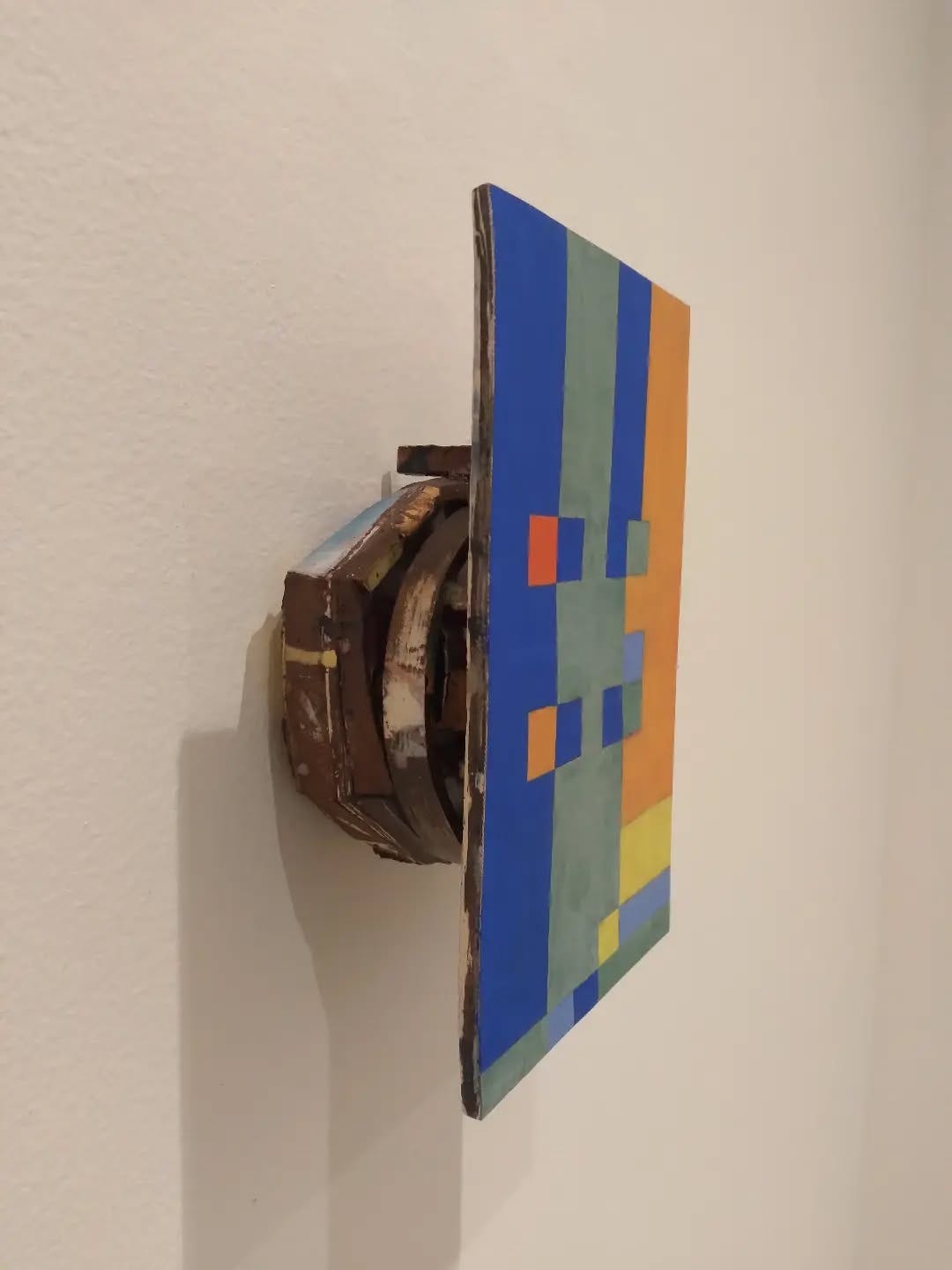
(Graham Collins, 2 cups flour, 4 tsp baking powder, 1/2 tsp baking soda, 1/2 tsp salt, 1/4 cup sugar, 1 1/2 cups milk, 4 tbs butter, 2 eggs, 2026, casein on hemp canvas laid on ceramic.)
Speaking of humor, 42 is the refreshingly unpretentious title for a group exhibit of a diverse selection of contemporary artists whose work hovers within the realms of “abstraction,” however you might define that word. 42 is currently on view at David Shelton Gallery through August 22, 2026, and was curated by Houston-based artists Dana Frankfort and Jeremy Deprez. In Douglas Adams’s book, The Hitchhiker’s Guide to the Galaxy, the number 42 is revealed as the Answer to the Ultimate Question of Life, the Universe, and Everything. The problem is, no one knows what the question was in the first place. With that conundrum in mind, if you’ve ever looked at and been moved by a so-called “abstract” painting, then found yourself unable to articulate why you were moved, this show is for you.
The artists in 42 include Natasha Bowdoin, Graham Collins, Mike Cloud, Chie Fueki, Harriet Korman, Cameron Martin, Marc Schepens, Jane Swavely, and Richard Tinkler. The trick here for the non-artist is to approach the installation with an open mind and time to just relax, look, and then look again. You have to try to take it all in, though that prospect never feels overwhelming.
At first glance, I didn’t feel much looking at Swavely’s Not Titled. At first glance, it looked incomplete to me. But then I looked again, and more closely at the hallucinatory haze of those white, grey, and purple brushstrokes. I felt a sense of becoming unmoored from whatever it is we collectively agree as tangible and real, and then accepting, after some resistance, the pull toward the inevitable, the unknown. Not to be morbid, but I was reminded of my own mortality.
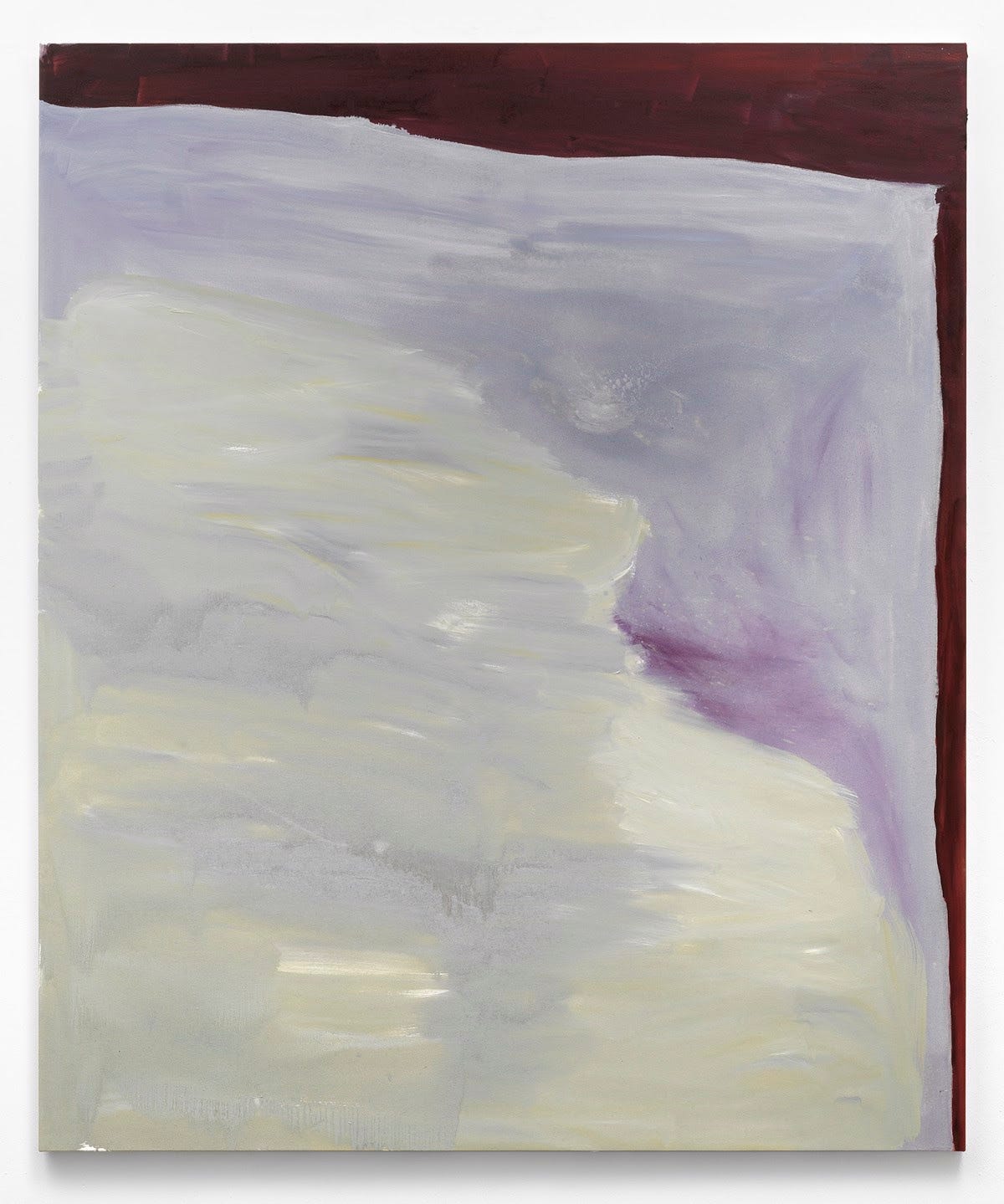
(Jane Swavely, Not Titled, 2024, oil on canvas.)
And that was just one painting. Kudos to Shelton and his collaborators for realizing such an intriguing and sensual show that opens up new ways of seeing.
3. A Beautiful Game: Every Match Leaves a Mark at Mitochondria Gallery
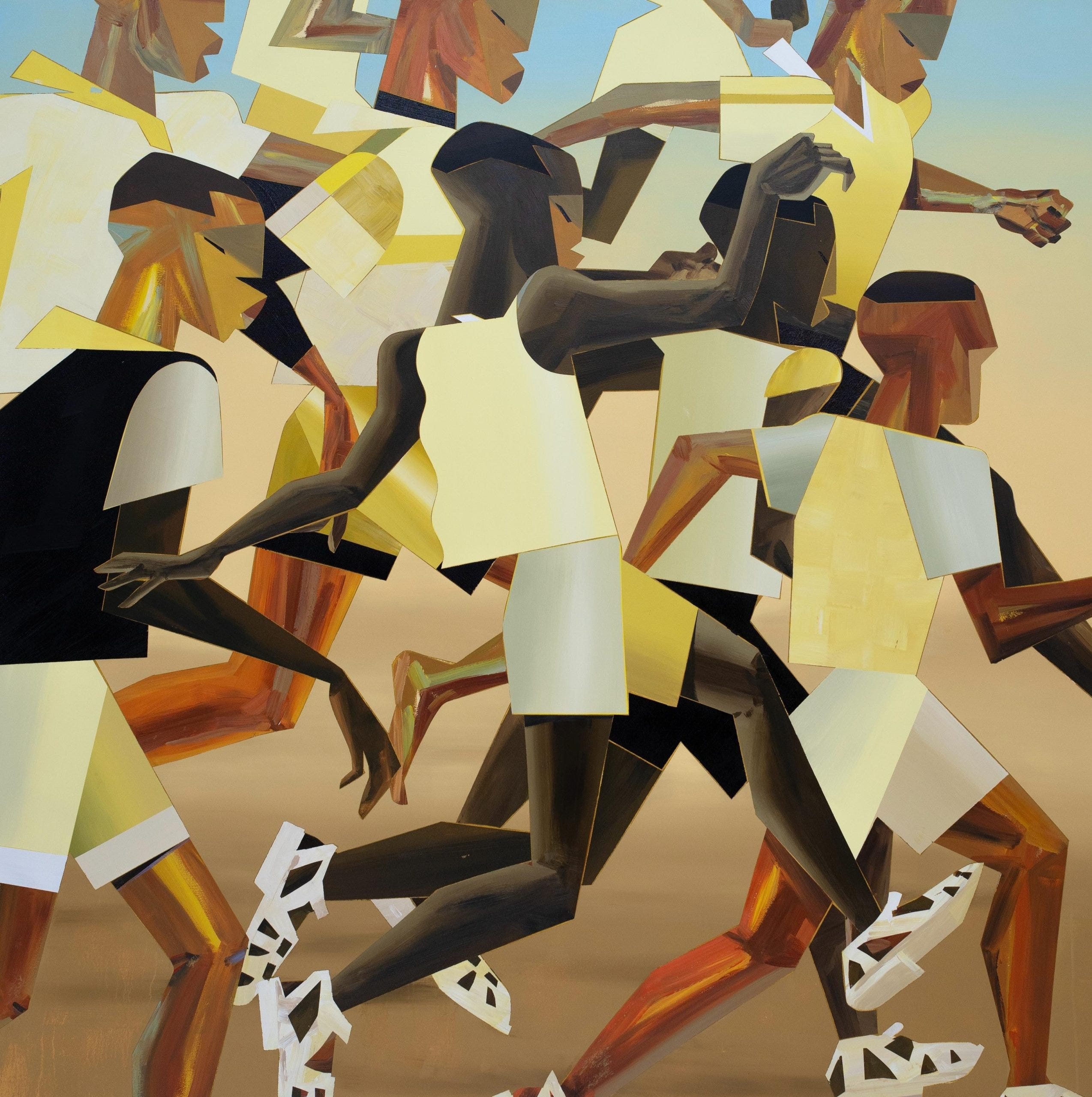
(Terence Maluleke, Towards Glory, 2026, acrylic on canvas.)
To commemorate this year’s FIFA World Cup and Houston’s participation as a host city, Mitochondria Gallery has curated a vibrant and provocative selection of paintings, sculptures, and mixed media works by talented artists from across the African continent for A Beautiful Game: Every Match Leaves a Mark, on view to the public through July 19. The subject matter is consistent, but the range of styles and degree of experimentation are what captured my attention during a walkthrough led by gallery co-owner Temi Etebu. The exhibition includes works by Terence Ntsako Maluleke, Charles Middleton, Guy Stanley Philoche, Corey Ramon Gibson, Alpha Odhiambo, Bradley Theodore, Sunday Ernest Nnamal, and Sphephelo Mnguni. Much of the art on view was created specifically for this show.
Born in Soweto, South Africa, Maluleke’s distinctive, sculptural style of portraiture and, as in Towards Glory, conveying motion, draws on his skills as a painter and as an animator for Walt Disney Animation Studios, Sony Pictures Animation, and Netflix. Looking at his paintings, so firmly rooted in and a reflection of contemporary life, you are reminded how profoundly Africa influenced the advent of cubism, expressionism, and the Western Avant-Garde.
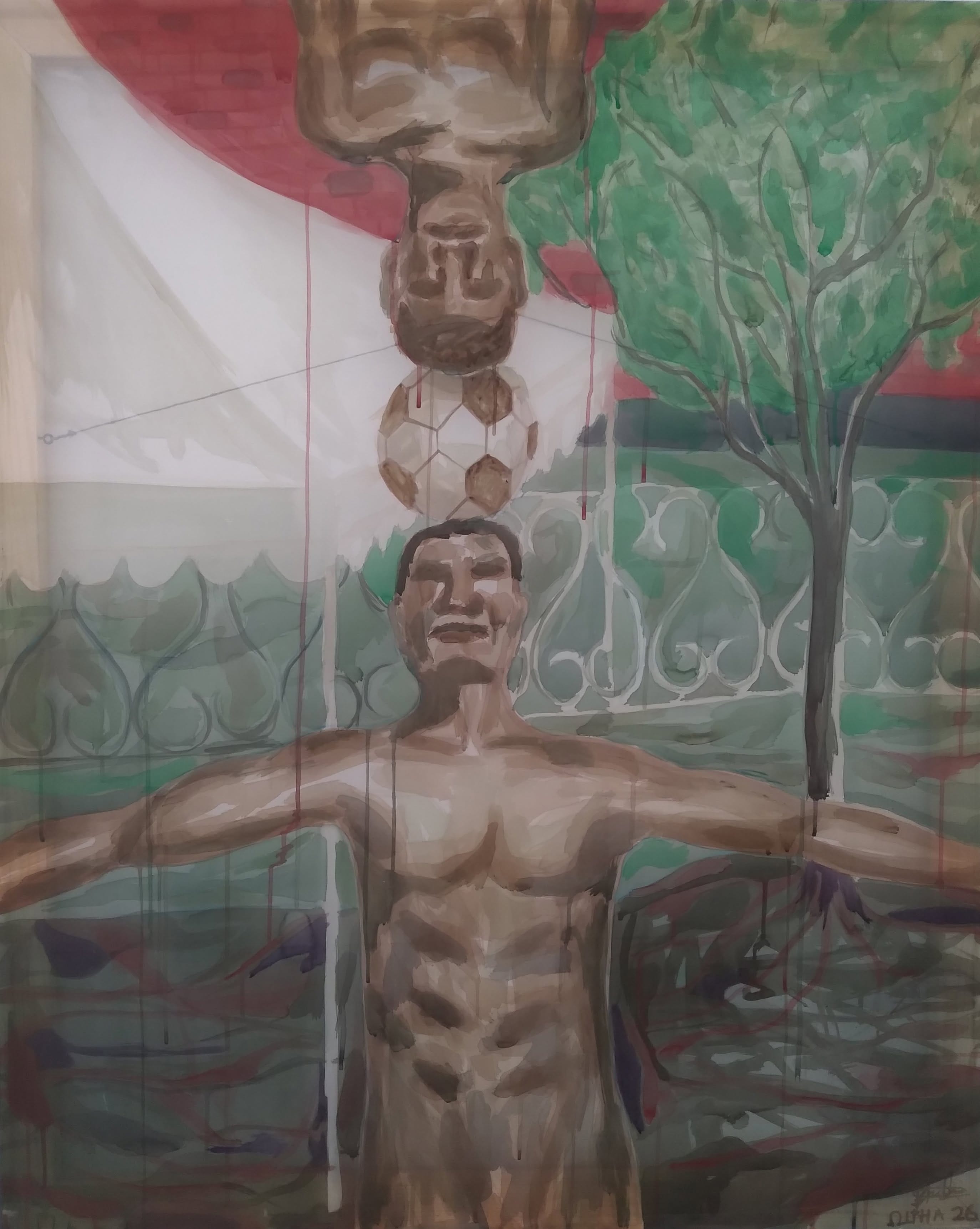
(Alpha Odhiambo, Balancing Boy, 2026, mixed media on vinyl mesh.)
Meanwhile, Alpha Odhiambo, a self-taught artist based in Nairobi, Kenya, paints in thick layers on vinyl mesh, through which light and whatever is behind the work is visible. In Balancing Boy, the stretcher and wire, visible through the mesh, are components to the dream-like composition of a boy acrobatically balanced upside down and atop a soccer ball on the head of another young man. The outstretched arms, the thinly branched tree, and the hard angle of the wooden stretcher may allude to sacrifice, martyrdom, and redemption. Meanwhile, the fencing, which appears often in Odhiambo’s art, reminds me of the famous line in Michael Ondaatje’s book The English Patient: “We are the real countries, not the boundaries drawn on maps with the names of powerful men.”
+ Apollo Africa
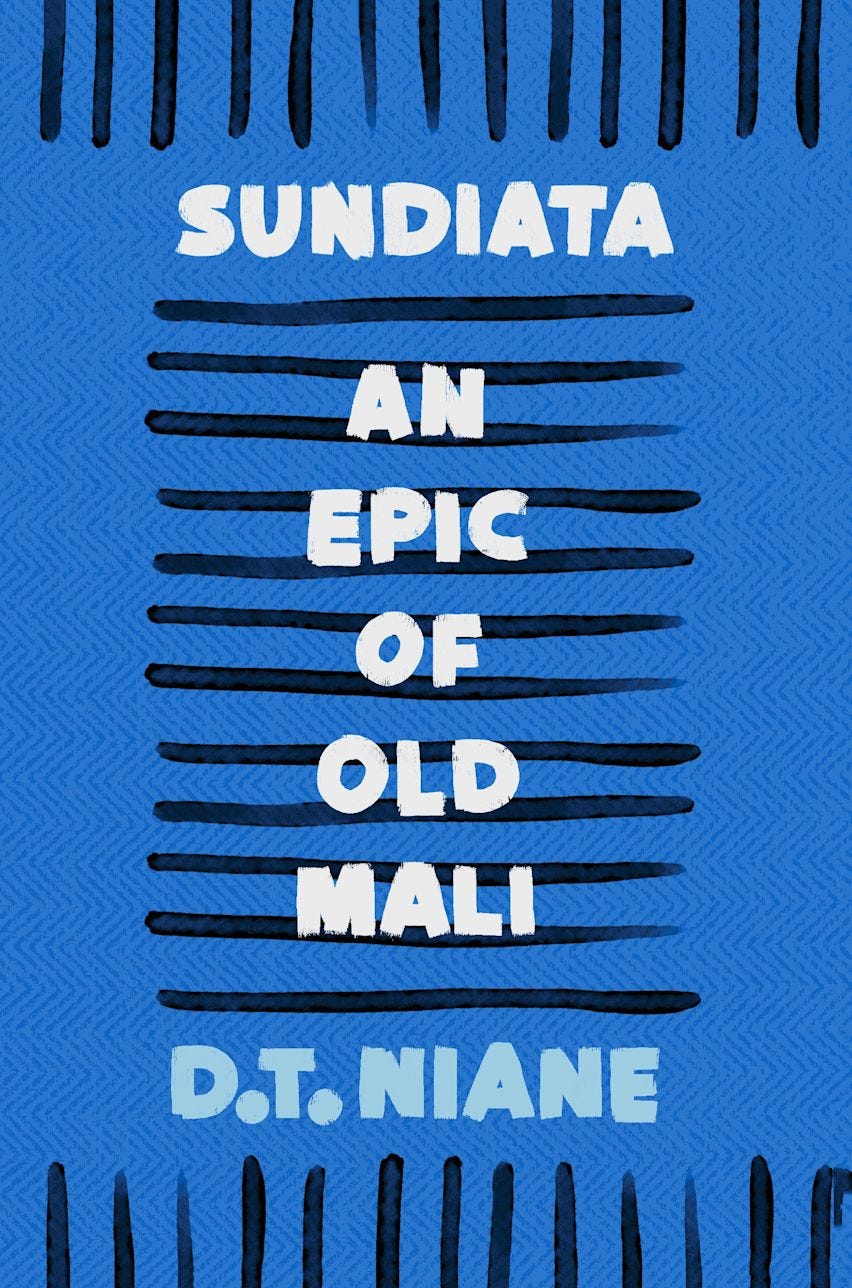
Last May, while visiting New York, I walked into McNally Jackson Books, and saw Sundiata: An Epic of Old Mali on display as one of the store’s staff recommendations. After reading the introduction, I knew I had to add it to my library. Having explored the Africanist concept of sound (and the voice) as a primary means for storytelling and historical preservation while composing a 16-minute soundscape inspired by artist David McGee’s survey The Griot and the Nightingale, I was very curious to read and experience, in print, this epic story of Sundiata, founder of the empire of Mali.
Sundiata is published by Apollo Africa, an imprint of Black Star Books and Head of Zeus that has been reissuing titles from the African Writers Series, which was launched in 1962 with the publication of Chinua Achebe’s Things Fall Apart, Cyprian Ekwensi’s Burning Grass, and Kenneth Kaunda’s Zambia Shall Be Free. Achebe was editorial advisor for the original series. Reading Sundiata inspired me to explore other titles published by Apollo Africa, all of which are available to order from the Bloomsbury website.
Right now, I’m about halfway through Jamal Mahjoub’s Wings of Dust, which was first published in the African Writers series in 1994. It is a “fictionalized memoir” that explores the adventures and misadventures of several North African-born students who have coe to England in the aftermath of World War II for an Oxford University education that might be applied in the creation of an independent Sudan. (Although Sudan is not named in the book, Mahjoub does describe Wings of Dust as “. . . the story of the formation of the modern republic of Sudan. . . told through the personal experiences of the generation which brought it to life.”) The book provides another key to understanding the complex and troubled history of Africa’s third largest country, a land currently experiencing an unimaginable degree of violence, and that remains, in Mahjoub’s words, “an enigma” for much of the West.
Beautiful picks!!!
🥊❤️