
Steven Higginbotham: Blindfold Test
Welcome to a new "Blindfold Test" for Night and Day with Steven Higginbotham.

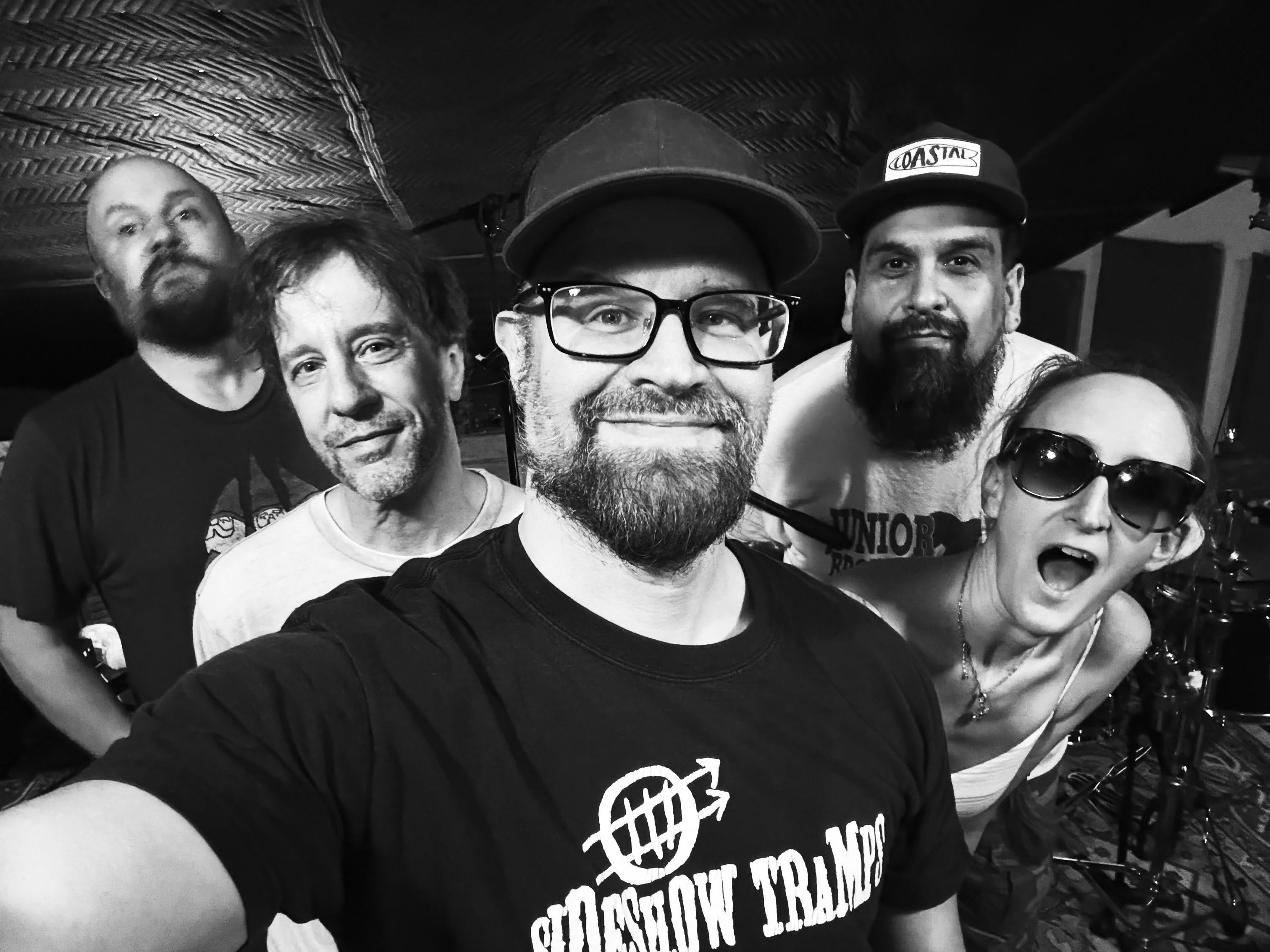
(The Wheel Workers. L to R: Craig Wilkins, Kevin Radomski, Steven Higginbotham, Zeek Garcia, and Erin Rodgers.)
Welcome to a new “Blindfold Test” for Night and Day with Houston singer, guitarist, and musical director of The Wheel Workers, Steven Higginbotham.
Originated by Downbeat magazine, a “blindfold test” is a listening test that challenges the featured artist to identify and discuss the music and musicians performing on selected recordings. No information is given to the artist in advance of the test.
One of the cool things about being a music journalist is the opportunity to follow and write about the creative trajectory of bands I especially admire. Houston-based indie psychedelic grunge rockers The Wheel Workers are one such band. The Wheel Workers came on my radar in 2023, but their history dates back to the early 2000s, when the group was a communal quintet of hyper-creative 20-somethings, whose members included singer and multi-instrumentalist Steven Higginbotham, guitarist and singer Chris Maness, drummer and percussionist Nathan Maness, bassist Giuseppe Ponti, and guitarist Chad Fontenot. The band broke up in 2006, leaving behind an unfinished sophomore album, One More Thing to Say, which has been partially rerecorded by Higginbotham, with new contributions from Nathan Maness and Guiseppe, and guests legendary recording engineer and producer Dan Workman (ZZ Top, Lyle Lovett, Beyoncé), and vocalist Alli Villines. The first single from the album, “Spreading the Fire,” is available to stream. The second single from the album, “One More Thing to Say,” drops August 13th, and The Wheel Workers, which includes guitarist and keyboardist Craig Wilkins, keyboardist and singer Erin Rogers, bassist Zack Garcia, and drummer Kevin Radomski, perform at Black Magic Social Club on August 15.
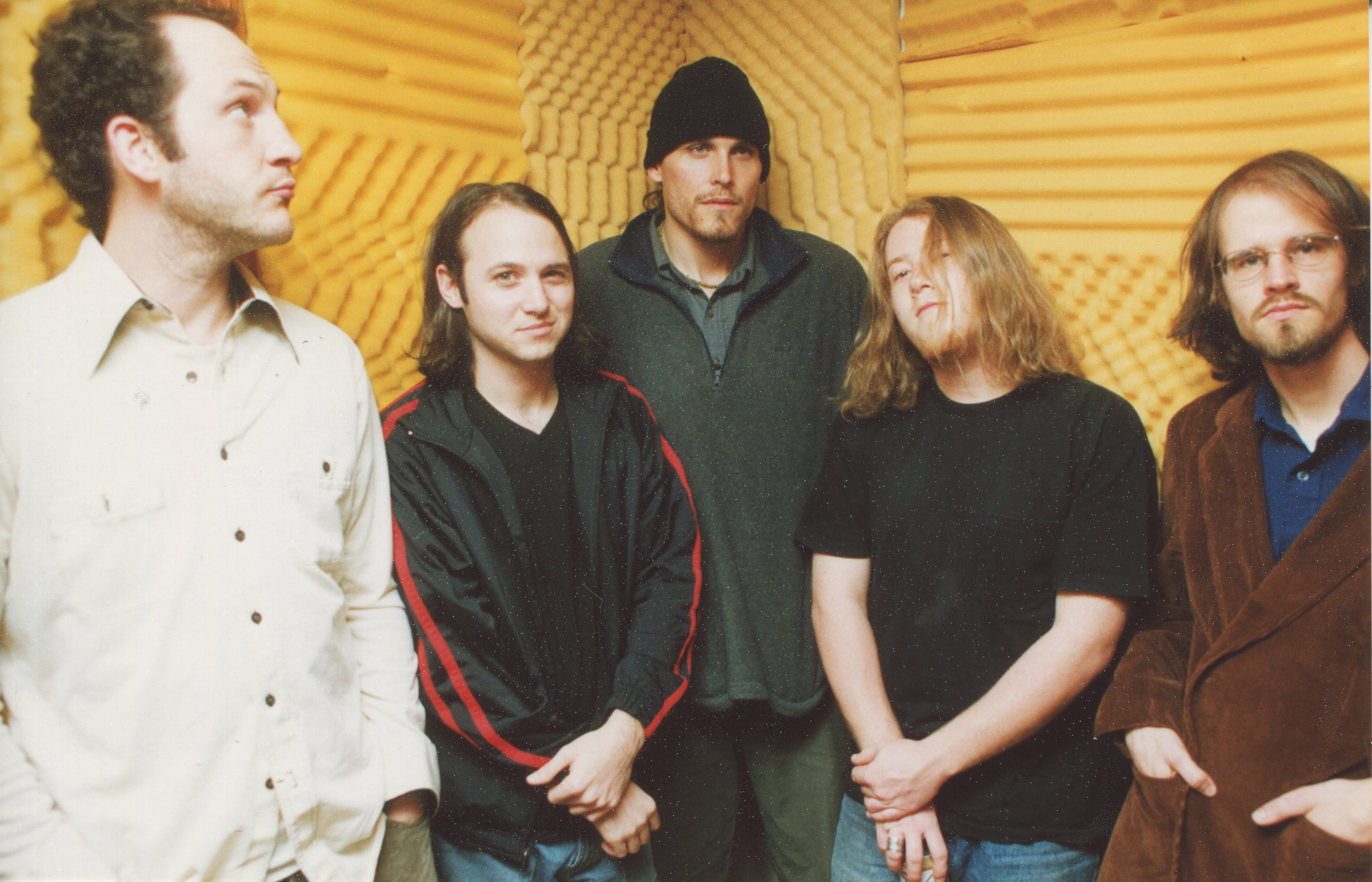
(The Wheel Workers, circa 2000/2001; photo by Evan Kolvoord.)
Ahead of the release of their 2023 album Harbor, in an article I wrote for Houston CityBook and described the music of The Wheel Workers as “a kaleidoscopic blend of soaring melodic hooks, alternately chiming and grungy guitars, spiraling keyboard patterns, and noisy synth squiggles and squalls.” That’s still pretty accurate, although with a catalogue that spans over two decades and features more than 15 contributing members, the musical and emotional range of The Wheel Workers is expansive, to say the least. For me, the band harkens back to the days when I followed bands that released several albums over the course of their careers, each different from the last.
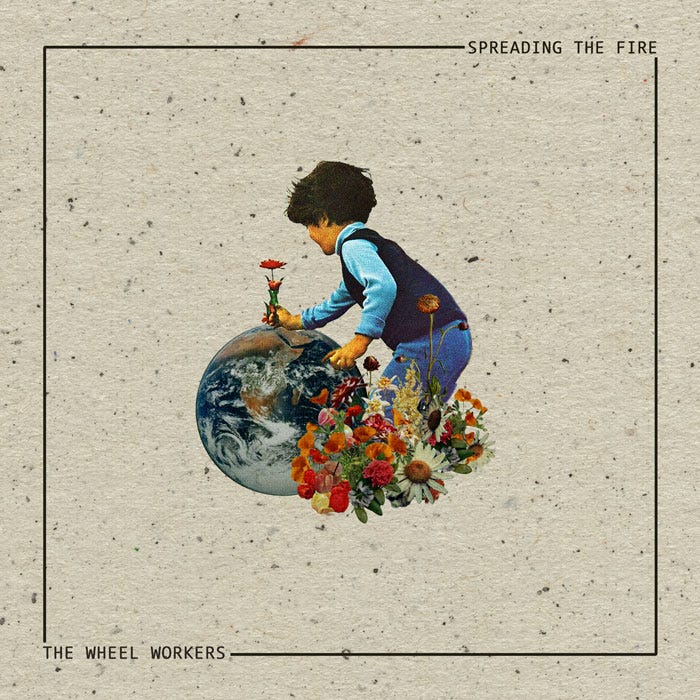
(“Spreading the Fire” single artwork by T Lavois.)
In addition to being The Wheel Workers musical director, Higginbotham holds down a day job as an attorney, doing business litigation and rewarding pro bono work, including working with Kids in Need of Defense (KIND) to ensure unaccompanied and separated children who have been forced to migrate have access to the legal protection they need to navigate complex immigration, asylum, and child protection systems.
For this “blindfold test,” I admit I threw Steven several carefully curated curves, although each selection connects to and resonates with his and The Wheel Workers’ history. I also chose several “covers,” which weren’t intentional, but ended up providing a through-line across the disparate tracks, and Steven appreciated the deeper dive.
One More Thing to Say will be available for purchase in digital and vinyl form online and in some local stores in mid-October 2026.
(Scroll down for a Spotify playlist of the following tracks.)
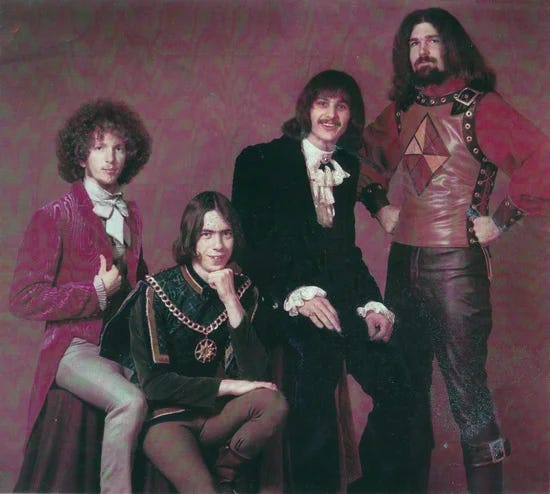
Bubble Puppy
“Hot Smoke and Sassafras” by Bubble Puppy (from A Gathering of Promises, 1969, International Artists), Rod Prince, guitar, vocals; Roy Cox, bass, vocals; Todd Potter, guitar, vocals; David Fore, drums, vocals.
Steven Higginbotham: I’m blanking on this one! Although that word, “Sassafras,” rings a bell.
Chris Becker: This is Bubble Puppy. I was rereading House of Hits: The Story of Houston’s Gold Star/SugarHill Recording Studios, and there’s a whole chapter that argues the roots of psychedelic rock are in Houston, not San Francisco. Bubble Puppy was one of those groundbreaking bands that recorded at Gold Star, along with legendary experimental bands the 13th Floor Elevators and Red Krayola.
The words “psychedelic” and “psych-rock” are often used in the press to describe The Wheel Workers.
SH: I would say this record coming out in October is probably our most psychedelic. It comes from a time when we were all living together, improvising and jamming all the time, and recording everything. We were definitely in a very psychedelic place at the time. We were experimenting in all kinds of ways! We even put out a record, called How to Fly a Washing Machine, that was entirely in-the-moment improvisations.
CB: It seems like a lot of Wheel Workers material provides an opportunity to just go off and improvise. Is that something you explore these days onstage?
SH: Not as much. There are moments where that happens, and over time, the songs definitely evolve. But it’s not as present in the current version of the band as it was in the earlier version of the band. Back in the old days, there was a lot of spontaneous, cooperative music creation, whereas more recently, I figure it out in the studio, and then we play (the music) live.
It’s definitely a different time in your life when you’re in your 40s versus your 20s. I think everybody felt that was an important time in their lives, musically. It’s very intense; it’s a time when a lot of trappings and responsibilities of adulthood have not latched on. (laughs) So you can really make music front and center in a way that seems a lot more difficult later in life. It’s harder to get a bunch of 40-year-olds together for practice, as opposed to when we were in our 20s, and could do that every night!
I’m really happy with the way the songs turned out. I also appreciate the understanding of the current lineup of the band; Craig Wilkins contributed some synthesizer lines; Erin Rogers contributed some vocal harmonies and took some of the songs into a new place.
The Breeders
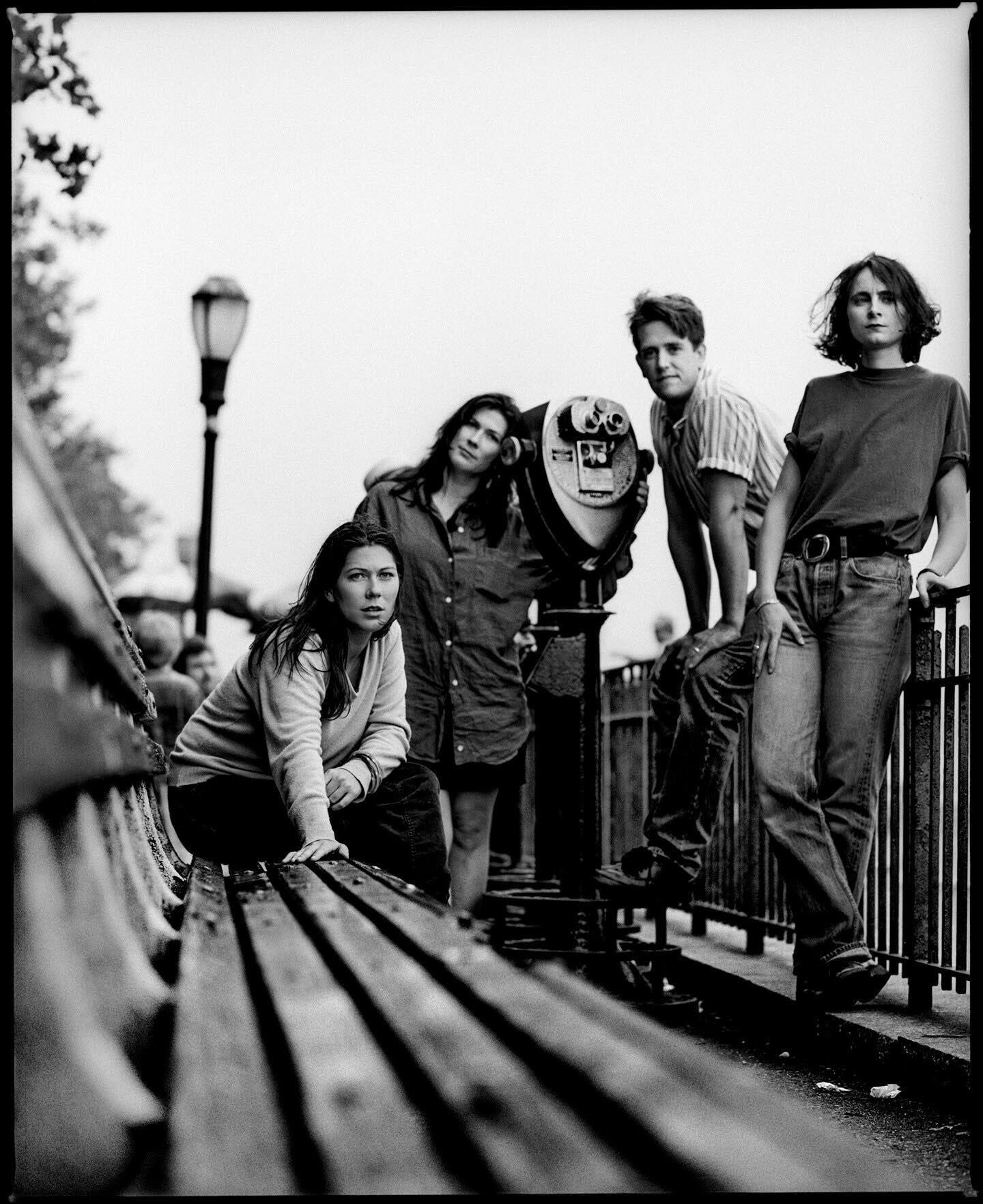
“Happiness is a Warm Gun” by The Breeders (from Pod, 1990, 4AD, Elektra), Kim Deal, lead vocals, rhythm guitar; Kelley Deal, lead guitar, backing vocals; Josephine Wiggs, bass.; Britt Walford (credited as Shannon Doughton), drums.
SH: (Immediately) The Beatles. “Happiness is a Warm Gun.” The Breeders version! I love the Breeders.
CB: I wanted to grab something from this era, the 90s, which is getting a lot of attention now. So much incredible music was happening then, and the music industry was very different. You could make money selling albums, which fed a lot of creativity. Was that decade a formative time for you as a musician and songwriter?
SH: Oh, absolutely. That’s music of my youth, and the music that brought me into this genre. I started with piano and violin lessons and was in the classical music world for a while. But I was corrupted by rock and roll and 90s music. That’s what made me want to write my own music and not necessarily perform other composers. So, I picked up the guitar and learned Nirvana, Pearl Jam, and Pixies songs.
I think the early 90s explosion alternative explosion was a really important time in music. Certainly, for me it was. When I play shows now, I feel like in a lot of the clubs the ethos still feels very 90s, in a lot of ways. But as you said, a lot of stuff has changed. It’s much harder to make a living. Basically, music is free, online. Even if you’re a professional and prominent musician, you’re not going to make a lot of money. It’s a very different world.
Houston’s A.S.S
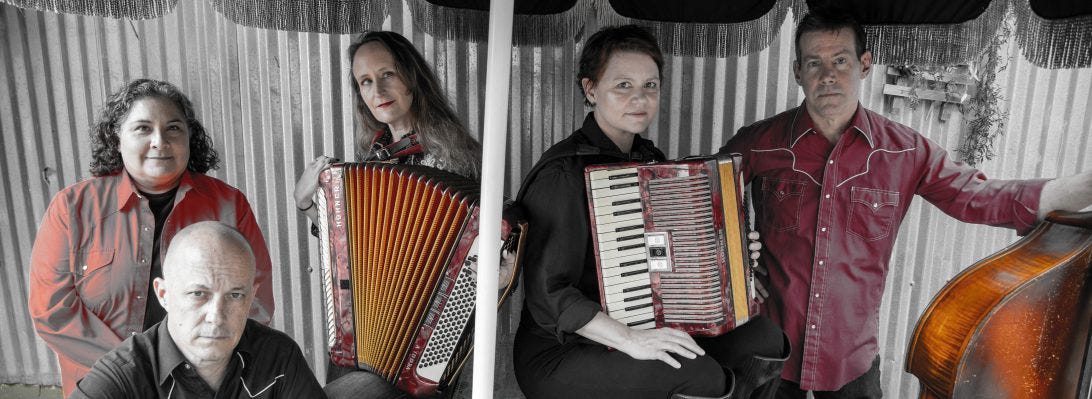
“Cranes in the Sky” by Houston’s A.S.S. (from Songs from Houston Covers: Volume 3), Glitter Milk Records, 2025), performed by Cathy Power, Erin Rodgers, Anthony Barilla, Chris Bakos, and Jenny Zuniga.
SH: (As soon as the vocal starts) Oh, wait! Wait! This one is Erin Rogers, right? As soon as her voice comes in, it’s so distinctive. Forgive me, but I can’t name the song . . .
CB: I love her voice. And I love the way she sings this tune. It’s a Solange tune, “Cranes in the Sky.”
Erin seems to be one of the secret weapons in The Wheel Workers.
SH: For sure! She is extremely talented and has a bunch of projects. And that’s one of them. At our next show, August 15, when we’re releasing the next single, “One More Thing to Say,” one of Erin’s bands, Klono Princess, will open for us. It’s more of a raw, punk rock project.
Houston’s A.S.S. (Houston’s Accordion Superstars) is great. They do all covers, in very original ways. And Erin has a very great and unique voice.
CB: Is Erin an attorney as well?
SH: She’s an entertainment law attorney. So, I turn to her on occasion. She’s brilliant as an attorney and as a musician and songwriter and adds a super cool dimension to the band.
One of the songs on the new record that she helped evolve is “Distractions.” This was a song I had for decades. It’s one of the earliest songs in the project. She just came up with this counterpoint melody that’s so beautiful and elevates the song in such a cool way. On another song, “Half Asleep,” she added a clarinet. She’ll always think of something I never would have thought of myself.
Erin connected us to T Lavois, who has done several music videos for us. One of which is going to come out when we release “One More Thing to Say.” It’s a brilliant hybrid of animation and live footage. They also did all of the artwork for the album and the singles. It’s been a really cool journey working with T on these projects.
Another important person I met through Erin is Alli Villines, who is my vocal coach. I don’t know if we talked about this, but in 2019, I fractured my larynx doing martial arts. I did some speech therapy, and then some lessons with Alli, and that’s really helped a lot. I honestly think I’m a better singer than I was before the injury. She also sings on a number of songs on the new album.
Money Chicha
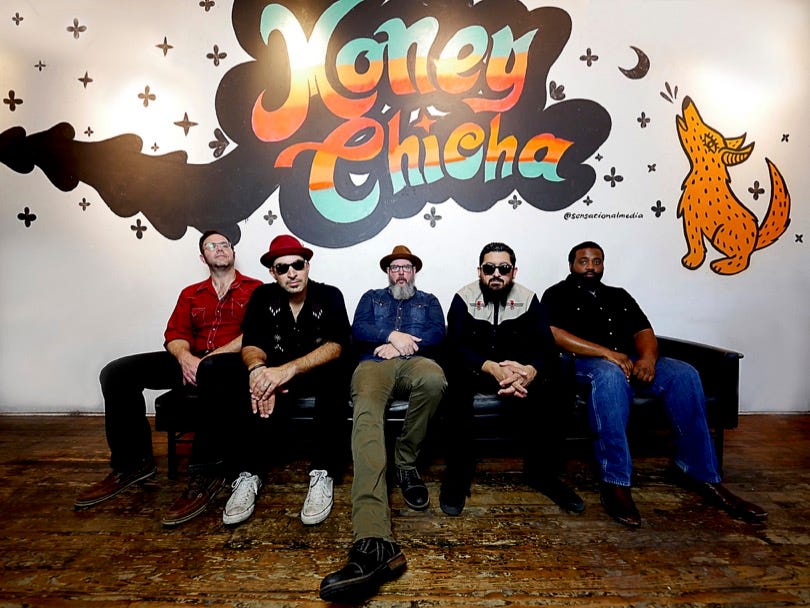
“Carnaval de Jujuy” by Money Chicha (from Onda Esotérica, 2025, Vampisoul).
SH: (After a couple of minutes) I don’t know!
CB: This is Money Chicha. I learned about this band from a post on The Wheel Workers’ Instagram feed.
SH: That’s one of the bands Guiseppe was talking about, right? I think he pulled out three or four records, and that was the one I didn’t know! (laughs) Giuseppe has a pretty good record collection. It’s super cool stuff. It’s got a 60s, California vibe, with some Latin rhythms.
CB: The band is based in Austin. Is there a lot of creative exchange among musicians between Austin and Houston, and opportunities to collaborate and support each other?
SH: I think so. Maybe it’s become more collaborative than it used to be, because Austin has become so expensive. I know Erin, for example, was in a cover band called Poon. Are you familiar with the band Ween?
CB: Yes.
SH: Well, Poon was an Austin-based, all-female cover band, doing Ween songs exclusively. (laughter) They’re really great! They’re not as active as they used to be. I think Ween heard about Poon and invited them to play at one of their parties.
Two of the musicians we worked on from the original lineup, Giuseppe and Nathan, still live in Austin. So I’m going back and forth a lot. That’s been really cool. We were living together in Austin, so it’s nice to get back up there and play. And The Wheel Workers have played Austin regularly. It’s not the easiest town to book, because there are a ton of musicians and really great bands. But we played a single release recently at Nomad Bar, and it was a lot of fun, and we had a good turnout.
Culturcide
“They Aren’t the World” by Culturcide (from Tacky Souvenirs of Pre-Revolutionary America, 1986), performed by Perry Webb, Dan Workman, and Ralf Armin.
SH: Sounds to me like a soundtrack, maybe?
CB: Well, just wait . . . (after the first verse and some laughter) This is a project featuring Dan Workman called Culturcide. They grabbed existing recordings of music, in this case, “We Are the World,” and sang and did their own thing over it. And like Negativland, they got into a lot of legal trouble as a result. This is a track that made me laugh so hard I fell out of my chair, but I haven’t been able to listen to it in its entirety. It possesses both of those qualities.
SH: I’m sure Dan would be pleased to hear that.
CB: Dan has been an important part of The Wheel Workers for a long time, right?
SH: Yes. When the first iteration of The Wheel Workers ended, I came back to Houston and did my own thing for a while, including a solo record, Unite, under The Wheel Workers’ name. I heard of a new label in Houston called ZenHill Records (founded by Dan Workman and Filmmaker W. Ross Wells). I sent a few tracks to them, and Dan said some really nice things about the music on social media. I reached out to him, and that was the beginning of a long musical collaboration and friendship. We’ve done four records together (Past to Present, Citizens, Post Truth, and Harbor) and experienced a close, personal journey. Our lives paralleled in a lot of ways. Dan moved from music production, and now, he’s a therapist. I moved from being a teacher to being an attorney, and those transitions happened for us at almost exactly the same time.
He contributed enormously to how those records sound and turned out. He also helped keep me sane enough to complete the records. He definitely got his preparatory work for his future role as a therapist. I don’t think I was terrible, but I had some ups and downs, and he was there for me, and we became really good friends.
We didn’t work with Dan on the most recent record, and part of that is because the journey came to a natural conclusion. But I’m sure, going forward, we will work together again in some capacity.
CB: The Culturcide track kind of encapsulates the punk era as it was in Houston in the 80s. That punk attitude, when you just say what you feel, unfiltered, and if you don’t like it, deal with it, is that a part of The Wheel Workers’ ethos?
SH: I used to teach History and Government to High School students, and I do think a lot about politics, and have woven those thoughts into songs. A lot of the musicians I really respect and have been influenced by are known for their politics and have supported various liberal, left-leaning political causes. I think there’s a place for that. It’s not everyone’s cup of tea, but I think it’s an entirely valid thing to do. What often motivates me to write lyrics is the injustices in the world, the absurdity of our political leadership, and how much better things should be. So yes, I often think about those things, and that filters into my lyrics, especially if the song is up-tempo and angry. Punk was a big influence on that.
CB: I believe just the act of creativity is political, and that freedom of expression is what’s so threatening to the status quo and totalitarian regimes.
SH: Oh, for sure! Even when there isn’t an explicit manifesto in the lyrics, the act of expressing raw, unfiltered emotion, without the constraints of polite society or the norms that help people advance in a totalitarian society, is itself an ethical stance. Those norms are fundamentally at odds with the ethos of rock music at its best.
Spoon
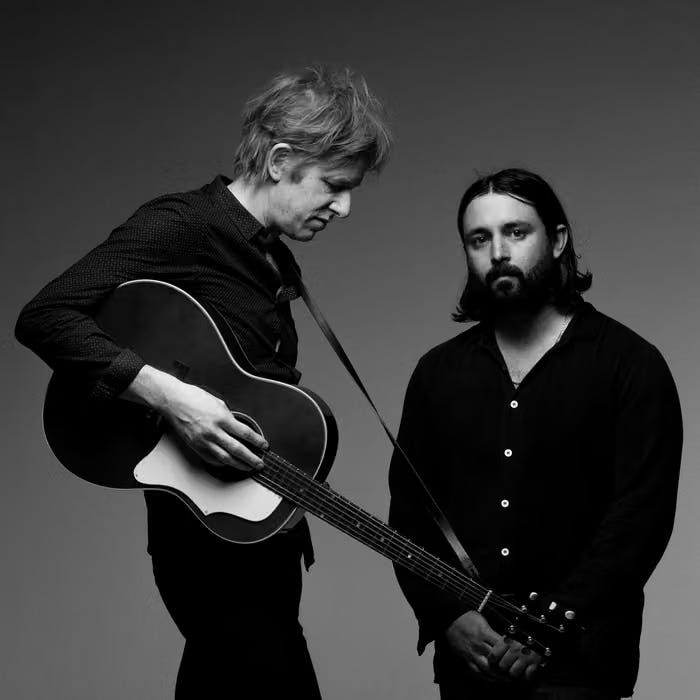
“I Can’t Give Everything Away” by Spoon (2023, Headz under exclusive license to Matador Records), Britt Daniel, vocals, guitar; Alex Fischel, piano.)
CB: Final track. I’ll give you a hint. It’s another cover!
SH: Two layers deep!
CB: That’s it. I was thinking deeply when selecting these tracks.
SH: I recognize the voice . . . it’s on the tip of my tongue.
CB: This is Britt Daniel and Alex Fischel of the Austin-based band Spoon doing David Bowie’s “I Can’t Give Everything Away” from Blackstar.
SH: I’m definitely aware of Spoon, and have listened to them off and on, though not as much lately. I have a lot of respect for their music. I haven’t heard this particular track.
CB: There’s a video of you on YouTube singing a song called “Be Yourself” and accompanying yourself on ukulele. I love hearing you in this context, and I wanted to play something “unplugged,” for lack of a better word. Are there similar “unplugged” tracks in The Wheel Workers’ recorded repertoire?
SH: There are a number of more acoustic-oriented songs, and on our next record, there will be a few of those tracks. I have a few other ukulele songs and a bunch of ideas on acoustic guitar. But because we are a rock band, and because we’re playing clubs, sometimes the songs that would work acoustic, at home, don’t necessarily lend themselves to being played in a rock venue. (laughs) People are like, “Okay, time to catch up on our conversation, and get a beer, and go to the bathroom.” There’s a little bit of an energy push from the crowd to rock. So, we’ve tended lately to respond to that, because we like it too! I like to get nice and loud.